Crash! At this precise moment, Paraguay is going through a powerful jolt: the solvency problems at Ueno Bank, allegations of irregularities, the political scandal, and the recent ouster of President Santiago Peña have ushered in a new period of institutional uncertainty and left the country facing an uncomfortable question: what’s the way out of this? That’s why, while Paraguayan politics tries to get its ducks in a row after Peña’s tumultuous departure, the green industry flickers like a light on the horizon. Can cannabis be an answer to this crisis?
At this point in the soirée, the question may sound like a jab or a provocation, but it has considerably more substance than smoke. One important fact worth mentioning: Paraguay has had legislation for medical cannabis since 2017 and for industrial hemp since 2019. It also has agricultural experience, favorable climatic conditions, hydroelectric power, and a strategic location next to Brazil, one of the largest markets in the region. The problem, specifically, is that it still has not managed to turn all that potential into a true economic engine. So, can cannabis help pull Paraguay out of the crisis?
A Country That Already Knows the Plant
For Mr. Joy, a media professional specializing in 420 culture and ambassador for Academia Educa in Paraguay, the country has an advantage that other markets are still trying to build: a cultivation tradition that spans generations. “In Paraguay, as we all know, we’re already a powerhouse when it comes to informal production,” he says. His proposal? Take advantage of that existing know-how and move it into the legal realm, generating jobs, tax revenue, and resources for the population.
Mr. Joy’s description is part rural postcard and part X-ray of an economy—let’s say, an alternative one. He says that, just a few dozen kilometers from Asunción, you can already find smallholder plots with one or two hundred plants, while larger-scale production measured in hectares appears in more remote areas. He also observes an evolution in techniques: greenhouses, clone selection, pheno hunting, and an increasingly sophisticated search for quality.
Strictly speaking, the communicator is not only talking about people who have learned to grow, but about generations that know the rhythms of cultivation, humidity, climate, and the particularities of Paraguayan soil. An accumulated body of knowledge that, in his view, could potentially be turned into productive capital. In his words: “Today we have smallholder growers who come from generations of growers, who have been working with the plant for a very long time.”
In addition, in his assessment, the world-famous Paraguayan brick weed coexists with newer cultivation and breeding practices. And the transition toward a regulated market could allow that knowledge to move beyond the margins and find formal commercial channels.
At the same time, Mr. Joy points to a concrete obstacle: the concentration of opportunities. According to his interpretation, as happens in other latitudes, current regulations have particularly favored pharmaceutical companies and large industries, making it difficult for small producers to enter the business. “Today, unfortunately, the existing resolution gives pharmaceutical companies and large industries more authority to develop, creating a monopoly,” he argues.
Consequently, the most important thing here is that his proposal has a social dimension that deserves attention. Because if cannabis becomes a multimillion-dollar industry, the discussion should not be limited to how much Paraguay can export, but also to who will participate in that wealth. The farmers who have been cultivating for decades, or only the companies with the ability to finance labs and obtain licenses?
From Plant to Added Value
Although Alejandro Benítez, a cannabis market specialist and head of Consultora 1420, agrees that Paraguay has the conditions to become one of Latin America’s leading hubs for cannabis production, industrialization, and exports, he warns of a fundamental distinction: one thing is legalizing the plant, and another, a muuuuch more complex thing, is building an industry around it.
“The main challenge is not simply to produce, but to transform the production that already exists in the country today into a true value chain,” he explains. That is why it is not simply a matter of harvesting flowers and selling them. Did Benítez say “value chain”? Yes—it means developing genetics, incorporating technology, financing research, establishing laboratories, producing medicines, and manufacturing derivatives capable of competing in international markets.
In fact, Paraguay has one particularly notable ingredient in its favor: its proximity to Brazil. This giant neighbor represents a market of enormous size and a commercial opportunity that could serve as a platform for projecting into other destinations. However, as countries across South America know well, sharing a border with giants does not guarantee business. To export medical or industrial cannabis, it’s necessary to meet health standards, demonstrate traceability, have technical documentation, and secure concrete trade agreements.
“Exporting does not depend solely on having cannabis available,” Benítez points out clearly. In other words: having an exceptional plant is not enough if you cannot later demonstrate what’s in it, how it was produced, and under what conditions it reached the final product.
Benítez is currently working on the development of medical cannabis projects in Paraguay and believes that the country has a real opportunity to attract investment and develop industrial capabilities. But he insists that the goal should not be to become merely a supplier of raw materials—a mistake several South American countries make with various commodities.
And that is where a central discussion emerges, one that also appears in the book Green Gold: The Economy and History of Cannabis in the United States, by Nicolás Rodríguez and Rolando García: Does Paraguay want to be a simple supplier of raw materials, or does it aspire to build a value-added industry? Where will Paraguay stand in the near future? In that sense, Benítez believes that “Paraguay should not settle for being merely a producer of raw materials. It should aspire to be a country that produces knowledge, that supports and relies on technology, and where high-value-added products emerge from cannabis.”
The State Must Also Plant a Flag
Now, while some enthusiasts imagine laboratories, exports, and new jobs, a warning is emerging from the institutional sphere: growth has to be built on clear rules. On this point, lawyer Juan Fernando Lebrón González, legal director of SENAVE (National Service for Plant and Seed Quality and Health), recognizes cannabis’s economic potential, although he avoids presenting cultivation as an immediate solution to Paraguay’s problems. “The potential exists, but it is neither automatic nor immediate. Before thinking about becoming major exporters, we need an orderly domestic market,” the official says cautiously.
Lebrón mentions progress on the PROINCUMEC pilot program (National Program for the Study and Medical and Scientific Research of the Medicinal Use of the Cannabis Plant and Its Derivatives), a program created by Law No. 6007/2017, as well as other processes related to the development of the sector. Nevertheless, he warns that there is still a disconnect between what growers produce and what consumers actually seek.
At this point, Lebrón identifies two potential avenues. On the one hand, medical cannabis, whose development must be accompanied by controls that prevent it from being diverted from its therapeutic purpose. On the other, industrial hemp, which could represent a productive alternative for family farming. He says: “Industrial hemp can reach family farming and become a real alternative for small producers. We have to protect it and promote its potential.”
The possibility is interesting because it broadens the conversation beyond medical or adult-use cannabis. Hemp can be integrated into production chains linked to fibers, materials, textiles, and other industrial uses. In a country with an agricultural tradition, it could become a diversification option for producers who need to expand their sources of income.
But Lebrón sets one condition: institutions have to be prepared to support production and guarantee quality, sanitary standards, and traceability. “No single crop can pull a country out of a crisis, although it can contribute if the industry is built properly. Markets are won through trust, and trust is built through order, control, and quality from the beginning,” he sums up with his feet firmly on the ground.
Opportunity Is Not a Miracle
Ñaiméma apañuãi’pe. Yes, Paraguay is in trouble right now, but, but, but, the political and financial crisis can also function—quoting The Simpsons—as a crisitunity. In other words, as a window to discuss the shape and substance of the country’s economic model. Here, this situation could become an opportunity for the new authorities to reconsider what place they want to give cannabis in their economic development strategy.
That is why, taking advantage of that momentum, Mr. Joy presents it almost as a last opportunity to accelerate a process that, according to him, began a long time ago. And, for his part, Benítez believes that the economic impact could be concrete: formal employment, investment, the incorporation of technology, export diversification, and new business capabilities. He does not promise to eliminate unemployment or solve the country’s structural problems in one fell swoop, but he does believe that a well-developed industry can help reduce informality and generate sustained growth.
For the rest, the key lies in not confusing potential with results. Paraguay may have favorable climatic conditions, land, energy, farming knowledge, and a gigantic neighbor that demands cannabis products, but it still needs predictable rules, legal certainty, investment, research, and a public policy that does not change direction with every new government. The question, then, is no longer only how much cannabis Paraguay can produce. Now, the question is also… what does Paraguay want to do with all that knowledge, that land, and those, ahem, “opportunities”?
In all honesty, perhaps cannabis is not the fast track out of a financial crisis that has just shaken the country. Because, well, there is no harvest capable of solving a financial and institutional crisis on its own, nor a single hectare that can replace the rebuilding of political trust. But, while dancing this minuet, there is something Paraguay might be in a position to do: move from the margins to the center by transforming a historically marginalized productive tradition into a legal, competitive industry capable of spreading opportunities more widely.
And here, once again, during these critical hours, in times when the economy needs to find new engines, cannabis can be one of its key driving gears. It can be an industrial policy, a tool for rural development, and a gateway to new markets. That said: for the harvest to arrive, the soil must first be prepared. And this time, simply planting is not enough. We have to build, plot by plot, everything that comes after.
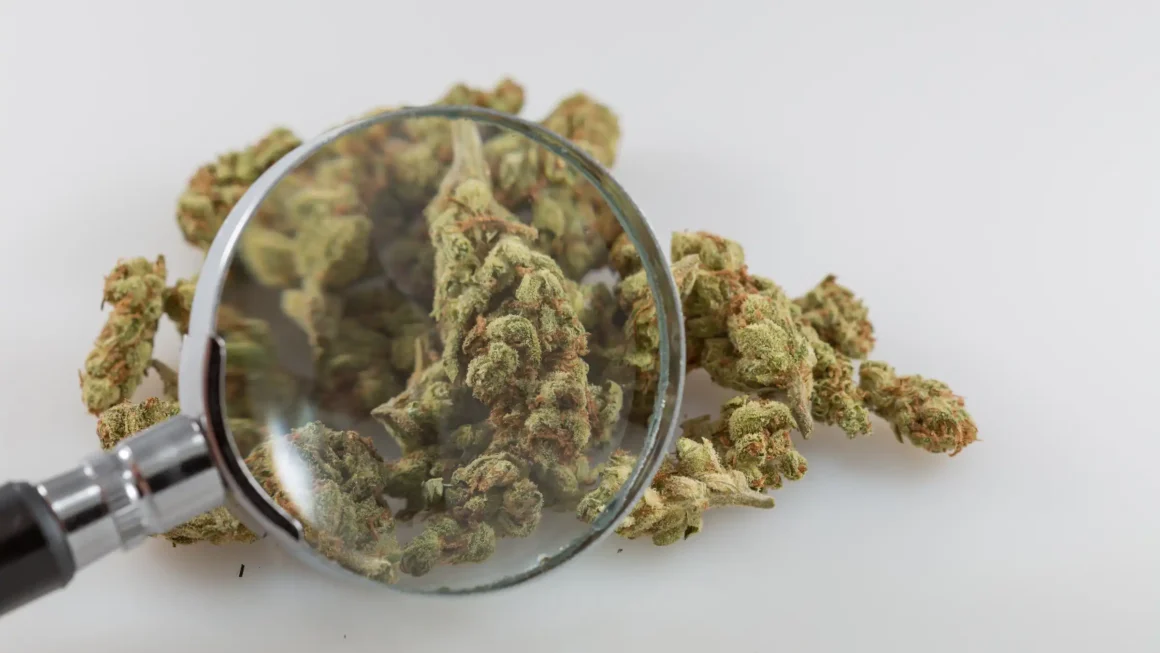
Cover photo created with AI

Related Posts

DEA Is Rejecting Medical Marijuana Businesses That Want Federal Rescheduling Protections In Multiple States

Iowa’s Incoming Governor Says Legalizing Marijuana Can Generate ‘Hundreds Of Millions Of Dollars’ For The State