In an exclusive High Times interview, the Jackass icon and his wife Dannii Marie talk recovery, sleep, bad trips, psychedelic ceremonies and why their new brand feels less like a launch and more like a life.
“Weed does not lead to other drugs,” says Bam Margera in an exclusive interview with High Times. “It leads to fucking carpentry.”
He says it to make a point about his wife. She builds bongs out of apples. That, he explains, is what cannabis actually does to people.
Two years sober from alcohol, goes to bed at ten, skates; he’s building a cannabis brand called Bam THC with his wife Dannii Marie, and the project feels less like a licensing deal than like something they are actually building around their life.

“Cannabis played a big role in recovery because I had a really horrible sleep schedule,” he says.
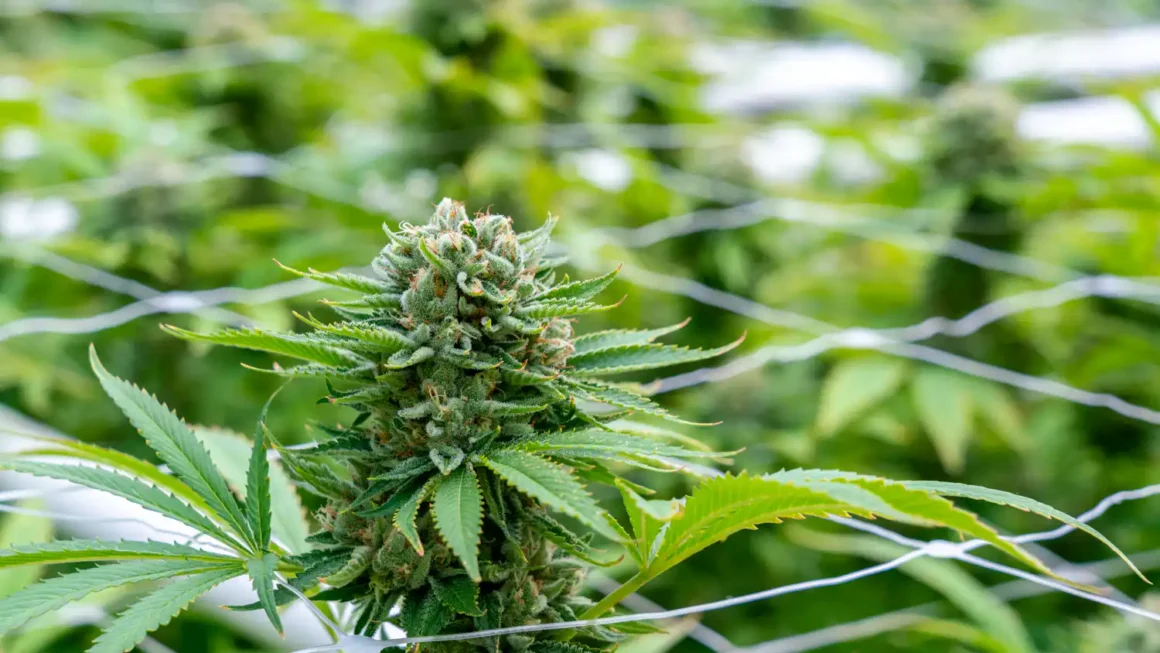
Purple Bin Laden Weed
Bam Margera was not, historically, a cannabis person.
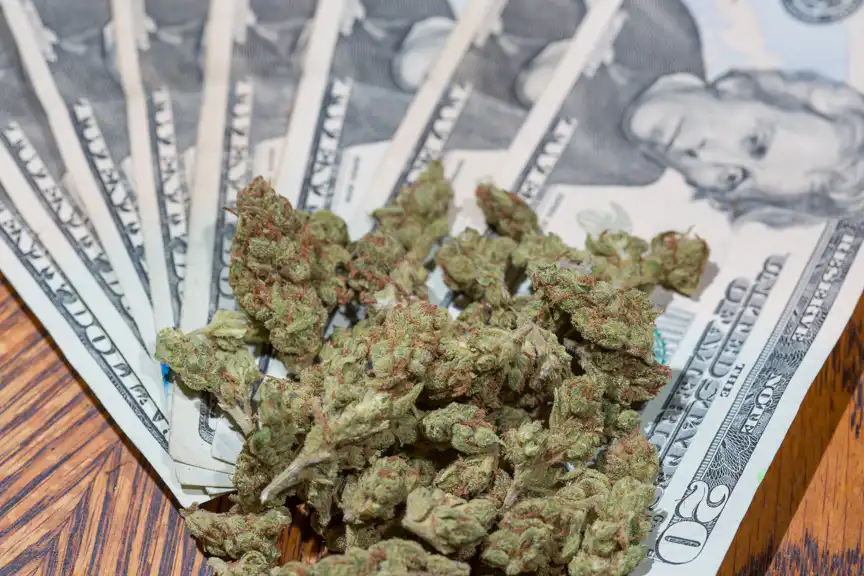
His first experience happened at 23, on the Steve O tour in Copenhagen. Someone offered him a hundred dollars to eat a hundred dollars worth of raw flower. He needed the money.
“I swallowed this shit and I just remember laughing my ass off for no reason,” he says. “And then I just stopped in a panic mode.”
He went back to his hotel room, wrote a list of everyone he loved because he thought he was dying, fell asleep on the bathroom sink and woke up 24 hours later, badly bruised. For the following week he survived on vanilla ice cream. Everything had a yellow tint.
He steered clear of cannabis after that. Then, years later, he ended up on Snoop Dogg’s tour bus in Petaluma. It wasn’t his idea to smoke, exactly, but when Snoop has taken eleven puffs off a joint and passes it to you, the social math is simple. Margera counted the puffs, took one and immediately went somewhere he did not want to be.
“Note to self,” he says. “No more Purple Bin Laden weed.”
He missed the whole show. He lay in a bush outside the tour bus and stared at the moon.

Even after that, the conclusion wasn’t simple. Cannabis didn’t agree with him — except when it did. The difference, it turned out, was context. At a nightclub one night, stoned and recognizable, he walked in and immediately felt surrounded.
“Everybody recognized me and I thought like they were like crows attacking me saying the word bam,” he says. “Bam, bam, bam. I’m like, I got to get the fuck out of here.”
A campfire in the woods with chill friends? Fine. A crowded nightclub with everyone in his face? Total shutdown. He knows the difference now. The plant didn’t change. The situation did.
Enter Dannii
Dannii Marie is Bam’s wife. She is also, by her own description, his business partner, stretch coach and personal trainer, and the person who — when they first got together — decided she was going to change his relationship with the plant, whether he liked it or not.


She’d been using cannabis daily since she was 16. Grew up in Charleston with a mother in medicine who normalized it at home. Arrived in adulthood without the stigma that had kept Bam away from it for years. When he came into her life still drinking, she saw the situation clearly.
“I hate alcohol and I hate drugs,” she told him. “Marijuana is not a drug. So if you want to do that, that’s great because I do it all day every day. Anything else is off limits. And you have a boyfriend called vodka, and if it touches your lips, you’re cheating.”
What followed, slowly, with gummies and a ten o’clock bedtime, was a different relationship with the plant. Not recreational. Not rebellious. Functional.
“I would stare at the ceiling till the sun came up with my racing ass thoughts,” he says. “And the weed gummies, or just a puff of weed, would help me completely go to bed.”
Two years sober. Bedtime at ten. Skating again.
The Part He Doesn’t Sanitize
Margera doesn’t trade in gentle euphemism for his past.

He stayed away from drugs and alcohol as a teenager because he had one goal: to become a professional skateboarder. That focus held. Then he made it, the money came, the cars piled up in the driveway. Two Lamborghinis, a Ferrari, a DeLorean, two Bentleys…
“I’ve run out of goals and wishes, man,” he says. “Now I’m just going to get fucked up.”
He did. Daily drinking. Cocaine. Adderall. He ended up in treatment on 18 different medications, half of them sleep-related. They made him sleepwalk. He knocked himself out five or six times in the same treatment center, each time a two-thousand-dollar ambulance ride he did not need.
“Pretty much all in a row,” he says.
Meanwhile, the one thing that had actually helped him sleep was off the table. That is the part that still frustrates Dannii.
“They can’t hit the bong,” she says. “We are so backwards.”
When the courts ordered Margera into rehab, she moved first. She got him a Pennsylvania medical card before he went in, thinking ahead about probation and what would happen if he tested positive. Then, at the facility, she ran into the same wall: the staff wanted to put him back on the same medication cycle that had been sending him into walls. She shut it down. He did 30 days clean of everything except cannabis.
The system, in her telling, had it exactly backwards. Alcohol is legal. The thing that helped him sleep is the thing they were trying to keep away from him.
Why The Body Needed This
Bam’s injuries are not theoretical.
Sixteen staples in his head. Eight broken ribs on one side, four on the other. Three broken feet, fifteen broken right wrists, eight broken left wrists, every finger, every toe. For years, alcohol muffled the pain and made it worse by morning. He’d wake up hurting worse than before, drink again to get through the day and run the whole cycle back.

The Bam THC roll-on broke that loop.
“With the THC and the CBD and the menthol and the lidocaine in these roll-ons,” he says, “it numbs it in such a healthy way that in like seconds you could go skating the day that you woke up and you can barely even limping to the fucking bathroom.”
What They’re Building
Bam THC launched earlier this year with that roll-on as its flagship: a lidocaine-based topical with CBD, THC and menthol, built around the simple premise that some bodies need serious relief and don’t want to smell like a dispensary while getting it. Flower, concentrates, gummies and pre-rolls are on the way. Dannii handles quality assurance on the inhalables and edibles, keeps a notebook rating each product and why, and worked with Bam closely on naming and packaging.

“A lot of other companies wanted to just put his name on something,” she says. “Which I would not allow.”
Manufacturing is handled by the SMAK’D team out of Miami, with over a decade in the industry. The strain names, No Safety Kush, Skull & Smoke and Punk Runtz among them, were designed by Bam and Dannii together.
In the interview, they talk over each other, wander into stories about Tommy Chong at a Comic-Con signing and Snoop wearing Bam’s custom sunglasses on stage that same night in Petaluma. At one point, Bam watches Dannii describe her testing process and says, unprompted: “Your passion for these products are seriously like my passion is skateboarding.”
“It’s fun because it helps both of us,” she says.
Dear Congress
Ask Margera why cannabis is still federally illegal and he goes full Bam.
“If everybody got along and behaved themselves and nobody did anything wrong, there would slowly be no more news. There would be no more helicopter chases, no more jails, no more tickets to give out. We need to have drunk motherfuckers fighting each other and getting arrested.”
She once sent him into a dispensary alone to pick something out. He emerged bewildered.
“Babe, there’s a lot of flavors in there now,” he reported back. “Do you want the kiwi strawberry birthday cake or the grape honeydew melon coconut maple nut crunch weeds?”
She did not want the grape honeydew melon coconut maple nut crunch weeds.
Dannii has the sharper version of the legalization argument. She helped Curaleaf intake patients in Florida when the state couldn’t process medical-card volume fast enough, standing at the front door helping elderly patients check in who had no idea what they were doing. She’s watched large operators move in and degrade the product since. She’s dumped dispensary flower that came out like oregano.
“Your street guy now has better weed than the dispensary,” she says.


The cultural inversion is something she finds genuinely bizarre. The skating world, where Bam built his entire identity, has always been cannabis-forward. The modeling world, where she built hers, still hides it. She’s stood outside venues in beautiful gowns, watching colleagues smoke cigarettes while she quietly does something the industry treats as far more scandalous. Her mother is a cardiologist.
“She’ll puff a Marlboro Red,” Dannii says. “Your heart doctors are smoking cigarettes and cannabis is not legal. I don’t understand it.”
She wants legalization but she also wants the plant left intact. The two things are not the same, and she knows it. Her pitch to Congress lands in one sentence: “Cannabis is a beautiful plant. Please do not destroy it.”
Seven Ceremonies
The recovery story doesn’t stop at gummies and bedtimes.
Margera has done seven ten-hour ceremonial sessions with a close friend, a shaman from Iran named Naveed. They start at five in the morning and end at five at night. The process involves a brew he describes as shiahuasca, a paste called harmala, “five burns on the skin filled with a frog oil called kambo” that makes his face swell and purges him completely, three mushrooms and rapé, “a tobacco blown up the nose to clear the sinuses.”
“If he wasn’t there to guide me, I’d probably lose my mind,” he says. “But he’s always right there, just eye contact. He doesn’t even have to speak.”
What comes up in the ceremonies, he says, is everything. Every decision, every regret, every road not taken, running on a loop until something settles. He describes the end of each session with unusual clarity: “Yes, I figured it out. That’s great.”

He says he’d only do it in a controlled ceremonial context. Not recreationally. Not casually. The structure matters.
“This one can’t be just tripping some mushrooms,” he says.
His shaman, he adds, has worked with heroin addicts, alcoholics, people with serious illness. He believes in it the same way he now believes in the gummy at ten o’clock and the roll-on before the skate park: not as magic, but as tools that work when approached with intention.
What The Brand Is, Really
Two people finishing each other’s sentences, genuinely excited, clearly building something that means something to them.
Margera speaks about addiction and self-destruction with the bluntness of someone who can no longer afford to romanticize it. He doesn’t sound polished. He doesn’t sound cured. He sounds like someone who knows exactly how bad things got, which is maybe why he takes the ten o’clock bedtime seriously now.
“He’s not going to go backwards just because we have a cannabis product,” Dannii says. “It’s actually helped him a lot.”
Bam put it differently.
Weed doesn’t lead to other drugs. His wife proved it with an apple.
Photos courtesy of Bam THC.