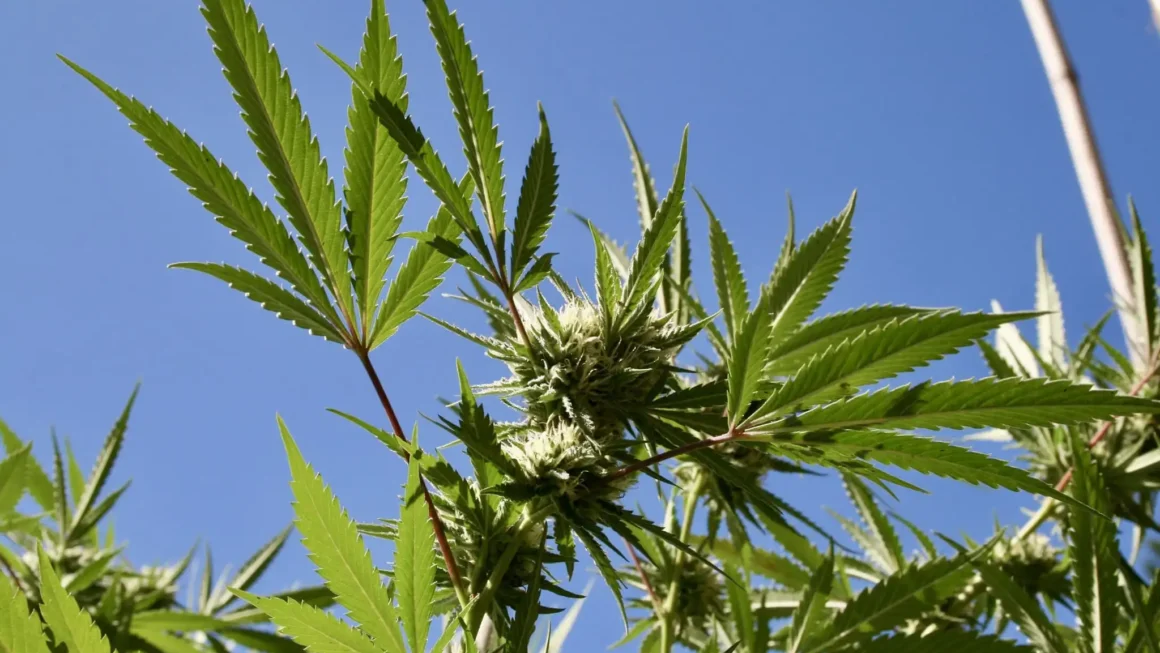
When the federal hemp ban hits on Dec. 11, it won’t wipe out the market everywhere. It will break it into islands, and they are forming almost exactly where legal cannabis does not exist.
In September, Toby Streett, founder of a Georgia online hemp retailer called Cbdeeme, sent High Times a 50-state law checker that sorts 450 combinations of state and cannabinoid by whether they can be sold or shipped, each one traced back to a statute, a regulation or a piece of agency guidance. His examples were the ordinary wreckage of a market built on a loophole: a 10-milligram gummy legal in one state and several times over the limit in the next, half a milligram in Connecticut deciding who was legally allowed to sell a product.
That map has an expiration date. On December 11 the federal definition of hemp narrows, and products above the new limit become marijuana under federal law from Maine to Hawaii. Streett told High Times that this would not flatten the differences between states, because the federal rules will operate alongside existing state laws.
Streett’s map points to something bigger. Hemp is heading toward a situation cannabis has lived with for years: a legal archipelago, where some people might keep the business going, at a moderate scale, to supply the states where hemp and hemp-derived products stay legal under state law. Some states will become disconnected islands, where these products keep circulating legally even though they are illegal under Washington’s rules and cannot legally cross state lines. Others will go dark. More interesting is the fact that, as far as I can tell, the islands will form almost exactly where legal cannabis does not exist.
The new line comes from Section 781 of the spending law that ended the longest government shutdown on record, in November 2025. It redefines hemp by total THC, THCA included, caps any finished product at 0.4 milligrams of total THC per container, and strips hemp status from cannabinoids made in a lab or converted from other cannabinoids. A second spending law, signed in September, delayed most of it to December 11, the same day federal funding runs out. In practice, the cap does most of the damage, as a standard 10-milligram THC seltzer holds 25 times the limit, and the U.S. Hemp Roundtable, an industry advocacy group, estimated that more than 95 percent of all hemp products fall outside the new definition, which makes them marijuana, a Schedule I substance, in every state alike. And it ends shipping across state lines, which is what turned hemp into a national business when the 2018 Farm Bill barred states from blocking hemp shipments. That protection reaches only what fits the federal definition, so from December 11 moving these products across a state line means moving a Schedule I drug, the condition licensed cannabis has always lived with.
The Hemp Ban, by the Numbers
- 0.4 mg: The new federal cap on total THC, THCA included, per container
- 25x: How far over that cap a standard 10 mg THC seltzer lands
- 95%+: Share of hemp products the U.S. Hemp Roundtable estimates fall outside the new definition
- 16 / 25 / 9: States that stay hemp islands, go dark or remain unclear, by High Times’ count
- 13 of 16: Hemp islands with no legal adult-use cannabis
One bud, two products
Federal law applies in every state, but it doesn’t rewrite state laws. Congress cannot order a state to make something a crime, and the Controlled Substances Act leaves state drug laws standing unless the two cannot both be obeyed. State-legal marijuana has lived in that gap since 2012, with 40 states running medical programs and 24 allowing adult use, largely free of federal enforcement. Hemp is about to move into that gray area.
Not to get philosophical, but when something is regulated this closely, it becomes hard to keep calling it one product. It is simpler to think of two: materially similar, often chemically identical, and entirely different in the eyes of the law and of the people paid to enforce it. A gummy on a Houston shelf on December 12 will be both at once, marijuana to a federal agent and hemp to a Texas inspector, and which of the two it is depends only on whose law is being read. That double reading is the key to what comes next, because it doesn’t stop at the product. The businesses that make and sell the gummy, and the places where it is made and sold, are also legal and illegal at once, depending on whose law is being read. Schrödinger’s edible.
After the 2018 Farm Bill, a bunch of state legislatures wrote hemp into their own statutes. Some copied the federal language out in their own words, while others simply pointed to the federal statute. The second group will change on December 11 whether anyone in the statehouse wants it or not. Wisconsin’s legislative analysts concluded that their state wrote the first kind. Other states have not waited, and their dates crowd the fall calendar: Illinois moved products above 0.4 milligrams to licensed dispensaries on November 12, New Jersey wrote the cap into its own law in January, Missouri tied its change to the federal date, and Rhode Island adopts the federal definition on December 11 with no transition period. There is also a third route, through clauses in some state drug laws that bring federal scheduling decisions into state law. That’s what happens in Texas.

Texas, always something special
Texas has a fully functioning, multibillion-dollar hemp industry, and its rules are quite tight. Since July 31 the state health department has treated delta-8, delta-10 and their relatives as controlled substances, sparing only the traces the plant makes on its own. What is left on the shelves is delta-9 THC, which Texas limits by concentration rather than by dose: no more than 0.3 percent of a product’s dry weight. A heavy gummy can stay under that percentage and still carry a serious dose.
“A gummy on a Houston shelf on December 12 will be both at once, marijuana to a federal agent and hemp to a Texas inspector.”
To see what happens on December 12, it helps to know that Texas hemp lives under two sets of rules. The first belongs to the health department, which licenses sellers and, since March, tests products for total THC, THCA included. The second is the criminal law, and that one has not moved since 2019: selling a hemp product is a crime only if its delta-9 THC goes above 0.3 percent, a test that ignores THCA and that only the Legislature can change, as the lawyers at Vicente LLP explain. A product under that line can violate the health department’s rules and still fall outside that criminal offense.
Neither set of rules points to the federal statute. The Texas definition of hemp, in the state agriculture code, spells out the old delta-9 test in its own words, so on December 12 Texas law and federal law will directly contradict each other, as Marijuana Moment reported. Governor Greg Abbott vetoed a legislative ban in June 2025 and ordered regulation instead, and the Legislature does not meet again until January 2027. In the meantime, a senior health official has admitted that Texas cannot tell hemp THC made in Texas from marijuana brought in from out of state.
There is one way Washington could reach into Texas law sooner. A clause in the Texas drug law copies federal changes to the drug schedules into the state’s own, unless the health commissioner objects within 30 days. That is how delta-8 became illegal in Texas. In 2020 the DEA published a rule bringing its schedules in line with the Farm Bill, which loosened federal control over THCs like delta-8. The commissioner objected, so Texas kept them controlled, and this May the state Supreme Court held that only the Legislature could overturn her.
This time, though, the clause may never be triggered. What Congress changed is the definition of hemp, which sits in agricultural law, and the federal drug schedules simply point to that definition, so no new scheduling order gets published for Texas to copy. Wisconsin’s legislative analysts read the same kind of clause in their state that way. And even if it did fire, it would only touch the schedules, while criminal liability for THC in Texas turns on the 0.3 percent delta-9 test, as Vicente explains. For now, the state alcohol commission, which licenses many of the stores that sell THC drinks, has said it will adjust its operations to comply with all applicable laws, without saying which law it means.
How We Got Here, and What Comes Next
- November 2025: Section 781 of the spending law that ended the shutdown redefines hemp and caps products at 0.4 mg of total THC per container.
- January 2026: New Jersey writes the 0.4 mg cap into state law. Tennessee moves hemp under its Alcoholic Beverage Commission.
- March 2026: Ohio limits intoxicating hemp products to dispensaries. Texas begins testing for total THC.
- April 28, 2026: State-licensed medical marijuana moves to Schedule III.
- September 2026: A second spending law delays most of the federal change to Dec. 11.
- Nov. 12, 2026: Illinois moves products above 0.4 mg into licensed dispensaries.
- Dec. 11, 2026: The federal definition takes effect. Products above the cap become marijuana under federal law.
- January 2027: The Texas Legislature returns.
- July 2027: Virginia’s adult-use stores are set to open.
Who keeps the market
By my count, based on a review of each state’s hemp statutes, regulations and agency guidance as they stand today, 16 states will be hemp islands after December 11, where products above the federal cap keep circulating legally under state law. Twenty-five go dark, meaning products above the federal cap lose their hemp retail channel under state law as well, and nine are still unclear. Seven of those calls, for Alabama, Kansas, Maine, Oklahoma, South Carolina, Virginia and West Virginia, are provisional. Thirteen of the 16 islands have no legal adult-use cannabis, while 17 of the 24 states that do have it go dark for these products.

Graphic: High Times
In states with legal cannabis, the federal change mostly hands the hemp market to the people who already hold cannabis licenses. Illinois moved products above 0.4 milligrams into its dispensaries on November 12, Ohio has largely kept them there since March, and Delaware opened a channel for hemp drinks in liquor and cannabis stores on October 21 that closes on its own when the federal definition changes. Virginia caps hemp at 2 milligrams per package while its adult-use stores wait to open next July.
The licensed industry has made its position clear: when Congress gave the hemp trade an extra month, the American Trade Association for Cannabis and Hemp said it was disappointed, and parts of the alcohol and marijuana industries support the ban, with regulation to come later.
In states without legal cannabis, hemp is the only legal source of THC, and several of them seem to want to keep it that way. Tennessee moved hemp under its Alcoholic Beverage Commission in January, with a three-tier chain of suppliers, wholesalers and retailers copied from alcohol and a wholesale tax of two cents per milligram of hemp-derived cannabinoid on most products and $4.40 per gallon on drinks. In Kentucky, the chair of the committee that heard the industry in October said hemp drinks should be regulated “exactly like the bourbon industry.”
| State | After Dec. 11 | How it works |
|---|---|---|
| Texas | Island | State health department licenses sellers; criminal law still uses the old 0.3% delta-9 test |
| Tennessee | Island | Regulated by the Alcoholic Beverage Commission with a three-tier system copied from alcohol |
| Virginia | Island | Hemp capped at 2 mg per package while adult-use stores wait to open |
| Indiana | Island | No product regulator after a ban died in February |
| North Carolina | Island | No product regulator; the House speaker calls it a market with “basically no rules” |
| Illinois | Dark | Products above 0.4 mg moved to licensed dispensaries on Nov. 12 |
| Ohio | Dark | Intoxicating hemp products largely limited to dispensaries since March |
| Rhode Island | Dark | Adopts the federal definition on Dec. 11 with no transition period |
The alcohol trade has drawn its own conclusion nationally: the Wine & Spirits Wholesalers of America and a retail coalition that includes Total Wine & More are backing a federal bill that would exempt hemp drinks from the ban, cap them at 5 milligrams per serving and tax them at eight cents per milligram. Not every island is following the alcohol model, though, and some have no product regulator at all. Indiana’s legislature let a ban die in February, and its sponsor, Senator Aaron Freeman, warned that his state would join the places that ignore federal law: “Indiana is going to be in that category,” he said. North Carolina’s House Speaker, Destin Hall, described his state’s market as one with “basically no rules.”
Keeping these products legal at the state level also means taking on the conditions the cannabis industry has worked under for a decade. Minnesota’s cannabis office has warned its hemp licensees to expect thin access to banks, limits on interstate commerce and on federal tax deductions, and fewer companies willing to process their sales, and Square has already told its sellers to clear hemp and CBD items from their catalogs. A business selling a Schedule I drug cannot deduct wages, rent or utilities from its federal taxes. State-licensed medical operators began shedding that burden for qualifying activity on April 28, when the federal government rescheduled marijuana under a state medical license to Schedule III.
“Indiana is going to be in that category.”
Indiana state Sen. Aaron Freeman, on states that will ignore the federal hemp ban
Cannabis regulation in the United States has piled up a long record of failed experiments, and the gas-station THC market the 2018 Farm Bill let loose may prove one of the loudest. It is far from the only one. If you are in this business, expect more.
This article is not legal advice. State and federal hemp laws are changing quickly. The classifications above reflect state statutes, regulations and agency guidance as of November 2026, and some are provisional.