FBI agents received specific guidance prohibiting them investing in marijuana companies—but not necessarily those that make hemp or CBD products—according to a 2022 memo that the agency released last week for reasons that are unclear.
The allowance for hemp investments and work contains an exception blocking involvement with companies whose packaging “promotes marijuana”—including any depiction of a cannabis leaf, however.
The now-unclassified policy directive also details restrictions for agents who work or volunteer outside their roles at FBI, stipulating that they could not take employment opportunities “with any company cultivating, processing, or distributing marijuana, regardless of the legal status of marijuana under local, state, tribal or foreign law.”
For both the investment and employment guidance, there are carve-outs—with certain caveats—for products and businesses that deal with hemp or the non-intoxicating cannabinoid CBD, which were federally legalized under the 2018 Farm Bill during President Donald Trump’s first term.
The document states that FBI workers can “invest, without restriction, in companies that maintain a financial interest in the CBD industry” unless that interest involves CBD products containing more than 0.3 percent THC by dry weight, which is how federal law currently distinguishes between illegal marijuana and legal hemp. Agents also can’t invest in CBD businesses or products that promote marijuana for medical or recreational purposes.
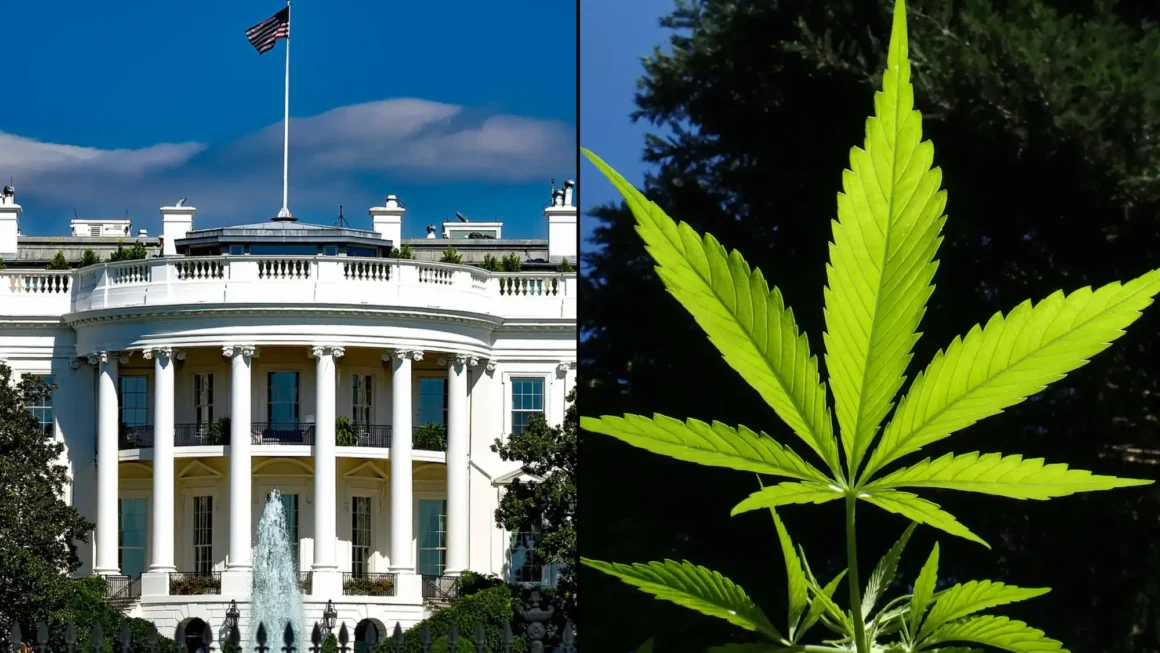
“The determination of whether or not a product promotes marijuana depends on various circumstances, but may be indicated by the product (or advertising for the product) displaying words, images, or associations with marijuana. For example, a product depicting a marijuana leaf on its label is considered promotion of marijuana, and would therefore be impermissible. Employees must consult their [chief division counsel] or the [Office of Integrity and Compliance] to determine whether the company is promoting marijuana.”
Under the policy directive, FBI workers are also “prohibited from engaging in outside employment (or any other outside activity [such as volunteering]) with any company cultivating, processing, or distributing marijuana, regardless of the legal status of marijuana under local, state, tribal, or foreign law.”
FBI treats marijuana differently from hemp-derived CBD given its legalization under federal law. Workers who make a request to work or volunteer at a business associated with the manufacturing or distribution of cannabidiol products would need to use a specific reporting tool to obtain approval.
“Approving authorities must consider such requests on a case-by-case basis and must deny any request to engage in outside employment (or an outside activity) that could create an appearance of violating the law or violating ethical standards, or is otherwise incompatible with maintaining a security clearance. For example, an FBI employee’s request to work for or volunteer with a company producing a drink that contains 0.3 percent or less CBD, but depicts a marijuana leaf on the label, must be denied due to the appearance of promoting illegal drug use.”
That component of the directive appears to include a key error by referencing drinks containing up to 0.3 percent of CBD. That trace percentage is typically associated with THC, not CBD, when talking about federal hemp and marijuana policy. Hemp drinks with more than 0.3 percent CBD would typically be considered federally legal, unless they also happened to contain more than 0.3 percent THC.
Marijuana Moment reached out to FBI for comment, but a representative was not immediately available.
FBI also said in the guidance that workers’ requests to “work at a grocery store that sells products containing CBD (amongst other unrelated products) may be approved if all other applicable criteria” are met.
Workers who violate the policy “may be subject to disciplinary or administrative action, including suspension or revocation of security clearance,” the agency said.
Again, it’s unclear why FBI declassified this guidance at this point in time, or whether it remains in effect as written. But it’s possible it may need to be revisited in the near future given that the federal definition of hemp and its derivatives are set to become significantly more restrictive, effectively banning all consumable cannabinoid products, under a law Trump signed last year that takes effect in November.
Also in 2022, meanwhile, FBI announced that the recent use of marijuana—and even CBD—automatically disqualified people from working at the federal agency. People interested in joining FBI must have abstained from consuming cannabinoids, including the non-intoxicating kind, for at least a year before submitting an application.
That guidance didn’t include mention of another marijuana employment rule that FBI previously instituted that rendered applicants ineligible for a job at the agency if they’ve used marijuana more than 24 times after turning 18.
In general, FBI’s gradual loosening of its marijuana employment policies has been interpreted as a more practical decision, rather one that necessarily reflects shifting opinions on cannabis within the agency.
Then-FBI Director James Comey suggested in 2014 that he wanted to loosen the agency’s employment policies as it concerns marijuana, as potential skilled workers were being passed over due to the requirement.
Marijuana Moment is made possible with support from readers. If you rely on our cannabis advocacy journalism to stay informed, please consider a monthly Patreon pledge.