


Fela Kuti smoked ritually and said so publicly. The Nigerian state used it to call his politics ridiculous. Ahead of his Rock and Roll Hall of Fame induction, Seun and Femi Kuti on what the plant meant to their father, and what it cost him.
Sometimes it takes a while to get there, but in the end, at last, there is a reward. This November, when the lights come up at the Peacock Theater in Los Angeles, Fela Anikulapo Kuti‘s name will be etched in fire into the Rock and Roll Hall of Fame. Beyond the bronze of history and the pageantry of the showbiz industry, the news carries an undeniable poetic justice: honored with the Early Influence Award, he is the first solo African artist to receive the distinction, a milestone that follows the Lifetime Achievement Award, a sort of honorary Grammy, that the Recording Academy granted him and that his children accepted in January.
For a man who made dissent his primary language and the Kalakuta Republic (his micronation in his own home!) his sovereign stronghold, these institutional laurels arrive at a time when the Western world seems to have finally figured out that Afrobeat was not a passing fad, but one of the world’s foundational musical forms. The paradox of honoring someone whom those in power relentlessly persecuted finds its clearest interpretation today in the voices of his own heirs, Seun and Femi Kuti, who have taken on the task of safeguarding their father’s legacy, an artist who never shied away from the political weight of his work, nor from his particular relationship with cannabis culture.
But no: the academies’ belated recognition does not alter the fact that music has always swayed between rhythmic genius and social agitation. For Seun Kuti, the younger of the brothers, the news feels like an act of justice long overdue: “I feel like the recognition is long overdue, for sure, because Afrobeat has been around for a while, you know, and it’s one of the world’s foremost sounds, so it’s been a long time coming, knowing that throughout Fela’s life he never got any kind of establishment recognition.”
At the same time, the musician adds that the current landscape feels like an unmistakable sign of the times, a symptom that contemporary audiences are not only looking for empty entertainment, but that “people also want substance with the music” and demand “to be educated with art.” In a complementary vein, but with much drier pragmatism, Femi Kuti prefers to strip the issue of any mysticism: “I don’t think it’s long overdue. I think it took as long as it was necessary. Don’t forget, it’s not an African award, it’s an American award. It probably took that amount of time for them to be totally convinced.” By that logic, the delay simply reflects a foreign process of deliberation.
“He Smoked Ritually”
Within the mythology of Fela Kuti, cannabis was never merely a recreational element or a cliché of artistic bohemia, but rather became a foundational pillar of his creative framework and, also, a tool of cultural resistance. At a time when global prohibition shaped common sense (what else is new, sound familiar?), the leader of Nigerian music was already viewing the plant through a medical and ritual lens.

In that sense, Seun clearly recalls the sacred dimension that surrounded weed use in everyday family life, defining his father’s practice through a strong, let’s say, mystical connection: “I know he smoked ritually, Fela smoked a lot, you know, and that was his thing. For him [it] was also a spiritual thing of connecting when he was going on, as he called it, astral travel.” If that close bond between African music icon and the plant had to be summed up, Femi’s answer is direct: “He loved it.”
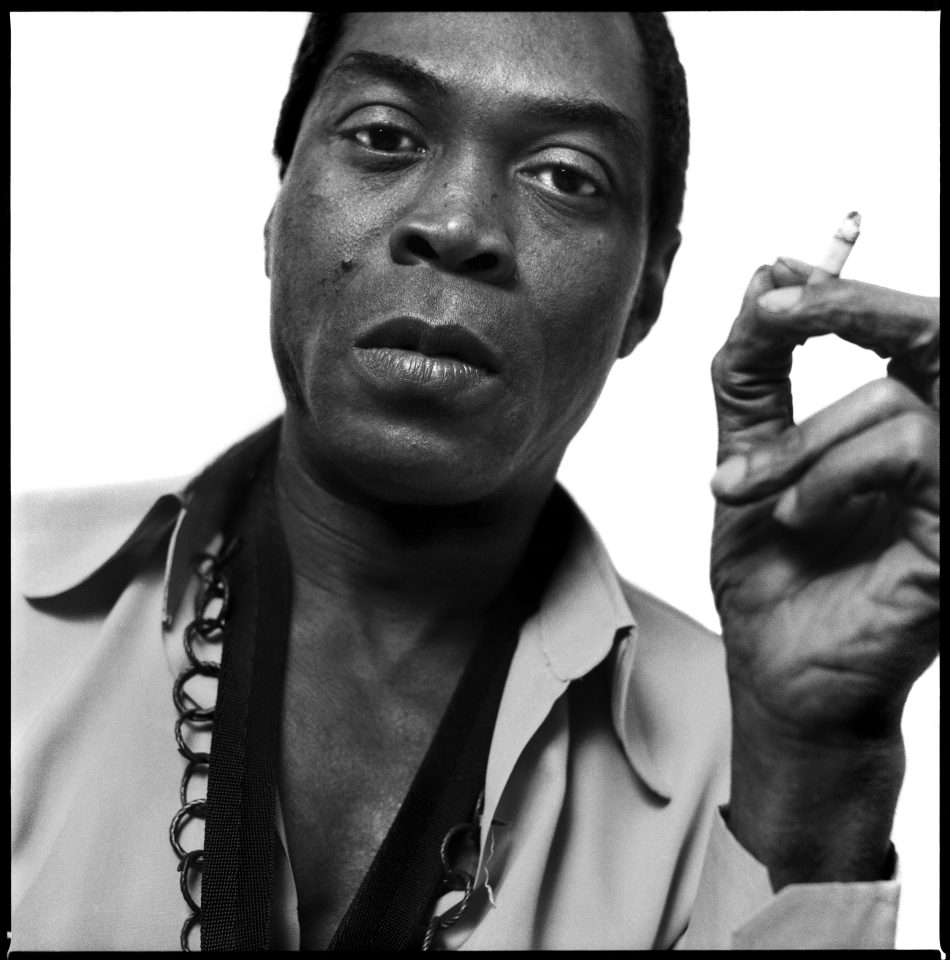
This mystical vision directly intersected with an explicit defense of the herb’s beneficial properties, anticipating the current wave of legalization and medical use in the West by several decades. Femi Kuti explains that his father’s position on substances was crystal clear and was expressed openly, both in the privacy of his home and at the microphone during his public appearances.
In fact, his father often explained that cannabis helped him in different areas of his life, while at the same time drawing a line when it came to hard drugs: “He warned us about taking hard drugs. He was very against hard drugs. He said hard drugs kill the sexual drive and cannabis helped him sexually and musically. He said this not just to us, but he always said this openly. It was a known fact that this was his view,” Femi says.
The Pretext
However, this transparent and pioneering relationship with the plant quickly became the perfect pretext for the Nigerian state’s repressive apparatus. From there, they chipped away at his message and conspired against his work. Successive military dictatorships and civilian governments found in cannabis use the ideal excuse to impose censorship and imprisonment that, at their core, sought to silence an incendiary political message. The legend’s sons lived through this constant tension between their father’s individual freedom and state persecution with a deep sense of confusion in their youth.
Femi recalls the outrage of watching the local establishment exalt major figures in American music and film, who openly used all kinds of substances, as cultural heroes, while in Nigeria the plant was used as a hammer against dissent: “I think this was very difficult for us… For me it was always confusing, because many of the great American artists, musicians, actors were all smoking or even taking hard drugs and they were all seen as heroes back here. Bob Marley, James Brown, name them,” Femi explains.
This tragic and magnetic daily life inside their communal bunker was preserved for posterity in seminal works such as the documentary Fela Kuti: Music Is the Weapon (1982), filmed within the walls of Kalakuta itself, or the exhaustive historical overview offered by Finding Fela! (2014), where the archival footage brings the true cost of his insurrection to light.

Two Sons, Two Answers
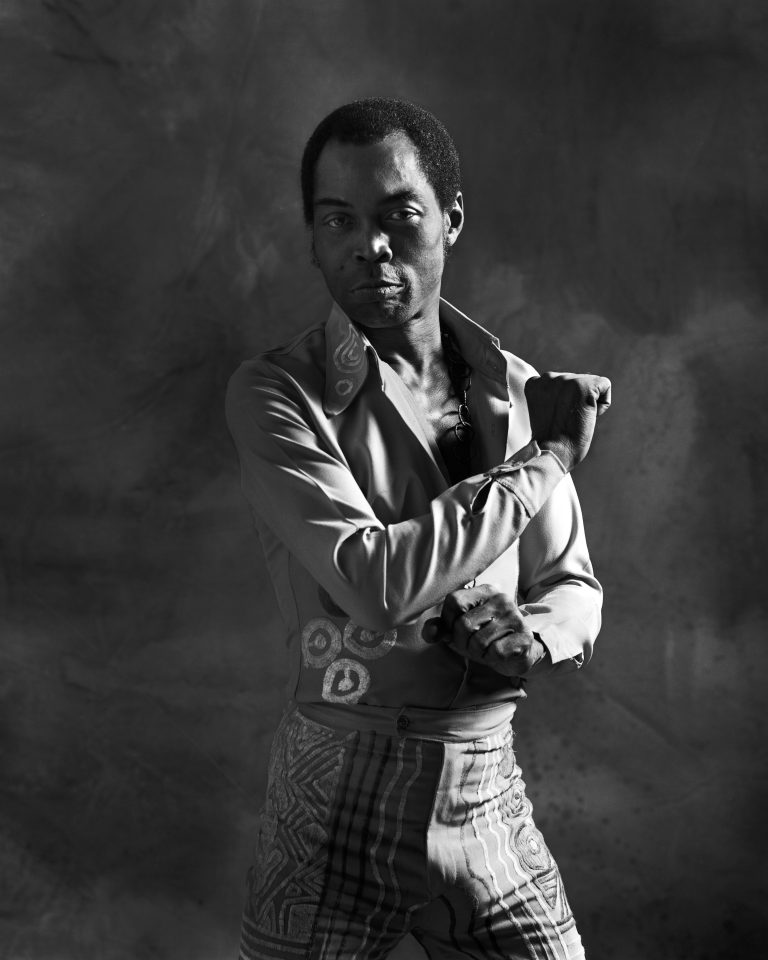
Over time, the weight of that stigma and the lessons learned from persecution shaped the two brothers’ adulthoods and subsequent professional development in very different ways. Femi Kuti, for one, made the drastic decision to stop smoking entirely after having smoked in his youth. His decision was not driven by morality, but by a strategy of purely political self-defense: “I didn’t want people to say cannabis was the reason for my political view, because they used it as a weapon against my father. They said because he was smoking he had… they called it ‘ridiculous ideas.’ Meanwhile, he was speaking the truth. He was speaking our reality.”
“They said because he was smoking he had… they called it ‘ridiculous ideas.’ Meanwhile, he was speaking the truth.”
Femi Kuti
By contrast, Seun Kuti integrated the plant into his creative process in a way that evokes his father’s legacy, although adapted to the demands of maturity. The younger member of the dynasty sees cannabis as a fundamental ally in his meditation process: “I would say cannabis has always been a great companion in my own meditative process, and trying to relate to my own subconscious, and enhancing my understanding, to make my music and things like that.”
Nevertheless, although he admits that over the years he has found it increasingly difficult to smoke during technical performance sessions in the studio or onstage, the plant still plays a significant role in the earliest stage of his work, where ideas begin to develop before becoming finished musical compositions.
The upcoming November ceremony will finally settle a debate that had already been settled long ago in the world’s countercultural music circles. Fela Kuti loved the plant because he understood it as part of a bodily and mental sovereignty that the system tried to break. Here, now, through the intertwined testimony of his sons, stands the true triumph of the king of Afrobeat, which lies not in receiving a statuette or securing a place in a museum, but in the survival of a family fire that continues to use music as a tool for popular education and cannabis as a banner of freedom, freedom, freedom.
Cover photo by Ian Watts, via Shore Fire Media


