A coalition of Ohio breweries are rallying residents to put pressure on their lawmakers to override the governor and give business until the end of the year to keep selling hemp-derived THC beverages as the legislature intended when they delivered a cannabis bill to his desk.
While the House and Senate passed legislation last year to effectively ban the consumable cannabinoid market, it was sent to Gov. Mike DeWine (R) with language that would have carved out a temporary exception for hemp beverages, making it so those products could continue to be sold through the end of 2026. But when the governor signed SB 56, which also places new restrictions on the state’s voter-approved marijuana law, he used his power to line-item veto the cannabis drinks provision.
Consequently, all hemp THC products, including beverages, are unlawful to market in Ohio as of last week. Now breweries across the state, including those that incorporated hemp drinks into their menu, are hoping to get lawmakers to override the veto.
“We’ve been working with our politicians over the past few months and thought we had a really good, solid bill that was safe, that was endorsed by many on both sides of the aisle, and, unfortunately, that went to veto by the governor,” Brent Zimmerman, CEO of Saucy Brew Works, said in a video on Tuesday. “So I’m here today pleading that you all can help us.”
Saucy is one of eight Ohio breweries that are organizing the campaign to keep hemp beverages on the market as the legislature intended. And so far, the businesses have seen an outpouring of public support, with thousands using an online form that sends a message to the their own lawmakers, as well as the House speaker and Senate president, urging them to restore THC drink protections included in SB 56.
“We expected strong support, but the response from Ohioans has exceeded every expectation,” Zimmer said in a press release. “Surpassing 6,000 supporters in less than 24 hours shows just how important this issue is—not only for our industry, but for consumers across the state who want safe, regulated access.”
But the prospects of a veto override are uncertain, with House Speaker Matt Huffman (R) telling cleveland.com that “we have to have 60 people do that in our caucus,” and an informal whip count puts the current number of likely “yes” votes to override around 30 “so I don’t think that it would likely happen in the House.”
“But, you know, we really wouldn’t do serious consideration unless the Senate did that,” he added.
While reversing the veto itself would only push back the timeline until hemp beverages would be banned, that delay could give stakeholders more time to work with the legislature to develop a long-term solution that regulates, rather than outright prohibits, THC drinks. Whether there’s an appetite among lawmakers to take that additional step in unclear.
Another consideration for hemp businesses and state legislators is how Ohio’s hemp market could be impacted by a federal policy change set to take effect in November that would redefine the crop in a way that stakeholders say would effectively eliminate the marketplace. Several states has preemptively enacted hemp bans in response, though there are also efforts in Congress to delay the pending federal recriminalization of hemp THC products.
Back in Ohio, an attempt to put a referendum on the ballot to block restrictive marijuana and hemp laws enacted under SB 56 failed to gather enough signatures by a deadline earlier this month. State officials have also recently defended the governor’s line-item veto on hemp beverages after a brewer filed a lawsuit challenging the policy.
The governor separately stirred controversy last month after telling critics of the law rolling back the state’s marijuana market and criminalizing intoxicating hemp products to stop “whining” and instead “be happy with their victory at the polls.”
When the governor said that “proponents” of the referendum should take the win and accept the policy changes that are being implemented under SB 56, he wasn’t necessarily referring to the broader marijuana industry, as many stakeholders support reining in the consumable hemp market.
—
Marijuana Moment is tracking hundreds of cannabis, psychedelics and drug policy bills in state legislatures and Congress this year. Patreon supporters pledging at least $25/month get access to our interactive maps, charts and hearing calendar so they don’t miss any developments.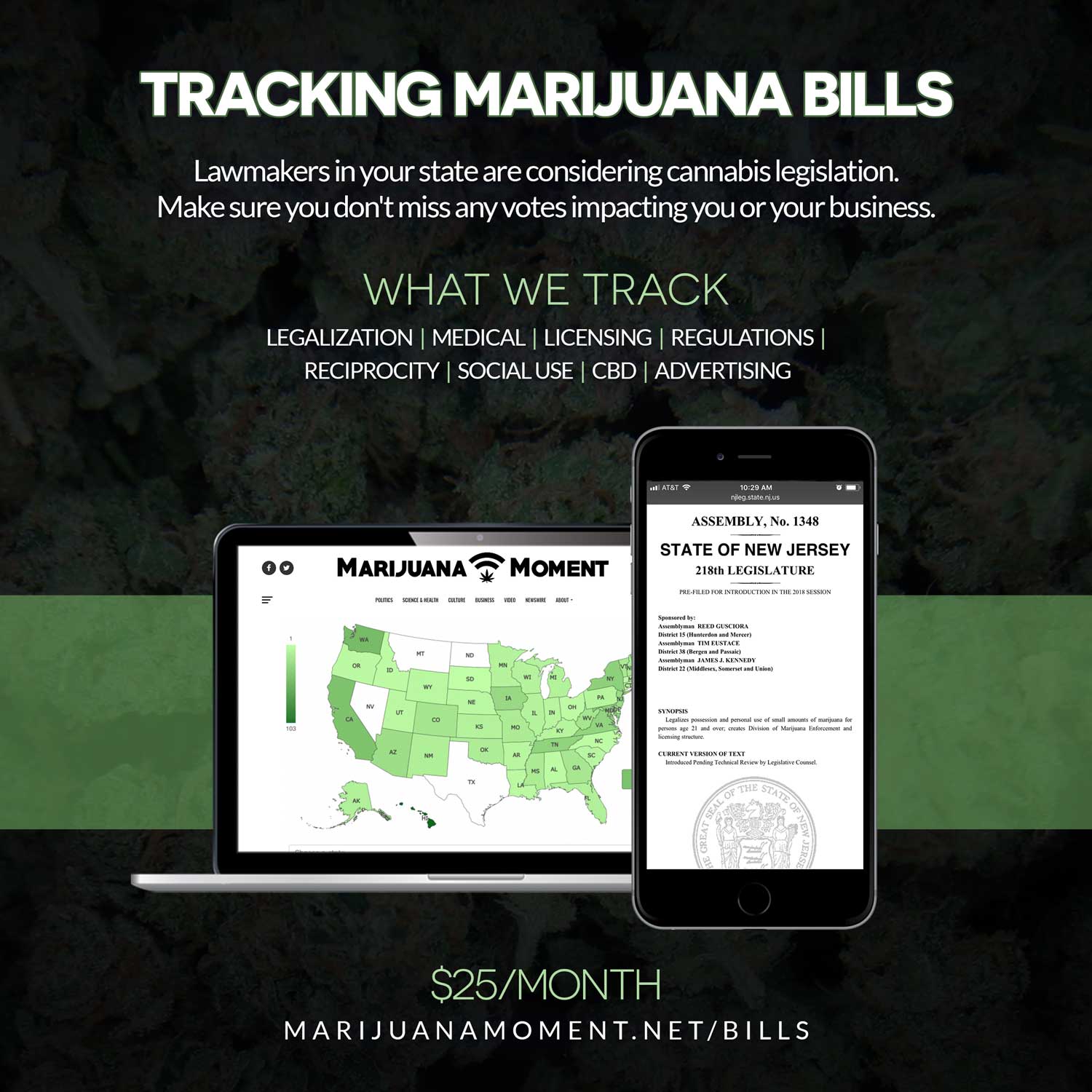
Learn more about our marijuana bill tracker and become a supporter on Patreon to get access.
—
In September, the Ohio Department of Cannabis Control (DCC) filed proposed rules to build upon the state’s marijuana legalization law, laying out plans to update regulations on labeling and packaging requirements.
Ohio retailers sold more than $1 billion worth of legal marijuana products in 2025, according to data from the state Department of Commerce (DOC).
Last March, a survey of 38 municipalities by the Ohio State University’s (OSU) Moritz College of Law found that local leaders were “unequivocally opposed” to earlier proposals that would have stripped the planned funding.
Meanwhile in Ohio, adults as of June are able to buy more than double the amount of marijuana than they were under previous limits, with state officials determining that the market can sustainably supply both medical cannabis patients and adult consumers.
Marijuana Moment is made possible with support from readers. If you rely on our cannabis advocacy journalism to stay informed, please consider a monthly Patreon pledge.