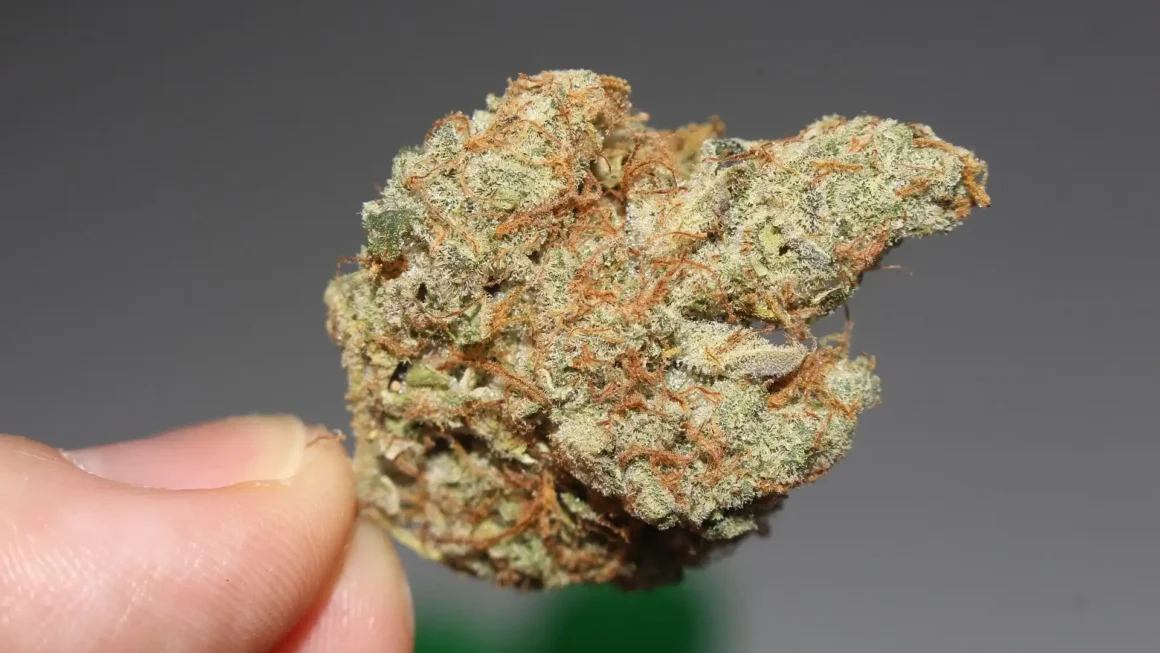
On the night of Maha Shivaratri, cannabis smoke rises over Pashupatinath as it has for centuries. Nepal sold hashish under government license until 1973, when Washington leaned on Kathmandu and the shops closed. Activist Hemant Shahi and Ed Rosenthal on the fight to give the plant back to the god it belongs to.
On the steps of Pashupatinath, the air isn’t just something you breathe: it’s something you feel. A dense mix of sandalwood, burnt flesh from funeral pyres, and the resinous sweetness of Shiva Buti hangs in the air. In the heart of Kathmandu, during the night of Maha Shivaratri, the great mystical wedding between consciousness and creation, cannabis doesn’t appear as a “trip,” but rather expands like a sacramental bridge. And while devotees seek Aananda (supreme bliss), modern laws, inherited from foreign pressures that have nothing to do with gods, faith, or anything at all related to this land, attempt to blow up a bridge that encapsulates thousands of years of history.
Hemant Shahi wasn’t always here. Like many others, he pursued the entrepreneurial dream in the concrete jungle of New York. There, he witnessed firsthand how the cannabis industry emerged from the shadows to become a legal, meticulously packaged behemoth. But upon returning to his roots in Nepal, the puzzle finally fell into place.

“In New York the cannabis industry emerged from the shadows and became legal. But reconnecting with my Nepalese heritage of Pashupatinath Temple and witnessing traditions around Maha Shivaratri reframed my understanding,” Hemant recounts with the conviction of someone who has seen the light at the end of the tunnel. For him, cannabis in the West is often about escape. And, in Nepal (his Nepal), it is about encounter. “The plant wasn’t something to escape from, it was something to align through. It became less about what it does to you and more about how you approach it,” he explains.

Since 2022, Hemant has led Re-Legalize Nepal and the global Free the Plant movement. From there, he not only advocates for legalization but also proposes a crusade for cultural and cognitive sovereignty. Shahi maintains that the current prohibition is not a Nepalese product but a toxic import from the War on Drugs of the 1970s. One more, and counting…
Thousands of kilometers away, but on the same wavelength, the voice of a legend emerges: Ed Rosenthal. The “Guru of Ganja,” a man who has dedicated his life to understanding botany from a place of freedom, puts his finger on the religious wound. For Ed, prohibition is not only a political mistake but a true lack of respect for the Hindu pantheon.
“It is an insult to Shiva that India, and by extension Nepal, only legally permits the use of inferior quality cannabis products,” Rosenthal declares. He is pointing at a contradiction written into Indian law, where bhang (the infused milk drink) survives because the statute exempts the leaves, while ganja (the flower) is criminalized. Nepal’s version is stranger still. The Narcotic Drugs (Control) Act of 1976 grants no such exemption to anything. What happens on the steps of Pashupatinath every Shivaratri, in full view of the police, is not a legal carve-out. It is a country looking the other way at its own god.
Rosenthal is emphatic on this point: “Cannabis has long played a role in Indian religious traditions, particularly in connection with Shiva and festivals such as Holi and Shivaratri. While bhang remains legal, the continued prohibition of ganja forces traditional users into unsafe, unregulated markets. Re-legalization would acknowledge cultural reality rather than deny it.”
According to Hemant, for the average young Nepali, this contradiction is a mental short circuit. How can what the Adiyogi (the first guru) himself uses to “sustain” the universe be illegal in the land of Shiva? Shahi explains that this disconnect creates a powerful “cultural counter-narrative.” Young people see in Shiva’s iconography a tool for healing and connection, not a vice. “Without awareness, it’s just consumption,” Hemant adds. “The plant is just one of the keys towards the ultimate bliss, aananda,” he continues.
But the path to that key is fraught with bureaucratic hurdles. Paradoxically, Nepal was a hippie paradise in the 1960s, with government-licensed hashish shops on Freak Street and all that jazz. Then, in July 1973, under pressure from Washington and the wider international community, Kathmandu revoked every cannabis license in the country. The shops closed overnight. Three years later the Narcotic Drugs (Control) Act made the ban permanent. Today, although there are motions in parliament to regulate the medicinal and industrial use of cannabis, progress in that area is quite slow. The problem is global and stems from the loss of the sacred.
Hemant Shahi is clear that it’s not about competing with the large cannabis corporations in the United States or Canada. In fact, if we’re being honest, Nepal already won that race centuries ago. “We won’t be competing with global corporations but will already be ahead of them because of our historical ties with cannabis,” he asserts. His vision includes protecting local genetics and ancestral practices. Ultimately, this is a battle for a nation’s DNA. For all that lay dormant long before.


While the bureaucracies and laws of Kathmandu somersault and perform all sorts of acrobatics, Shivaratri, which is always celebrated on the fourteenth night of the new moon of the month of Phalguna (between late February and early March), stands as a doorway. The use of Shiva Buti (literally “Shiva’s Herb”) represents a transition from the mundane to the mystical, a way to quiet the mind in a world that never stops shouting. It is an act of discipline, not of lack of control. “In the presence of Shiva, cannabis isn’t used to escape, it’s used to arrive,” he defines with surgical precision. It is what the South Korean philosopher Byung-Chul Han describes as the need to recover the contemplative life: silence as a condition for the soul to open itself up to the world.
And this is where Hemant gets confessional, lowering the activist’s guard to reveal the devotee: “On a personal level, it feels like a reset of consciousness. A night where the veil between the physical and the spiritual thins, where staying awake isn’t just about ritual, but about awareness witnessing your thoughts, your patterns, your karma in real time… It helps me connect to the cosmic Wi-Fi, something beyond words. Not every answer comes as a thought; sometimes it’s just a feeling of clarity, of being exactly where I need to be. It reminds me that healing isn’t something you chase, it’s something you allow.”
This scenario was astutely captured by the master Antonio Escohotado in the pages of his bible, A General History of Drugs, when he said, “From my skin inward begins my exclusive jurisdiction.” That inner sovereignty is what you breathe in at Pashupatinath, where cannabis slows the ego and allows for a deep immersion in prayer.
In that sense, the message to political power is simple yet devastating: “Re-legalize cannabis in Nepal and rejuvenate our historical, spiritual and cultural recognition in the global platform,” Shahi pleads. Meanwhile, Nepalese people know that the plant is a gift. And that prohibiting a gift from the gods is, in fact, a tremendous folly that belongs strictly to humans. Meanwhile, at the Temple of Pashupatinath, the wisps of smoke continue to rise, ignoring borders, laws, and time. Because the spirit is not legislated, but experienced. Namaste, plants.

Related Posts
Missouri Marijuana Officials Announce Recall Of Pre-Rolled Joints Following Mold Testing Results
25 Years Of Drug Decriminalization In Portugal Shows Importance Of Investing In Public Health Approach (Op-Ed)