The White House has held the first in a series of scheduled meetings with cannabis industry and research stakeholders to discuss a proposed new enforcement policy for CBD products.
Representatives of the Office of Information and Regulatory Affairs (OIRA) under the White House Office of Management and Budget (OMB) spoke with David Heldreth, CEO of Panacea Plant Sciences, on Wednesday to gain insight on the pending Food and Drug Administration (FDA) approach for cannabidiol.
Marijuana Moment caught up with Heldreth shortly after he finished attending the remote meeting, which is one of several discussions on the issue that OIRA scheduled after publishing a notice about its review of the FDA policy last month.
“Members of FDA were present but did not identify themselves besides the host. They opened the meeting with statements that they cannot reveal anything about the policy or when it will come out and essentially won’t provide any details,” he said. “Then they opened the floor for me.”
Heldreth said he raised questions about the legality of a new Centers for Medicare & Medicaid Services (CMS) initiative to cover certain hemp-derived CBD and THC products that launched on Wednesday.
“Current FDA policy is that CBD can’t be a [generally recognized as safe], food additive or supplement, and as such technically all CBD products are illegal outside vaping and smoking,” he said he told the federal officials. “I told them they put the cart before the horse. This current CBD policy needed to be updated before they could legally begin any legal reimbursement program for CBD.”
“I then went on to discuss that if policy changes then it should be more than just CBD isolate,” Heldreth said.
“Recent federal legislation set a THC limit at 0.4 mg per container/serving for cannabinoid extracts, but created industrial hemp carve out that stays at a 0.3 percent THC level rather than the 0.4 mg THC limit for for stalk, seed and hemp microgreen or leaves for oral consumption. As such hemp leaves below 0.3 percent THC are industrial hemp and also defined as for oral consumption by Congress. I believe the FDA policy for CBD should acknowledge that and include a policy allowing hemp leaves and microgreens to be defined as food, gras and allowed as food additives.”
He said that as a citizen of the Cherokee Nation, he hopes officials follow federal laws to hold specific tribal consultation about the issue.
“I’m glad the White House held the meeting, but I believe this whole process won’t amount to much,” Heldreth said, noting that he participated in similar meetings about CBD policy with FDA officials in 2020 and “nothing changed” at the time.
“The reality is without congressional action to address the drug preclusion law it’s difficult to get CBD allowed,” he said. “However, I believe items like hemp leaf will fall outside of that and provide options.”
OIRA will also be meeting with Trent Woloveck of the multi-state cannabis operator Jushi Holdings on Wednesday, as well as Mackie Barch of Story Cannabis and Iowa hemp farmer Earl Ramey on Thursday, and Brett Goldman of OCan Group, LLC next week.
All of this comes months before changes to federal hemp laws are set to significantly shake up the industry, with a ban on most consumable cannabinoid products containing THC taking effect in November. As part of the underlying law, FDA was tasked with publishing a list of known cannabinoids, but it missed a congressionally imposed deadline to fulfill that obligation and it’s unclear when that list will ultimately be furnished.
Some have speculated that the enforcement policy guidance that OIRA is reviewing concerns the executive order President Donald Trump signed in December to move marijuana from Schedule I to Schedule III of the Controlled Substances Act (CSA), which also included provisions directing CMS to create a pathway for CBD health care coverage.
The CBD-focused plan—which a coalition of anti-cannabis groups led by Smart Approaches to Marijuana (SAM) is now seeking to block in federal court—will also allow a certain amount of THC in products, but the agency said the planned rules are subject to change if federal hemp policy changes, as is currently expected under the law set to take effect in November.
Participants would be required to ensure that CBD is sourced from “a legally compliant source and high-quality farm,” prepared as an oral solution and tested for cannabinoid content so that available products contain no more than 0.3 percent delta-9 THC by dry weight and up to 3 milligrams of total THC per serving.
CMS said that centers participating in one of three models that receive substance access Beneficiary Engagement Incentives (BEI) will be able to “consult with eligible beneficiaries about the possible use of eligible hemp products to improve symptom control.”
The details about the rules for the CBD pilot program came weeks after a co-founder of the hemp company Charlotte’s Web, which has been collaborating with CMS, said the agency had already finalized its plans for federal health insurance coverage of cannabidiol.
—
Marijuana Moment is tracking hundreds of cannabis, psychedelics and drug policy bills in state legislatures and Congress this year. Patreon supporters pledging at least $25/month get access to our interactive maps, charts and hearing calendar so they don’t miss any developments.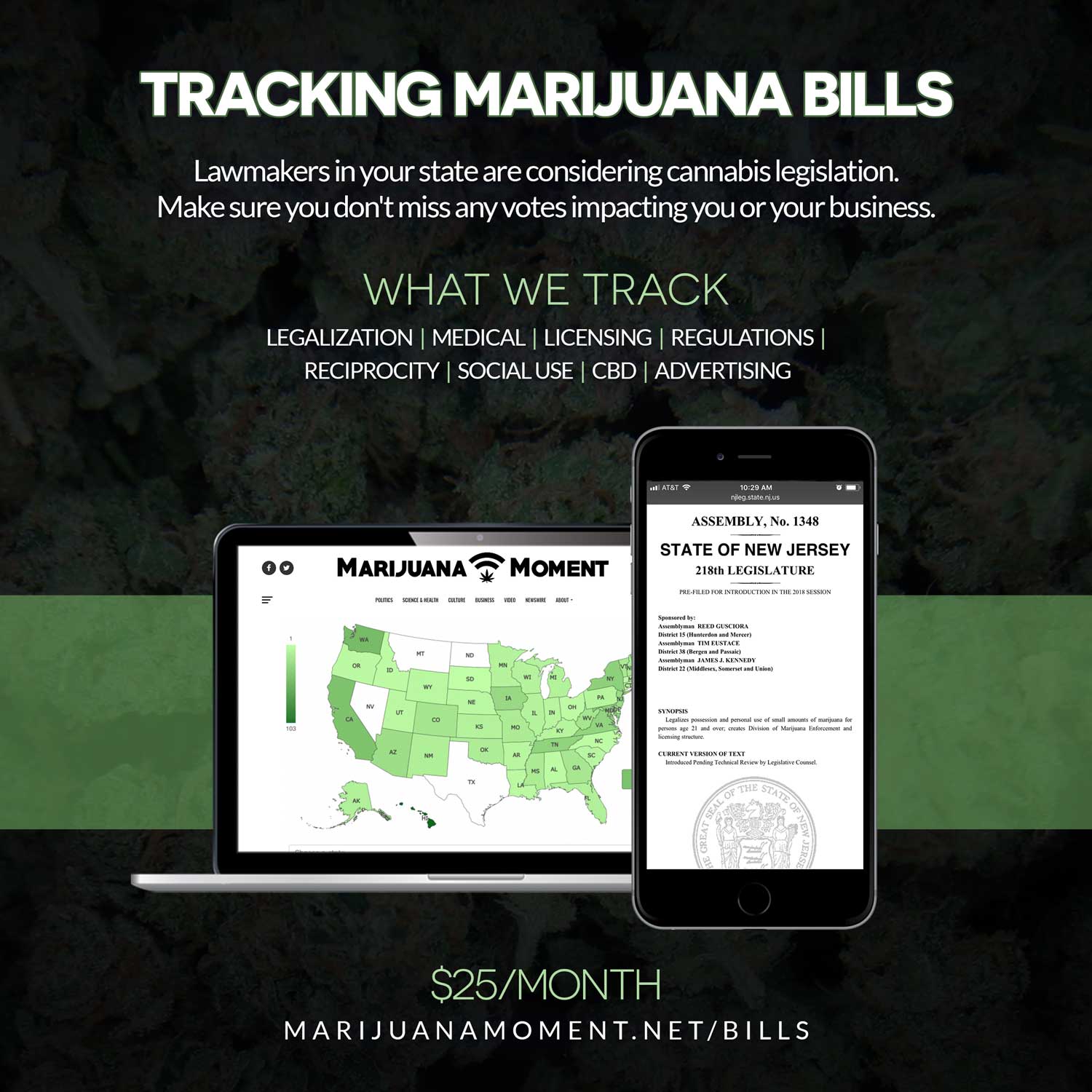
Learn more about our marijuana bill tracker and become a supporter on Patreon to get access.
—
While CMS implemented an earlier final rule last April specifically stipulating that marijuana, as well as CBD that can be derived from federally legal hemp, are ineligible for coverage under its Medicare Advantage program and other services, the agency is now revising that policy.
CMS had already announced certain changes as part of a rulemaking process that was unveiled late last year, affecting “marketing and communications, drug coverage, enrollment processes, special needs plans, and other programmatic areas” for insurance programs it oversees. One of those changes dealt with cannabidiol coverage.
Meanwhile, with respect to the marijuana components of Trump’s December executive order, Attorney General Pam Bondi was directed to expeditiously finalize the proposal to reschedule cannabis, which would not federally legalize it but would remove certain research barriers and let state-licensed marijuana businesses take federal tax deductions they’re currently barred from under an Internal Revenue Service (IRS) code known as 280E. That rescheduling proposal remains pending, however.
Marijuana Moment is made possible with support from readers. If you rely on our cannabis advocacy journalism to stay informed, please consider a monthly Patreon pledge.