How Niambe McIntosh Is Defending Her Father’s Work
The song opens patiently, almost sweetly, with a voice that has decided not to raise its voice because the truth does not need volume. Fifty years after Peter Tosh first pressed “Legalize It” to vinyl, the track still lands like a dare you cannot refuse, because the dare is simply the truth. Jamaican radio banned it. Customs confiscated copies at the border. Tosh printed the lyrics in a newspaper ad, the way a man posts bail for an idea the state has tried to lock up.
This year marks the 50th anniversary of that dare. Niambe McIntosh, the youngest of Tosh’s ten children, has spent two decades learning what her father’s music means and the last decade learning what it costs. If you want to understand why a fifty-year-old reggae album matters beyond the anniversary, her story is the groove the needle keeps finding.
Niambe was five when Tosh was murdered in his Kingston home in 1987, and three when she left Jamaica for Boston—old enough to carry the name, but not a single memory of the man who made it mean something. Not the co-founder of the Wailers, not the solo artist who berated Prime Minister Manley at the One Love Peace Concert while smoking a spliff onstage, not the Rastafarian who coined “politricksters” and performed with a guitar shaped like an M16. Everything she knows came later, from photographs, band members like Santa Davis, her mother, and strangers who wanted to press a story into her hands.
“It’s humbling,” she says. “I take so much pride in being able to continue to know him in a different way, since I never really had that opportunity.”
For years, “Legalize It” was just part of the air she breathed. “It all felt normal to me,” she has written, “because he felt normal to me.” It was only later, watching states legalize while communities destroyed by prohibition saw none of the benefit, that the track stopped being a family artifact and became something closer to prophecy.
Tosh was brilliant, principled, and difficult, also stubborn, quick-tempered, unwilling to soften a message for anyone’s comfort, the kind of artist who called Island Records’ Chris Blackwell “Whiteworst” and paid for it in commercial reach and, some argue, safety. But the music he cut still presses the argument into your chest before your politics catch up. Equal Rights reads as a manifesto; “Apartheid” argued for South African freedom when Western governments still called Mandela a terrorist. The songs do not age. They track.


When the Fight Became Personal
When Niambe took over the estate in 2008, an engineer by training, a master’s in education, years in Boston Public Schools, she found a catalog left dormant and exploited by a public administrator who had run it for a decade without telling the family they could manage it themselves. She rebuilt: royalties, the Peter Tosh Museum in Kingston, and the Foundation.
Then the system came for her brother. Jawara McIntosh, “Tosh 1,” a musician, cannabis advocate, follower of Rastafari, father of four, the liveliest person in any room, was arrested for cannabis possession in New Jersey in 2013. Niambe thought it was minor. Then she sat in the hearing and heard the state propose a sentence of twenty years. “We were like, wait, what is happening?” she says. Legalization was just becoming the talk of the town; the family expected it would go away. It didn’t. New Jersey had a dark sentencing history, and the McIntoshes were torn between fighting and protecting him. He accepted a plea and turned himself in in January 2017.
A month later, he was attacked by another inmate. The traumatic brain injury left him completely incapacitated. When the family flew from Boston, the prison told them they had no right to visit; he was a ward of the state. Only the family name got them through the door.
What she found in that room changed everything. Jawara was fighting for his life, cuffed to the bed by his ankle. “From that moment, I knew my life was forever changed,” she says. “He shouldn’t have been in a place where that could have happened to him.”
They fought to get him released. He spent over five hundred days in the hospital before Niambe brought him home and cared for him until he died in 2020. Even from inside, Jawara had told her about a seventeen-year-old boy locked up with grown men because he couldn’t make five hundred dollars bail on a cannabis charge.
Here is the paradox no one has resolved: Jawara’s father pressed an album arguing that cannabis criminalization was state violence against Black people, and the state banned it; fifty years later, his son was arrested for the same plant, brutalized inside the system the father indicted, and then killed. The track was prophetic. Peter’s prophecy was personal to his whole family.

Legalization Without Repair
Ask Niambe about anger, and she will tell you she is not built for it. “What I felt was not anger as much as clarity,” she wrote. She channeled that clarity into the Justice for Jawara campaign, the Last Prisoner Project, expungement through Project Clean Slate, and advocacy that insists legalization without repair (no automatic expungement, no real capital for equity licensees, no community reinvestment) is not legalization at all. “A license you cannot afford to use is not equity,” she says. “It’s a press release.”
That language hits differently in 2026, a year when some states have attempted to roll back or restrict voter-approved cannabis laws, even as the federal government moves to reschedule marijuana from Schedule I to III—half a century late. The contradiction is exactly what Tosh grooved into vinyl.
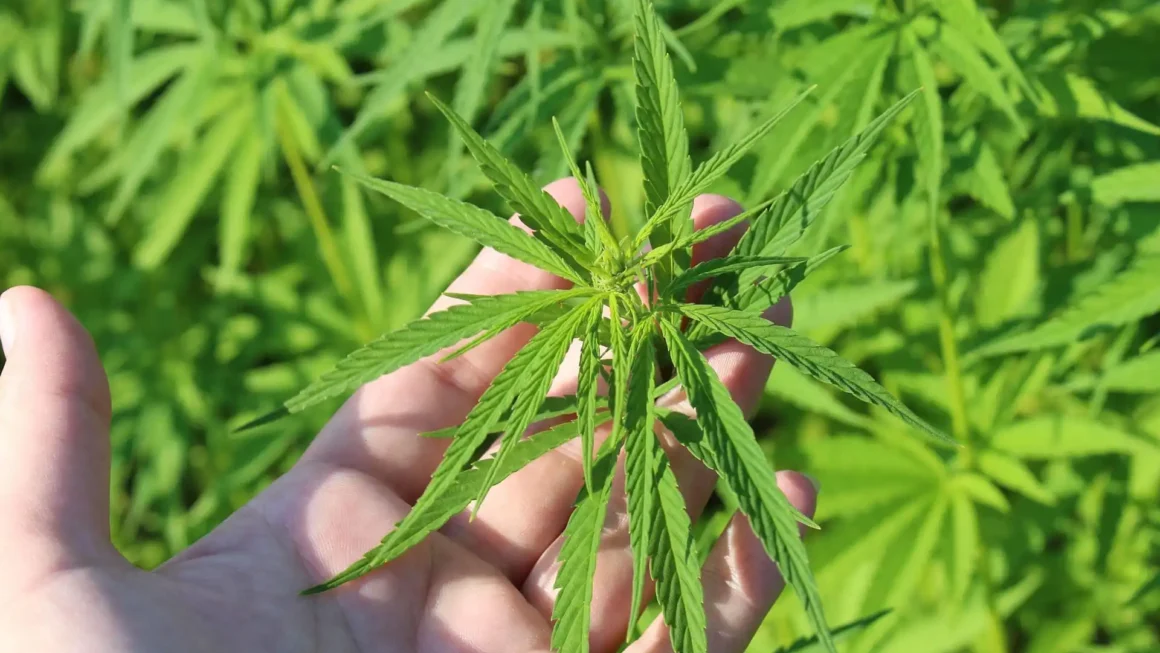
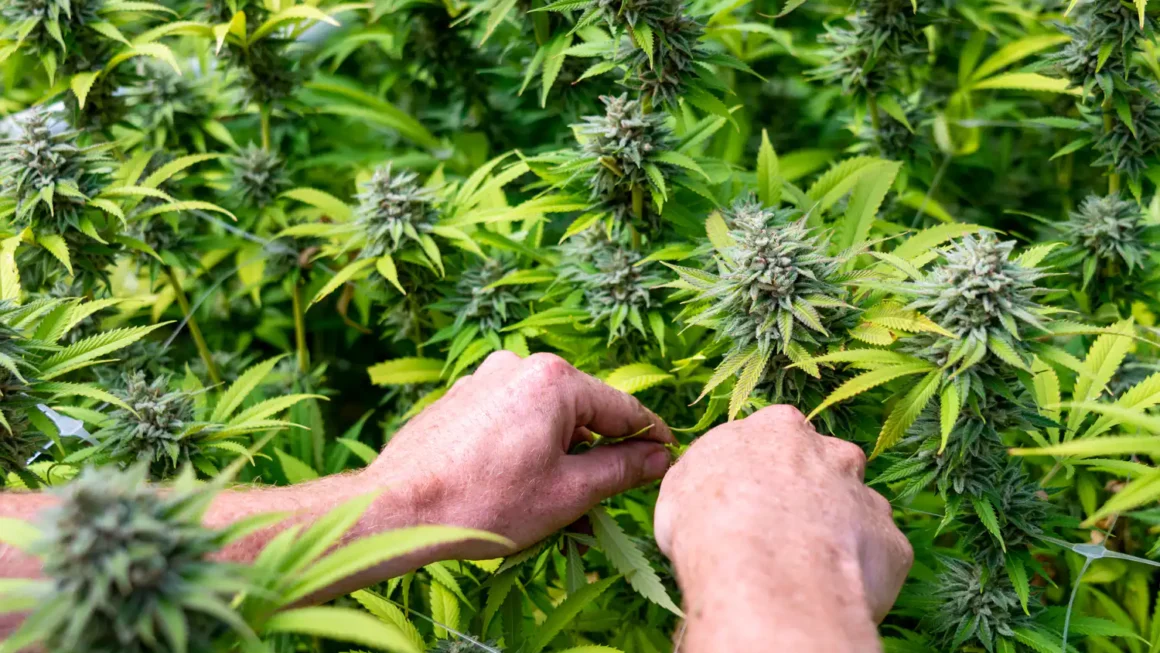
The plant is not the point. Control is the point.


Continuing the Work
The Foundation works across several fronts: Can’t Blame the Youth provides scholarships in Boston and Jamaica; Peter Tosh Town, the community in Belmont, Bluefields, was becoming a cultural destination before Hurricane Melissa devastated it last October. And Tosh Reloaded, a global collaboration reimagining the catalog with artists from Jamaica, South Africa, Ghana, Germany, and Brazil, is pressing the songs back into rotation. “It’s not just a tribute,” Niambe says. “It’s going to stand the test of time.”
Recently, South Africa invited her to accept a national award on her father’s behalf as a formal recognition of what his song “Apartheid” argued decades before any government would. His band members didn’t even know “apartheid” was a real word when he wrote it; they thought it was one of his wordplays. Standing in that ceremony, Niambe thought about how, as a child, she would not have been allowed through the door.
Her mother always told her Tosh knew he was ahead of his time, that his music would be “a new music,” that the world was not ready.
Fifty years on, there are still people in prison for a plant that corporations sell for billions. Niambe McIntosh knows this because her brother was one of them. What do you do with a record that keeps being right?
You keep pressing. The assignment—her father’s word for the work—is nowhere near finished.
Photos courtesy of The Tosh Foundation.
This article is from an external, unpaid contributor. It does not represent High Times’ reporting and has not been edited for content or accuracy.