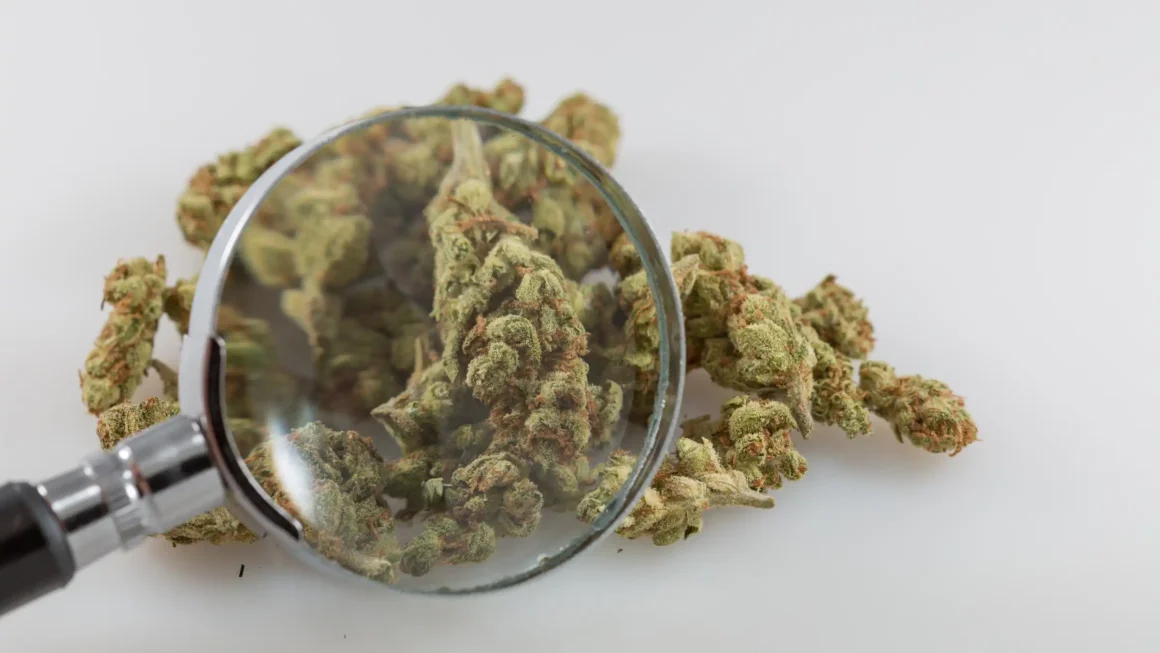
Cannabis lawyers operate in a legal world full of contradictions, where state permission, federal prohibition, tax burdens, weak trademark protections, and shifting regulations constantly collide. Their work goes far beyond paperwork: it involves protecting clients, navigating gray areas, persuading politicians, and trying to build a legal industry without erasing the people criminalized before legalization.
In the winding world of law, there’s a maxim that Jimmy McGill learned the hard way: you don’t need a criminal lawyer, you need a bold one. This premise, the driving force behind the series Better Call Saul, resonates with particular force in the cannabis underworld, where the Albuquerque fiction translates into a much more complex and far less cartoonish reality. We’re not talking about laundering money in a nail salon or hiding behind the facade of a fried chicken chain, but about professionals who must decipher the contradictions of an ecosystem where regulations are always miles behind the reality of the plant.
At its most basic, a cannabis lawyer is a tightrope walker. This is someone who must know the laws by heart while understanding the difference between a terpene and a trichome, and navigating a landscape where a misinterpretation can mean freedom or prison for a grower or business owner.
Amid this zigzag of legal trenches, Juan Palomino, an Argentine lawyer with extensive experience in emerging regulations, vividly recalls the precariousness of the early days in markets that today seem, shall we say, civilized. “Until very recently, access to cannabis was through imported oil. In practice, there wasn’t a real solution for the vast majority of people already involved in cultivation. My first clients operated directly outside the law,” he explains. And he maintains that “rather than talking about a gray area, I think it’s more honest to say that during those years we were working directly in a very clearly black one.”
This sense of professional marginalization knows no bounds. Rachel Gillette, from her offices in Colorado, recounts that when she decided to open her own firm in 2010, her law professor delivered a grim prediction: “You’re going to lose your law license.” Sixteen years later, she’s still going strong, representing companies, but with the same conviction as on day one that “the plant has always made sense, but the law still doesn’t.”
Similarly, Bob Hoban, who has navigated these waters internationally for two decades, defines his career as an exercise in constant legal cognitive dissonance. “The very first thing we would do with a client is make sure they understood that marijuana was federally illegal, even though it was legal and regulated in the state markets in which we had offices and in which they had operations. This has been my day-to-day existence for almost twenty years serving this space. Legal here, but not over there,” he states. Hoban emphasizes that the gap is not only legal but also operational, asserting that “it made perfect sense to raise money and start the business, but there was always this split between state and federal law—the biggest grey area that there is.”
Jessica González, a lawyer and president of the Latino Cannabis Alliance, offers the perspective of someone who has to explain the inexplicable, even to her peers. “I learned that advising clients in the sector is considered complicity in a Schedule I federal crime. It’s mind-blowing to discover that in an ethics course, especially as a young lawyer,” she confesses. Furthermore, the pressure wasn’t just legal, but also cultural and familial.

“Imagine telling your mother that after everything she sacrificed to see you become a lawyer, you had decided to make a shift toward cannabis while it was still illegal. My family didn’t talk to me about my work for six months,” she recounts. Today, the lawyer recalls with irony that her social circle only validated her career when she appeared in the newspapers: “Apparently, the print media is the official notary seal of legitimacy in an immigrant household. Then I appeared in the newspaper, and suddenly everyone was very interested.”
The art of negotiation in this market requires a special kind of psychology. One might think the problem is a lack of trust, but González proposes a different thesis, where the real damage is caused by excessive trust based on good vibes. “I’ve seen agreements fail time and time again because they were based on handshakes and pleasant dinners. A lawyer’s job is easier when the parties arrive with a bit of skepticism toward each other. Skepticism means they’re listening,” she argues.
Likewise, Palomino agrees that distrust isn’t an individual ethical problem, but a consequence of bureaucracy. “When the State fails to provide clear rules, it transfers that uncertainty to the relationships between those trying to establish projects. Distrust ceases to be an individual problem and becomes a direct consequence of a system that fails to properly regulate activity,” he explains.
For his part, Hoban points out that time is the biggest enemy of deals, explaining that “deals tend to fall apart based on imperfect information and impatient people. Everyone in cannabis is impatient. And trust only lasts for a moment…even when papered properly.”
But if there’s a villain in this story, it’s the tax code. Gillette describes her battles with the IRS over Section 280E as her true front line. That’s why she maintains that “the federal government has an archaic tax code provision that makes legal cannabis mathematically impossible to survive and/or succeed. There is just this icky feeling of unfairness to it all.”
To survive that hostility, Bob Hoban recalls that creativity was the absolute norm before the current wave of openness. “Previously, we had to structure the deal and the businesses, as if they were not cannabis businesses to ensure banking, intellectual property rights, and the like. Everything was either a real estate deal, an equipment purchase deal, or a lease of personnel. None of those things ever had anything to do with cannabis on paper,” he confesses, portraying a legal engineering worthy of the best productions by Vince Gilligan, the screenwriter of Breaking Bad and Better Call Saul.
The figure of the modern cannabis lawyer has much in common with that Jimmy McGill who transforms into Saul Goodman. For Palomino, the character is fascinating because of his communication skills: “At a certain point, I think he was a kind of first legal influencer. I found his communication style, the advertisements, his media persona very entertaining. Both series achieve something very difficult: making you empathize with contradictory characters while exposing the real tensions between ethics and the system.”

Gillette, on the other hand, reads it as a professional lesson. “The show understands something most legal dramas miss: the law isn’t just rules. It’s relationships, leverage. Jimmy’s problem wasn’t that he was creative. But he never figured out where the line was,” she reflects, while acknowledging that the ambiguity of Bob Odenkirk’s character has a real-world basis in daily practice. “Jimmy McGill is not as fictional as people think. As a lawyer who has spent years advising clients in a legally ambiguous industry, I watched the show as both professional development and a cautionary tale,” she admits.
When it comes to persuading prohibitionist politicians, these lawyers set aside the mystique surrounding the plant. There, Gillette cuts sharp: “Easy. I wouldn’t talk about the plant at all. Instead, I would talk about tax revenue, property rights, job creation. Your state is writing a check to the state next door every single day this stays illegal.” Jessica González prefers an approach focused on authority and territorial control. “I change the subject and start talking about governance. The question I ask them is simple: Do you want to have a say in how this plays out in your community, or are you okay with letting someone else make that decision?” she explains.
Hoban borrows a line from the Grateful Dead’s Black Throated Wind to illustrate the political closed-mindedness: “You ain’t gonna learn what you don’t want to know. Often times, personal stories can make an impact on changing people’s minds about cannabis… But if that individual does not want to believe, changing their mind is nearly impossible. But put them in touch with a real person who gets relief from cannabis on a regular basis, and they will be hard pressed to deny it any further.”
Yet, the most absurd legal loopholes persist, often hidden in plain sight. Gillette points to the definition of hemp in the 2018 Farm Bill as a historic mistake. She says that “Congress defined hemp as cannabis with less than 0.3% delta-9 THC by dry weight. They were thinking fiber and grain. What they accidentally created was a federally legal pathway for intoxicating cannabinoid products sold at gas stations.”
In that sense, Hoban agrees that the system is riddled with contradictions and mentions elegant solutions to circumvent the tax burden: “There is an elegant legal concept at the federal level, called an ESOP (employee stock ownership plan), which in effect, allows owners to cash out, and eliminates the 280 E problem for scalable operations. A tremendous loophole if you will.” Meanwhile, González points to the fragility of intellectual property: “None of these brands can obtain federal trademark protection. It’s a significant disadvantage that most people, even within the industry, don’t fully appreciate.”
The question swirling in the minds of these professionals lies in the ethics of the empire. Is it possible to build a billion-dollar industry without betraying the pioneers? Rachel Gillette is emphatic when she states that “building an empire on that foundation without acknowledging it isn’t just ethically questionable — it’s historically illiterate. The least the industry can do is fight for expungement, support social equity, and stop pretending the war on drugs was fought equally in all communities.”
Bob Hoban adds a dose of reality about the transition from activism to the global corporation. “We need to honor the activists who have set the foundation for us to be here today, but rarely is there a role for those folks in what amounts to a large-scale corporate environment with licenses, compliance, and production metrics,” the lawyer reflects. González demands tangible solutions, not just gestures: “Granting a license without the financial knowledge, legal support, and resources to maintain it can cause more harm despite good intentions.” Palomino concludes with a warning about systemic exclusion: “While projecting a billion-dollar industry, there are thousands of people who have been criminalized for doing the exact same thing. Without a profound reform of drug laws and comprehensive regulation, all we’re doing is creating a form of exclusion.“
Reality is the only truth: the path to full legality isn’t paved with good intentions, but with injunctions, appeals, and infinite patience. As Saul Goodman would say, there’s always a legal way out; you just have to know where to look. While prohibition continues its last desperate flailing, these defenders of the cannabis cosmos will remain, stoic, signing documents and ensuring that the scales tip toward logic. The law is a living organism, and cannabis is the oxygen forcing it to awaken from its long slumber.

Related Posts
DEA Opposes Marijuana Rescheduling Opponents’ Request For New Testimony And Document Discovery In Ongoing Hearing
Nebraska Medical Marijuana Cultivators Ask State Officials To Change Rules On Testing, Fees And Doctor Protections