A land-rooted look at the growers reshaping cannabis through living soil, ecological intelligence and regenerative cultivation.
This article originally appeared in High Times’ Spring/Summer 2026 print edition. Get yours here.
The story of modern cannabis cultivation often begins the same way: a garage, a single grow light and a determination to coax a plant into thriving in a place it was never meant to be. Dave LaFlamme remembers those early days clearly, hauling in bags of soil, feeding with whatever bottles and powders were pulled from the grow store shelves, training plants through ScrOGs, the screen-of-green method that forces a canopy flat, and tossing spent dirt after every harvest. It was the era of control, dialing in temperature, humidity, CO₂, nutrients and light cycles until the whole operation ran like a sealed ecosystem built by hand. It felt a lot like playing God, except God would have never grown cannabis indoors.

For many growers, this wasn’t a creative choice; it was survival. Indoor grows were born from necessity. A way to stay out of sight, dodge landlords and avoid attention in the years when even “legal” cannabis was still whispered about behind closed doors. The medical era isn’t ancient history, but in cannabis years it feels like lifetimes ago, and there was very little protection for anyone growing, whether you had a Rolodex of patients or not.

As Dave later learned, no matter how refined the system, an indoor room could only ever mimic what the natural world perfected long before prohibition and fear forced the plant inside. Soil microbiology, seasonal rhythms, ecological intelligence and natural sunlight, these were things no bottle or bulb could replicate.
As more cultivators adopt natural methods, a clear truth emerges. Cannabis expresses itself more fully outdoors and in living soil, where growers are learning to work with the land instead of against it. Not because the past was better, but because nature already carries the instructions we’ve spent years trying to engineer.
Back to the Land, Fifty Years Later
Half a century ago, long before legalization and lab testing or the language of “regenerative agriculture,” a wave of young people left the cities and headed for the hills of Northern California. They were looking for something simple. Something honest. A life shaped by soil, seasons and self-sufficiency rather than speed and concrete. In places like Humboldt, Mendocino and Trinity counties, they built cabins, planted gardens, learned to live with the land, and quietly grew cannabis alongside their vegetables and fruit trees. No one called it regenerative. At best, it was sustainable. Mostly, it was just how you grew things when the earth was your teacher.
That history lives on in people like Nya Hessler, who still cultivates on the same Humboldt County property his parents homesteaded fifty years ago. His childhood memories are wrapped in forest air, the smell of soil and the improvisational agriculture of people who learned by paying attention.
The stories he carries from those early days are not romanticized. They are practical. His parents learned to read weather instead of forecasts, to work with the soil instead of against it, and to trust the rhythms of a landscape that asks for patience. Today, Nya blends those inherited instincts with a deeper understanding of our impact on the earth and how to work in tandem with its native intelligence. His approach at Amaranth Farms is rooted in the same humility his parents practiced: tend the land, listen to it, and let it teach you.

Much of Humboldt’s soil is fertile, rich and already alive. “You’re not remediating out here,” he said. “You’re tending, caring, not poisoning.” He avoids rototillers to preserve native soil life, relies on local manures, brews compost teas from rice hulls, and plants cover crops, legumes and locust trees around the perimeter of his fields to build nitrogen naturally. “It’s beautiful earth here,” he said. “The native mycorrhizae are very much alive in the soil.” Mycorrhizae are the fungi that attach to roots and trade nutrients with the plant.

That harmony-with-the-land mindset guides how he sources his inputs. Nya is always calculating the invisible impact behind every amendment he brings onto the farm. “How far are your inputs coming from? How many fossil fuels are burned just to get your supplies?” he urges growers to ask. Nya focuses on reducing his carbon footprint wherever he can. “Use as much solar as you can generate. Use rain-catchment water stores. Cut down on shipping,” he said.
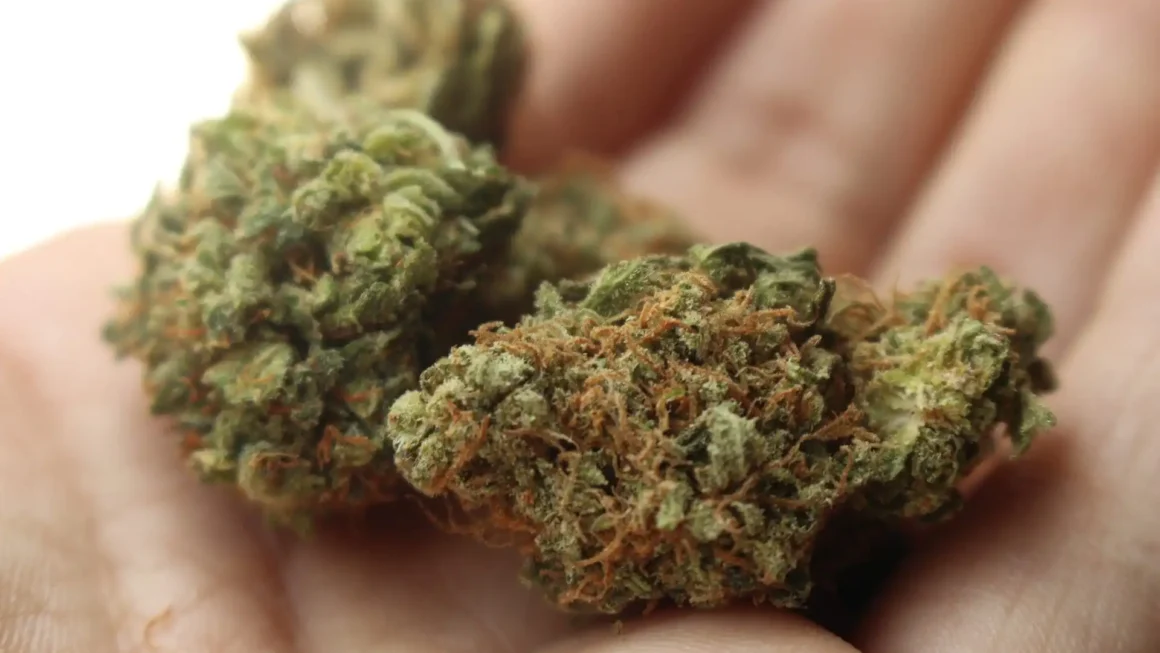
For Nya, sungrown cannabis isn’t just feasible. It’s superior. “Outdoor burns better and tastes better,” he said. “Test results show much larger terpene profiles on sungrown.” That sensory difference is backed by research. A 2023 study published in Molecules compared genetically identical cannabis grown indoors and outdoors and found significantly higher levels of oxidized and degraded cannabinoids in the indoor samples, while outdoor flower grown in living soil produced a richer terpene profile.
“You’re not remediating out here. You’re tending, caring, not poisoning.”
Nya Hessler, Amaranth Farms
And while Nya’s family story reaches back generations, the path of growers like Dave and Blaise LaFlamme stretches in the opposite direction.

The LaFlammes, a father-son team based in Bend, Oregon, co-founded NW Kind in 2013. After years of indoor trials, warehouse grows and mastery of the medical-era playbook, they are one of Oregon’s longest-standing extraction brands. Their early focus on crafting high-quality concentrates eventually led them outside, where the plants, and the land, began to reshape their thinking about cultivation.
Blaise explains it simply. “We’ve tried just about everything. We grew with synthetics, we grew synganic, we ran indoor no-till or low-till beds. We really tried it all over the years, and when we made the switch to full organics, there was no question we would ever return to synthetic practices.” Synganic is the hybrid approach, synthetic inputs run alongside organic ones; no-till means the beds are never turned over, so the soil life underneath is left intact from season to season. For him, the difference was immediate. “The overall plant vigor and terpene production are night and day.”
Dave’s shift came from the same place but through a deeper fascination with biology. After years spent dialing in the precise conditions of an indoor warehouse, he realized the limitations were baked into the walls. “Trying to create a natural environment inside a building was never going to be the same as an actual natural environment,” he said. Studying soil microbiology opened an entirely new frame. Microbes, mycorrhizae and mineral-exchange networks were doing work that no feeding schedule could imitate.

Their commitment to outdoor cultivation deepened when they found their property in Williams Valley in Southern Oregon, a place where the terroir practically announces itself. The valley is narrow and flat, ringed by mountains that have been shedding minerals into the soil for thousands of years. The community carries an older ethos too, shaped by homesteaders, herbalists and growers who built their lives around land-based living long before cannabis legalization arrived. Williams has a kind of quiet electricity to it, a sense that people here still view the earth as collaborator rather than substrate.
Blaise noted that they acquired the farm from Siskiyou Sungrown, longtime partners who had nourished the soil for years. The LaFlammes took that stewardship seriously. “We’re grateful for the mineral-rich soil the Williams Valley provides,” Blaise said. “We add companion plants, build a natural integrated pest management program, and lay cover crops each season so the soil improves every year.”

Dave shares the same reverence. “We feel humbled and grateful to be stewards of this land,” he said. Part of his devotion to the soil includes amendments like sea minerals, algae and mycorrhizal inoculants. He also uses straw mulch and seasonal cover crops, which help protect moisture, support microbial communities and add natural sources of nitrogen back into the soil ahead of spring planting.
Their farming ethos mirrors their extraction philosophy: purity, expression and respect for the plant. “We try to focus on terpenes over everything,” Blaise said. “We solely grow for hash production, so the biggest factor in running a strain again is how the terps shine through to the final hash.” Outdoors, those terpenes come alive. Their live resin has earned multiple accolades, including a 2020 High Times Cannabis Cup, but for the LaFlammes, the rewards run deeper than trophies. “Our company has become a reflection of the natural world,” Dave told me. “Responsible stewardship gifts us the biomass that becomes the cleanest, highest quality products in the Oregon marketplace.”


Why Regeneration Matters
Modern agriculture has left a long shadow across the planet. In pursuit of yield and efficiency, we’ve stripped away the topsoil that holds life together, poisoned rivers and groundwater, and grown food so depleted it can barely nourish us. Cannabis hasn’t been exempt from this trajectory. It can be cultivated in ways that drain water, burn energy and leave behind a trail of residual toxins in both soil and final products. The plant may be medicinal, but the systems surrounding it are not always built to heal.
As the legal industry expands, that tension grows sharper. Cannabis now sits at the crossroads of two global realities: a warming world in need of ecological repair, and a newly aboveboard industry suddenly responsible for its own footprint. The choices growers make today ripple far beyond the garden. They influence local ecosystems, watershed health, carbon cycling, biodiversity and the chemistry of the medicine that consumers ultimately inhale or ingest.
This is why regenerative practices matter. Unlike conventional or even organic methods, regenerative cultivation does more than avoid harm. It restores. It rebuilds. It repairs what industrial processes depleted. Organic amendments alone do not guarantee sustainability. Many are mined unsustainably, shipped across continents, or are disruptive to native biodiversity. Even pest controls labeled “natural” can harm pollinators or destabilize local ecosystems.
Regenerative cultivation asks a different question entirely: What would it look like to grow cannabis in ways that make the land healthier, more alive and more resilient than it was before we touched it?
For many growers, that question leads back to the soil. Living soil systems, thick with fungi, bacteria and organic matter, create a nutrient cycle far more intelligent than any bottle or program can replicate. They hold water, self-regulate, suppress pathogens and respond dynamically to a plant’s needs. When growers nurture those microbial relationships, the plant reflects it. Terpenes sharpen. Cannabinoids shift. Resin becomes richer and more expressive.
In this sense, regenerative cultivation is not an aesthetic preference. It is a direct investment in the quality and safety of the medicine itself. Flowers that pass testing may still create concentrates that fail. Soil grown with integrity creates medicine grown with integrity. The chain is unbroken.
The growers choosing this path, whether they come from multi-generational homesteads or science-driven extraction labs, aren’t just opting for a different production method. They’re working within ecological systems instead of trying to override them, rebuilding soil structure, supporting pollinators and biodiversity, and reducing the inputs that strain local environments. Their work shows that cannabis can be grown in a way that supports the land it depends on.


Letting the Land Lead
Across the country, regenerative cannabis looks different depending on the climate, the culture and the constraints growers face. In Biddeford, Maine, the work is shaped by shorter seasons, harsher swings and policies that often favor large indoor businesses over small family farms. But for Nikos Papachristo, owner of Daedalus Craft Cannabis, the foundation is the same as it is for growers out West: let the land do what it does best.
Nikos didn’t set out to become a cannabis farmer. When he moved to Maine in 2018, he unexpectedly found himself standing on a 20-acre property he hadn’t planned to buy. “I guess I took a leap of faith. It was meant to be,” he said. What followed was a sense of obligation not simply to grow cannabis, but to grow into the land. “I felt the obligation to be a good steward of the land. When I decided to start growing cannabis, I would say the plan was to use it as a foundation to further develop my farm, where we could eventually grow organic vegetables and cut flowers, raise chickens, open a farm stand, and truly live in connection to the land. Romantic idea, I know.”
His approach was shaped early by longtime Maine cultivator Scott Dalton, who helped him establish his first outdoor beds and introduced him to no-till living soil cultivation. Nikos didn’t experience a sudden shift toward regenerative thinking because, for him, this was the only philosophy that ever made sense. “All we did was try to create an environment for those things to happen, and then foster that through its evolution over the years,” he said.
Daedalus grows in massive 500 to 600-gallon beds built with peat, perlite, loam, compost, sand, worms and worm castings. Over time, the soil has matured into something alive and unmistakable. “There’s just a granular, airy feeling to it. You can kind of tell it’s full of life, like there’s millions of things happening in there,” he said. “It really smells good to me. It’s kind of clean and crisp.”
Nikos points to two early experiences that confirmed he was on the right path. The first came during a late-October storm in his first cannabis season, when four days of 40-mph winds and heavy rain pummeled the garden. The plants bent, fell and were battered, but when the weather cleared, “they were absolutely fine and eventually finished up great.” He realized how much more was involved than his own effort. “They didn’t need me to survive and flourish,” he said.
The second moment came in spring, when he pulled spent stalks from overwintered beds and noticed that worms had tunneled through and the roots had completely decomposed. “The soil had changed so much… its smell, its texture, its consistency. It was just really impressive to me to see how much everything had changed and incorporated together into this new ecosystem.”
Daedalus now grows with compost topcoats, kelp meal, straw, spent barley from a local brewery, gypsum, onsite compost and water pulled directly from ponds and wells. “All the water we use is coming straight from the land,” he said. “We don’t use any synthetic nutrients or fertilizers or pesticides. We generally only use what we can produce on the farm or source from other local farmers and suppliers.” Microbes sit at the center of his philosophy. “I think microbes are pretty much the whole deal,” Nikos said. “We’ve definitely used TeraGanix EM-1 and EM-5, which have been great.”
Success, for him, is measured not in pounds, but in evolution. “Continued improvement year after year,” he said. His plants, now often eight to fourteen feet tall, reflect that long arc. Root health, stalk health, pest resistance and biomass have all strengthened as the soil has matured.
But farming regeneratively in Maine also means contending with a policy landscape that often works against the very growers who are producing the cleanest cannabis. Many of the state’s testing requirements, he said, are copied from indoor-heavy markets and “would fail all outdoor grown cannabis in Maine, just because of what’s found outside in the natural environment.” The result? Highly skilled regenerative cultivators in the medical program are effectively shut out of the adult-use market. “It’s really unfortunate, because it makes it impossible to get better quality products to a broader market,” he said.
“Working the land is a two-way street. The natural world is bigger and better and more complex than you can even imagine.”
Nikos Papachristo, Daedalus Craft Cannabis
Still, Nikos remains rooted in the relationship that brought him here. What keeps him committed is the intimacy of the work. “You kind of find yourself living in this symbiotic relationship with your plants when you grow like this,” he said. “Your plants grow each year and your gardens develop each year, and I think you kind of grow along with that process.”


The Science Behind the Soil
To understand where regenerative cannabis is heading, it helps to look at the ecological principles that support it. Soil agroecologist Eric Landen frames it simply: the defining strength of Earth’s biosphere is its ability to sustain and regenerate life. For nearly four billion years, nature’s intelligence has emerged and organized itself into living regenerative networks from the relationships and patterns within ecosystems, microbes, minerals, water, fungi and roots, not from human intervention.
His systemic perspective mirrors what regenerative farms observe every season. When soil biology is intact, it feeds, protects and communicates with plants in ways no synthetic program can replicate. Microbes build soil structure, cycle nutrients, regulate moisture, repel pathogens and help plants fully express their chemistry. Fungal networks expand the reach of roots. Organic matter becomes energy, which transforms back into organic matter.
The future of cannabis cultivation rests in that recognition. The plant can either be grown through systems that strip soil, drain and pollute water, and consume enormous energy, or it can be grown through ecologically sustainable systems that restore landscapes and deepen our relationship and reconnection with the natural world. Regenerative cultivation is a reminder that cannabis is not separate from ecology. It is shaped by it.

When growers build living soil, reduce outside inputs, protect biodiversity and allow microbial life to flourish, they are participating in an ancient primeval rhythm, one that heals rather than harms. And as the industry continues to mature, the choices we make will determine whether cannabis follows the extractive path of industrial agriculture or becomes part of a broader movement toward ecological repair and regeneration.
The science is clear, and so is the opportunity. The more we align with the intelligence of the soil, the more this plant can reflect its full potential for the earth, for the ecosystem and for the people who depend on it.
The future, as the past quietly reminds us, belongs to the soil.