Time seems to go by so fast. In reality, it moves no faster—or slower—than ever, but there’s a very specific feeling, distinctive of these times: we are so immersed in routine and the constant repetition of activities that we end up operating on autopilot. Days seem to “fly by” because, by automatically repeating actions, our brain saves energy, compresses our experiences, and reduces the capacity to pay attention to other details.
Modern life fosters a contemporary malaise: overstimulation, multitasking, multiple screens at once, and an accelerated pace that diminishes the capacity for mindfulness. Looking back, bam!, “the years condense into just a few highlights, while the everyday hours vanish into oblivion,” notes Rocío Zorzon, a physician specializing in therapeutic cannabis and phytomedicine, with a poetic touch.
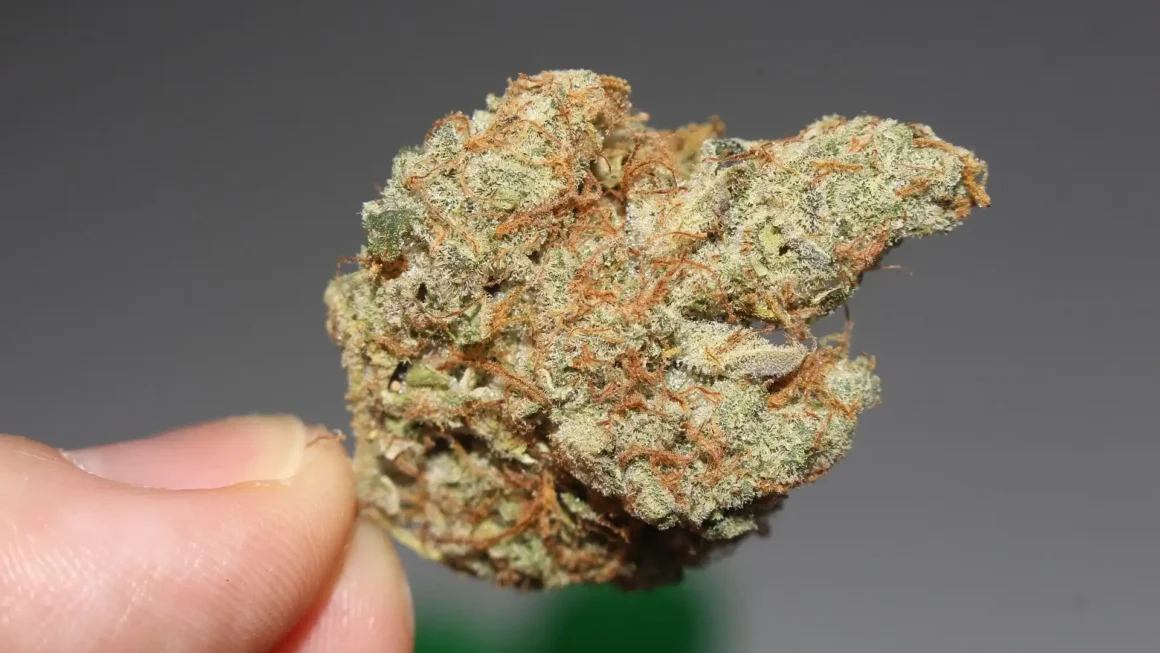
Thus, memory, in its eagerness to synthesize, “gives us back an abridged version of lived time, reinforcing the impression that everything is happening faster,” she continues. Furthermore, the constant pursuit of productivity and the dizzying pace of technological advancement generate stress and fuel a persistent feeling of “not wanting to miss out on anything.” In this sense, weed could help slow down that speed.
Let’s talk a bit about this. “Cannabis, especially through CBD, acts as an anxiolytic and helps reduce anxiety. On the other hand, THC, the main psychoactive compound, interacts with the endocannabinoid system, which regulates processes such as sensory perception and the body’s internal rhythms,” Zorzon explains.
This interaction affects areas of the brain linked to memory, attention, and time perception. Meanwhile, “many people report that during the onset of THC’s effects, time seems to ‘slow down,’ generating a subjective experience in which minutes feel longer and the experience becomes more intense.”
Are there any specific strains that work best and lend themselves more to introspection and slowing down? “Yes, without a doubt, indica or indica-dominant hybrid strains, rich in terpenes like myrcene, linalool, and terpinolene, which induce physical and mental relaxation, help us enter contemplative and peaceful states.”
These days, it’s difficult to “disconnect,” and with such momentum, a distinctly epochal symptom emerges: the rise of the infamous FOMO, a phenomenon that generates anxiety, digital dependence, and various difficulties in our daily lives, such as the inability to disconnect from obligations and, especially, from social media. In simpler terms, FOMO is understood as the perception of “missing out” while simultaneously compulsively maintaining connections via social media.
And once more, weed. An “antidote” to boredom, and thus, with the aim of countering idleness, it can become a powerful tool. The professional says: “Neuroscience shows that moments of ‘doing nothing’ are not only productive, but essential. They allow the brain to rest, reorganize, and enhance key functions such as creativity, memory, and decision-making.”
Therefore, it is recommended to incorporate conscious pauses in which nothing is done, not even overthinking. Difficult, right? “These pauses act as a simple yet profound technique to reconnect with the present moment and give time a more human rhythm,” explains Zorzon.
At the same time, the incorporation of some “slow practices” such as yoga and mindfulness are recommended, as they are especially valuable. “They help us remember the importance of being in the here and now, carefully observing our thoughts, emotions, and activities. In this way, we can experience each moment with greater awareness, avoiding falling into automation and doing things mechanically.”
Nevertheless, the pursuit of slowing down can sometimes lead to passivity and even escapism. Beware of giving in to mental wandering, of burning out your brain by burning one. It’s all in the eye of the beholder. In fact, the pursuit of slowing down can involve certain risks if it’s confused with passivity or a way of escaping reality.
“The real secret,” the professional assures us, “lies in finding balance: being productive, but also reserving space for leisure, mindfulness, and relaxation. Slowing down is valuable when it’s understood as presence and connection, not as immobility or escape.”
In short, the danger arises when “living more slowly” is interpreted as “not living fully.”
And, strictly speaking, cannabis is profoundly linked to the purpose for which it is being used. The key lies in the intention: what is the substance being used for? There is a fine line between the different forms of use, since the effect is highly subjective and varies from person to person. “When used in moderation and with a conscious intention, both options can acquire a therapeutic character. Of course, it is essential to remember that nothing in excess is beneficial,” Zorzon warns.
And in a society—at a time, in a place—that demands more from us, more feeling, more hustle, more producing, going against the grain and slowing down can ignite countercultural sparks. The idyllic image of children playing freely in the street, of adults sharing time together, of social spaces as community hubs is gradually fading. A good response might be: do less, produce less, and hit the brakes. That’s where mindfulness, yoga, meditation, and mindfulness practices come in. And when the urge arises, because it always does, weed.
“More and more people are becoming interested in, training in, and incorporating these practices into their daily lives, seeking a deeper connection with consciousness and the present moment. For me, all of this represents a new stage in our human evolution: a conscious return to more integrative and connected ways of living,” Zorzon concludes.
The mind is a master editor, and we whirl through the accelerated montage of a life lived at breakneck speed, the absence of intermediate moments, and ever-lower peaks. If life is but a breath, perhaps the key lies in fighting against this acceleration and learning to expand the present as much as possible, leaving it at a semicolon, right here.