A Democratic congresswoman is imploring President Donald Trump’s newly Senate-confirmed White House drug czar to follow the science and proactively support fully legalizing marijuana—going beyond the incremental cannabis rescheduling order the president recently signed.
Rep. Dina Titus (D-NV), co-chair of the Congressional Cannabis Caucus, shared a link on Tuesday to a Marijuana Moment article about the Senate confirmation vote for Sara Carter Bailey to serve as the director of the Office of National Drug Control Policy (ONDCP).
Titus said Carter “must commit to common-sense, evidence-based cannabis policy.”
“That includes supporting marijuana de-scheduling and fully implementing my Evidence-Based Drug Policy Act so that federal decisions are guided by science, not stigma,” she said.
Titus and fellow Cannabis Caucus co-chair Rep. Ilhan Omar (D-MN) announced the filing of the Evidence-Based Drug Policy Act back in April, aiming to remove a statutory restriction barring the drug czar from advocating for the legalization of marijuana or other Schedule I drugs. The legislation has not yet advanced in the GOP-controlled Congress, however.
Here’s the text of the current law that would be repealed under the proposal:
“The Director…shall ensure that no Federal funds appropriated to the Office of National Drug Control Policy shall be expended for any study or contract relating to the legalization (for a medical use or any other use) of a substance listed in schedule I of section 812 of this title and take such actions as necessary to oppose any attempt to legalize the use of a substance (in any form) that— (A) is listed in schedule I of section 812 of this title; and (B) has not been approved for use for medical purposes by the Food and Drug Administration.”
Carter, for her part, has previously voiced support for medical marijuana access, while stating that she doesn’t have a “problem” with legalization, even if she might not personally agree with the policy.
A former journalist known for her coverage of drug cartels, the incoming ONDCP director also previously advised senators that the administration was keeping “all options” on the table as it considered a marijuana rescheduling proposal, while describing cannabis reform as a “bipartisan issue.”
Despite her personal ambiguity on the rescheduling issue, Trump last month signed an executive order directing the attorney general to expeditiously complete the process of moving cannabis from Schedule I to Schedule III of the Controlled Substances Act (CSA).
Given the role of the ONDCP director in setting and carrying out the administrative agenda on drug policy issues, the fact that Carter has gone on the record enthusiastically endorsing medical cannabis in the past is welcome news for advocates.
Sen. Cory Booker (D-NJ) raised the issue of cannabis rescheduling with the then-nominee in September, stating that the incremental reform would represents a “step in the right direction.”
“It would open up the door to more scientific study, and so I’m wondering if you were confirmed, how would you advise the American president about the ongoing rescheduling process?” he asked.
Carter said she shares Booker’s passion for the issue, which she characterized as “bipartisan.”
“If confirmed as director, I will comply with all federal laws and fulfill all statutory responsibilities of the ONDCP,” she said. “However, we will continue to work extensively with research and data. We will continue to do that and explore all options.”
Tuesday’s vote on her confirmation was largely along party lines—with Sen. Rand Paul (R-KY) joining all Democrats in opposition, and all other Republicans in support.
While Carter has spoken often about various marijuana policy issues—focusing attention on illicit trafficking and illegal grow operations on U.S. land, for example—her public comments on how she personally feels about the topic have been limited. What she did say in a 2024 episode of her podcast, The Sara Carter Show, signaled that she draws a distinction between legally regulated and illicitly supplied marijuana.
“I don’t have any problem if it’s legalized and it’s monitored,” she said. “I mean, I may have my own issues of how I feel about that, but I do believe that cannabis for medicinal purposes and medical reasons is a fantastic way of handling—especially for people with cancer and other illnesses, you know—of handling the illness and the side effects of the medication and those illnesses. So I’m not saying we’ve gotta make it illegal.”
Last month, a Democratic senator temporarily held up the Republican majority’s attempt to advance Carter’s confirmation, saying she is among many “unqualified” candidates who threaten to “undermine the rule of law and our national security.”
Carter will be the second White House drug czar in a row who has voiced support for medical marijuana, following former President Joe Biden’s ONDCP director Rahul Gupta, who worked as a consultant for a cannabis businesses and also oversaw implementation of West Virginia’s medical marijuana program.
On her social media, Carter has previously shared links—without commentary—to news stories about a variety of marijuana-related issues. In addition to her focus on illicit cartel grows, she’s also posted about congressional and state-level legalization votes, staffers in the Biden administration being fired over past cannabis use, Democratic presidential candidates’ support for legalization, the advancement of cannabis banking legislation in Congress and state policy developments such as Alaska’s legalization of cannabis cafes.
Carter has separately sounded the alarm about the risk of pesticides and other contaminants in marijuana grown and sold by Chinese cartels—an issue that was taken up by a House committee last year.
Also last year, the incoming ONDCP director talked about the issue with Derek Maltz, a then-retired Drug Enforcement Administration (DEA) official who temporarily served as acting administrator of the agency prior to the confirmation of Trump’s permanent pick, Terrance Cole.
In an X post about the interview with Maltz, Carter said he exposed how “Chinese marijuana grow operations are using hazardous chemicals as pesticides.”
—
Marijuana Moment is tracking hundreds of cannabis, psychedelics and drug policy bills in state legislatures and Congress this year. Patreon supporters pledging at least $25/month get access to our interactive maps, charts and hearing calendar so they don’t miss any developments.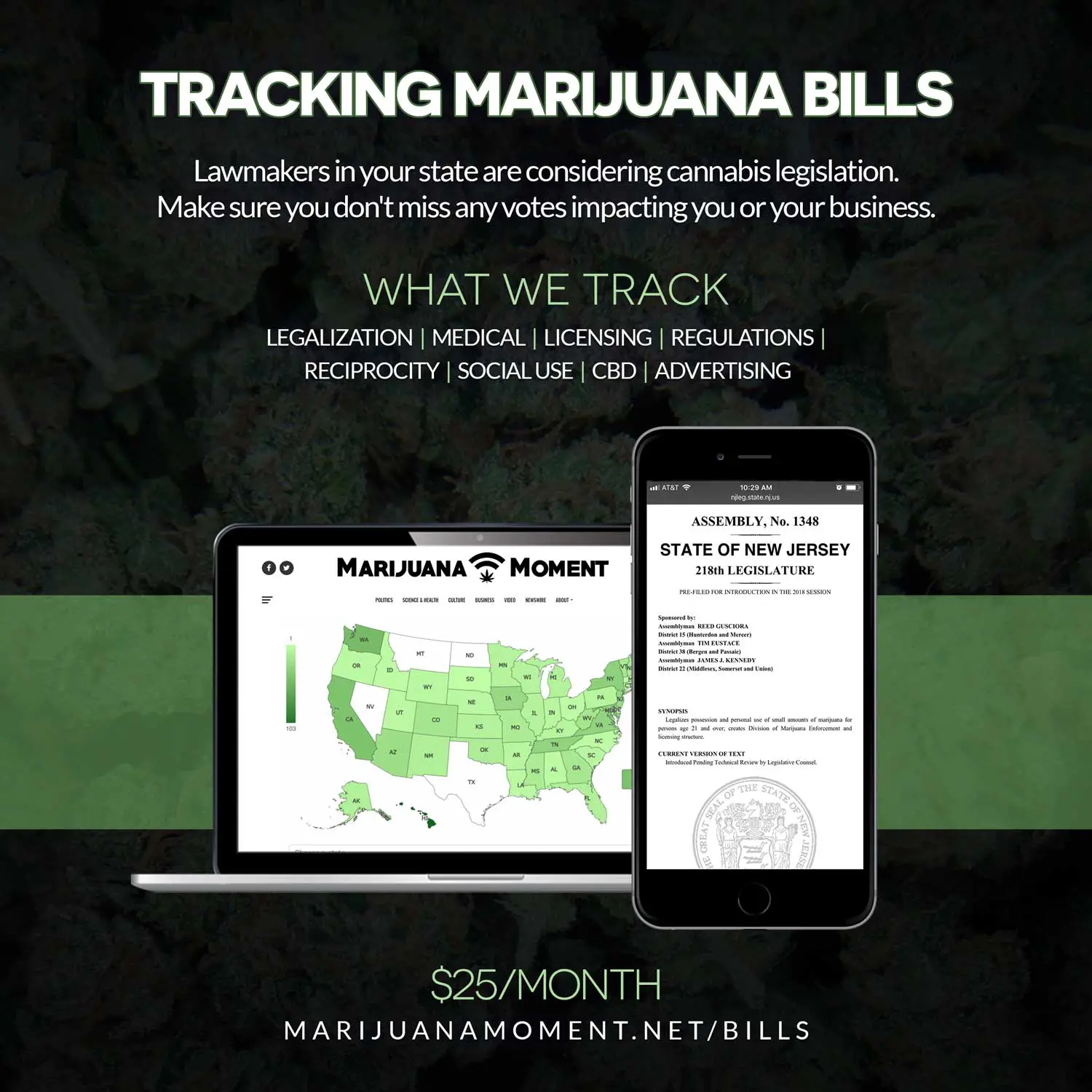
Learn more about our marijuana bill tracker and become a supporter on Patreon to get access.
—
In 2022, U.S. Rep. Mike Garcia (R-CA) applauded Carter, who worked with his office to bring attention to illicit grow operations in his district, leading to a local law enforcement investigation.
Carter gave the congressman credit, saying “your work in taking down the illegal marijuana grows has stopped cartels from exploiting your community, those people forced to work on them and the [money].”
In an interview with Fox News’s Sean Hannity in 2021, she also talked about her work with Garcia—including accompanying him on a helicopter to survey “miles and miles and miles of vast, sophisticated illegal grows worth tens of millions of dollars.”
Cartels have “become extremely more brazen. They’re not afraid of hiding it,” she said. “They don’t hide it because they don’t feel that they’ll ever be held accountable for it.”
In a sense, Carter has seemed to implicitly suggest at multiple times that she supports regulated access to cannabis as a means of promoting public safety and health. Whether and how that implied position will influence federal policy now that she’s confirmed is yet to be seen.
On her social media, she’s previously shared links—without commentary—to news stories about a variety of marijuana-related issues. In addition to her focus on illicit cartel grows, she’s also posted about congressional and state-level legalization votes, staffers in the Biden administration being fired over past cannabis use, Democratic presidential candidates’ support for legalization, the advancement of cannabis banking legislation in Congress and state policy developments such as Alaska’s legalization of cannabis cafes.
Marijuana Moment is made possible with support from readers. If you rely on our cannabis advocacy journalism to stay informed, please consider a monthly Patreon pledge.