In the 1970s, Colombia’s Sierra Nevada became the source of the world’s most famous cannabis. Then Washington’s War on Drugs destroyed the trade and helped create the cocaine cartels that replaced it.
The Bonanza in Numbers
Colombia’s first cannabis economy, at a glance.
80%
Sierra and La Guajira campesinos dependent on cannabis by 1975
150,000
Colombians directly or indirectly linked to the cannabis economy (1979)
3,500 t
Cannabis seized in Operation Fulminante (1979)
25,000
Acres of cannabis crops destroyed in the same operation
Back in the 70s, before cannabis prohibition and the U.S. crackdown turned Latin America’s jungle-green leaves red, there was a time defined by vibrance, transformative power and cultural surge, fueled by tons of weed money flowing from North American pockets into Colombia’s Sierra Nevada. That period, which saw the Santa Marta region rise as an empire built on cannabis, is known as La Bonanza Marimbera. It is the subject of an upcoming documentary by producer Lucas Nosiglia and director Guido Mignogna. Nosiglia is also working with cannabis legend Sergio Puerta on multiple initiatives to revitalize cannabis culture and production in the region.
El Corazón del Mundo, to be presented in 2026, tells the story of those crazy, vibrant years, showcasing how that ever-changing agricultural landscape became the theater of operations for one of the most violent and cruel chapters in the history of drug prohibition, and how those years echo in today’s revival of cannabis production in Colombia.
The Real OGs Are Actually Campesinos
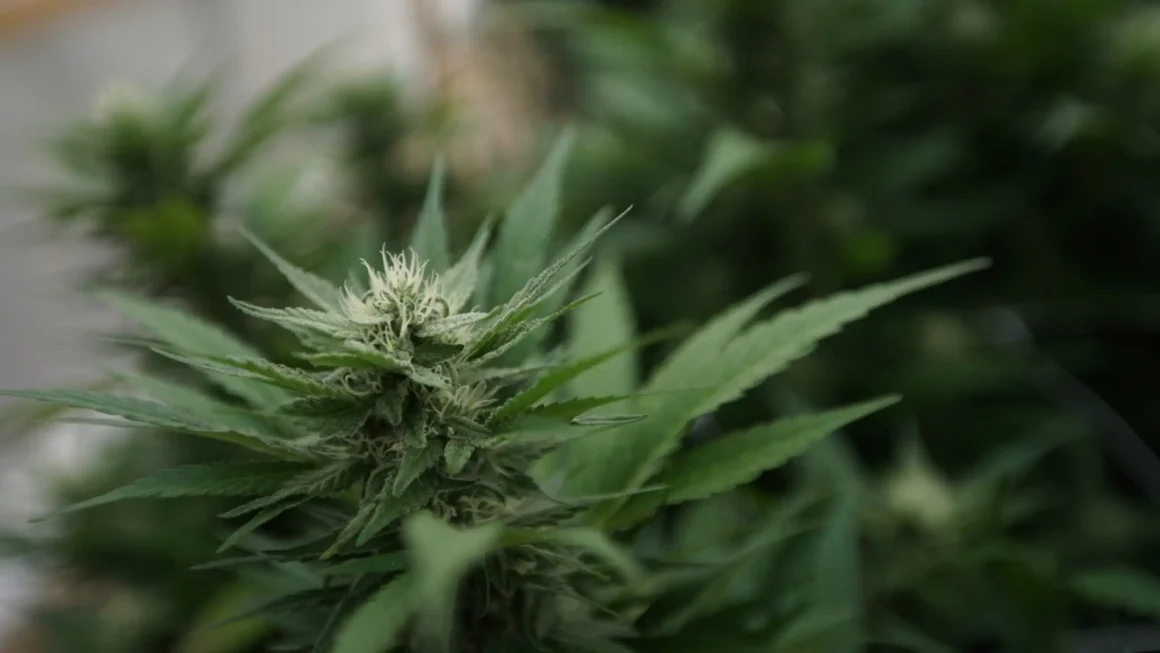
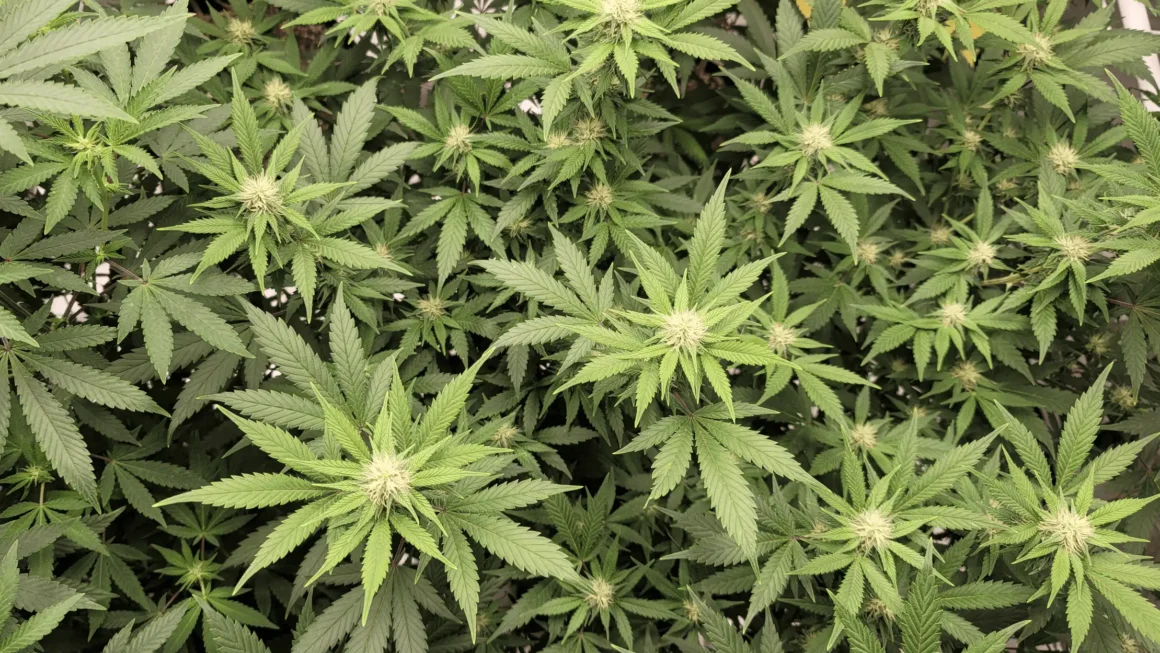
In the late 60s and 70s, the lush slopes of Sierra Nevada became the unlikely epicenter of a new transnational economy. What had been a relatively isolated agricultural frontier of maize, plantain and coffee, turned into the source of Colombia’s first great “green rush” through what can only be described as a convergence of multiple unpredictable circumstances, perhaps a twist of fortune. Weed was an unpredictable revolution. Dense, resinous, and sun-kissed by the Caribbean, it flowed northward in staggering volumes, fueling the anti–Vietnam War counterculture in the U.S., lining the pockets of hippie smugglers, small farmers, and of the newly converted middle classes of the region.
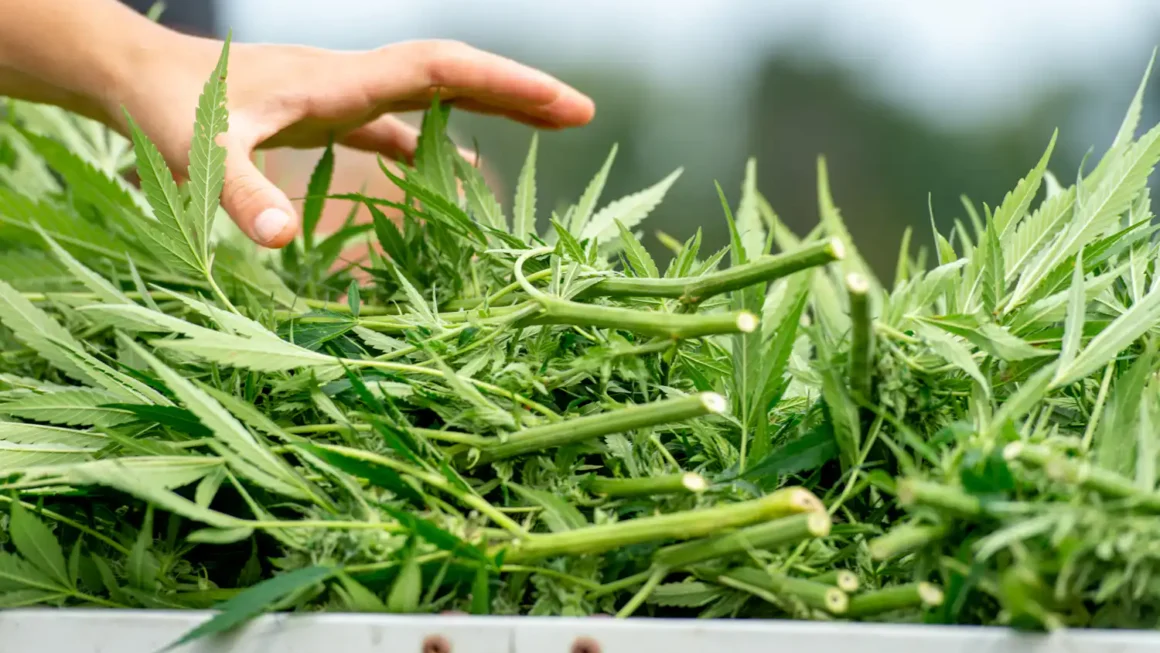
Colombian campesino families, long trapped in cycles of poverty and exploitation at the hands of the United Fruit Company, became master growers. A curious mix of foreign Peace Corps volunteers, adventurers, and young Americans fleeing Vietnam while searching for alternative ways of life, shared cultivation tricks, exchanged seeds and opened new channels of distribution. In towns like Santa Marta and Barranquilla, the bridge was built by marijuana as cargo, stuffed into boats, trucks, and even airplanes and on its way to Miami and New York.
By 1975, an estimated 80% of the campesinos in the Sierra and La Guajira were dependent on cannabis cultivation. But this new Latin American rural economy, tied to the appetite of distant cities and foreign governments, was condemned to face reactionary policies.
Along Those Roads of Gold and Silver Snow
Traditionally, marimba refers to the Afro-Colombian xylophone, central to music and festivity on the Pacific coast. But the very word took on a new life during these years. “There’s, of course, the sound similarity between marihuana and marimba,” explains author, anthropologist and historian Lina Britto. “But there’s also another history, linking African culture to the term.” During the bonanza (Spanish word for “economic boom”), it became a cultural slang, shorthand for bundles of pressed weed ready for shipment. Out of this, the figure of the marimbero was born: men and women who grew, transported, and traded the plant in what quickly became a regional craft.
Small farmers finally earned the money that the United Fruit Company no longer provided after abandoning banana operations in the area. There was also political turmoil, as talk of agrarian reform spread and campesino unions advanced over territories left behind. Money started flowing from hippie movements, smugglers, and urban consumers from developed countries straight into the pockets of Colombia’s middle and lower classes. Towns around Santa Marta and Sierra Nevada experienced growth and prosperity as never before. Being a marimbero became an identity, a way of life and a source of pride, as marimbero families thrived in the early years of the bonanza.
And the child prodigy of this new identity was called Santa Marta Gold, both a strain and a cultural icon. This resinous, golden strain is still known around the world, although most of it is not produced in Santa Marta. These distinctively aromatic buds became the most coveted product of the Bonanza Marimbera and arguably the first global cannabis brand, its reputation in U.S. countercultural markets elevating it to mythic status, where “Colombian weed” became synonymous with Santa Marta Gold. The strain represented the perfect convergence of local ingenuity and global demand.
Santa Marta Gold was not marketed by a state export board, but by smugglers, travelers and word-of-mouth in New York, Miami, and California.
Cultivated in the microclimates of the Sierra Nevada, Santa Marta Gold was both a commercial label and a symbol of quality, commanding premium prices abroad. Hippie networks of the late 60s and 70s celebrated it in underground guides, song lyrics and travel stories, cementing Colombia’s place in the global weed culture’s imagination.
This moment also illustrates how local farmers transformed their knowledge into an international brand without corporate intermediaries, unlike coffee or bananas. Santa Marta Gold was not marketed by a state export board, but by smugglers, travelers and word-of-mouth in New York, Miami, and California. In Britto’s words, it was a “vernacular globalization,” where campesino labor and U.S. counterculture co-produced a commodity that became legendary.
The Empire Strikes Back
So how did something that generated such economic dynamism, such a burst of cannabis culture and local circuits, become a cradle for revenge and armed violence?
By the late 1970s, in the context of the Cold War, Washington decided to tighten its control over Latin America. The “War on Drugs” had already been tested as a tool of political repression, and the U.S. government applied it to a new scenario, launching an international anti-narcotics campaign aimed at seizing control in Central America under the pretext of eradicating marijuana crops in Sierra Nevada and along the Colombia–Venezuela border.
In 1979, Operation Fulminante seized 3,500 tons of cannabis and destroyed almost 25,000 acres of crops. By 1982, fumigations with paraquat and glyphosate, both chemical warfare tools honed during the Vietnam War, were unleashed on campesino fields. These aerial sprays devastated not only cannabis but also subsistence crops like plantain and yucca, and anyone who stood in the way of the planes.
From Boom to Cartel: A Two-Decade Arc
Late 1960s
First Sierra Nevada cannabis crops planted by campesinos working with Peace Corps volunteers and American counterculture travelers.
Early 1970s
Santa Marta Gold becomes the dominant brand in U.S. countercultural markets. Towns around Santa Marta and Sierra Nevada experience unprecedented prosperity.
1975
An estimated 80% of campesinos in the Sierra and La Guajira are dependent on cannabis cultivation.
1979
Operation Fulminante. 3,500 tons of cannabis seized. 25,000 acres of crops destroyed. ANIF estimates 150,000 Colombians linked to the cannabis economy. Legalization is briefly discussed at a public symposium attended by the U.S. ambassador, then dismissed.
1982
Aerial fumigations with paraquat and glyphosate begin, destroying cannabis crops and subsistence agriculture alike.
Mid-1980s
Campesinos and smugglers pivot to coca paste and cocaine hydrochloride. The infrastructure built for cannabis becomes the foundation of the Medellín and Cali cartels.
The U.S. War on Drugs against cannabis built the conditions for the cocaine empires that followed.
The impact was paradoxical and tragic, notes Britto, author of Marijuana Boom: The Rise and Fall of Colombia’s First Drug Paradise. State violence, she argues, “disrupted and rendered useless the mechanisms that more or less functioned to contain violence. Large wars never broke out within the business. But once the state began its attacks, you started to see cinematic shootouts, because now they had the money, the trucks, the arsenals, the big guns, the bodyguards…” What had been a tense, but relatively contained, system of exchange was thrown into chaos.
“Large wars never broke out within the business. But once the state began its attacks, you started to see cinematic shootouts.”
— Lina Britto, historian and author of Marijuana Boom
Scholar Freddy González Subiría explains that every illegal economy inevitably generates a sector of predators, actors for whom violence is the preferred tool. This was a new layer added to the already tense smuggling theater of operations before the U.S. decided on a military crackdown in the region. By the end of the 70s, under increased pressure from the U.S., said predators found fertile ground and became beasts. Inside the business of growing, trading and exporting cannabis, violence was not indispensable. But as the risk of operating increased, predators found an environment perfectly suited to thrive.
Marijuana, once a plant of cultural exchange and subsistence, was now framed as a symbol of criminality, imperial confrontation and national shame.
There Could Have Been Another Way
The scale of the cannabis economy was undeniable. In 1979, Colombia’s own National Association of Financial Institutions (ANIF) estimated that as many as 150,000 Colombians were directly or indirectly linked to the cannabis complex: farmers, transporters, processors, dock workers and traders. That same year, in an extraordinary moment, proposals for legalization were publicly discussed at a symposium, even attended by the U.S. ambassador, Britto reminds us. For a brief instant, legalization was on the table, an alternative path before repression and criminalization locked in.
As a result, minor farmers who wanted to stay in business were forced toward the cocaine markets. By the mid-80s, much of the infrastructure that had once carried weed was now trafficking coca paste and cocaine hydrochloride. The transition gave rise to the infamous cartels of Medellín and Cali, and with them, an escalation of violence far beyond anything the marimberos had imagined.
Summoning Spirits from Ancestors
The Bonanza Marimbera is long gone, but in some ways it still defines how Colombians talk about marijuana, development and sovereignty.
When I asked Britto, who grew up near these regions, what kinds of memories local people from Sierra Nevada have of those years, she admitted that violence overshadowed the bonanza and transformed its memory into one of conflict and struggle. She believes the mechanisms locals once used to resolve disputes—rituals, duels or negotiations, which seldom escalated into serious bloodshed—were disrupted by the huge sums of money flowing from the smuggling complex, compounded once producing cannabis became a dangerous business under Nixon’s “War on Drugs.”
Today, as cannabis legalization sweeps across the Americas, Colombia once again faces a crossroads. The same soil that produced the legendary Santa Marta Gold could now be the foundation for a legal, regulated industry. The work of historian Lina Britto, alongside filmmakers and entrepreneurs like Nosiglia and growers like Sergio Puerta, is crucial for allowing this story the depth and dignity it deserves, and to reclaim a glorious history now displaced by violence. Puerta appeared on High Times magazine many times, but notably once 30 years ago. That year, he’d produced around 120 different weed strains. All while narcotic and state-backed networks prohibited master growers like Sergio from cultivating cannabis in their own regions and homelands. Now, Sergio is back in Santa Marta, leading multiple initiatives. The Marimbera generation, and those who grew under its shadow, are ready to rewrite history and set the record straight.
Coming in 2026
El Corazón del Mundo
A documentary by Lucas Nosiglia and Guido Mignogna on La Bonanza Marimbera and Colombia’s cannabis revival.
Further reading: Marijuana Boom: The Rise and Fall of Colombia’s First Drug Paradise, by Lina Britto.