The Republican chair of a key House committee says a proposed amendment to a large-scale agriculture bill that would delay a hemp THC ban by a year isn’t relevant to the legislation, casting doubt on the prospects that it will get a vote in the panel next week.
Shortly after Rep. Jim Baird (R-IN) submitted the amendment—which supporters say is necessary to give farmers more time to prepare and stakeholders more time to negotiate a long-term deal on potential regulations for hemp products—House Agriculture Committee Chairman Glenn Thompson (R-PA) reportedly said he doesn’t think the proposal is germane to the 2026 Farm Bill that’s scheduled for a markup on Tuesday.
If that’s the position of the chair, as CQ reported, it’s unlikely the amendment will receive a vote in the panel.
Thompson “doesn’t think the amendment is germane, making it unlikely that Baird could offer the provision for a vote at the markup despite bipartisan backing,” the outlet reported. “The House Energy and Commerce Committee has jurisdiction over the Food and Drug Administration, which is responsible for regulating hemp products when they reach the market. The Agriculture Department only has control over the plant.”
CQ said that Baird has acknowledged his amendment is unlikely to succeed in being attached to the 2026 Farm Bill. His office did not immediately respond to a request for comment from Marijuana Moment.
The hemp sector has been sounding the alarm about the cannabinoid ban that was included in broader spending legislation President Donald Trump signed into law last year. They argue that the redefinition of what constitutes federally legal hemp—which is currently set to take effect in November— would effectively upend the market that’s emerged since the crop was legalized under the 2018 Farm Bill during the president’s first term.
Here’s the summary of the Baird amendment:
“This amendment would delay the redefining of hemp by 1 year in section 781 of the Agriculture, Rural Development, Food and Drug Administration, and Related Agency Appropriations Act of 2026.”
Delaying the THC ban by a year would serve as a temporary bridge for the industry as it works to convince Congress to regulate—rather than recriminalize—hemp products, and it’s a shorter delay than Baird is working to secure through separate standalone legislation he filed this session that would put a pause on the policy change for two years to give stakeholders more time to navigate the issue.
Since 2018, cannabis products have been considered legal hemp if they contain less than 0.3 percent delta-9 THC on a dry weight basis.
The provisions set to take effect later this year specify that, within one year of enactment, the weight will apply to total THC—including delta-8 and other isomers. It will also include “any other cannabinoids that have similar effects (or are marketed to have similar effects) on humans or animals as a tetrahydrocannabinol (as determined by the Secretary of Health and Human Services).”
The new definition of legal hemp will additionally ban “any intermediate hemp-derived cannabinoid products which are marketed or sold as a final product or directly to an end consumer for personal or household use” as well as products containing cannabinoids that are synthesized or manufactured outside of the cannabis plant or not capable of being naturally produced by it.
Legal hemp products will be limited to a total of 0.4 milligrams per container of total THC or any other cannabinoids with similar effects.
Within 90 days of the bill’s enactment, the Food and Drug Administration (FDA) and other agencies were supposed to publish list of “all cannabinoids known to FDA to be capable of being naturally produced by a Cannabis sativa L. plant, as reflected in peer reviewed literature,” “all tetrahydrocannabinol class cannabinoids known to the agency to be naturally occurring in the plant” and “all other known cannabinoids with similar effects to, or marketed to have similar effects to, tetrahyrocannabinol class cannabinoids.”
However, FDA appears to have missed that deadline. A spokesperson told Marijuana Moment earlier this month that the lists would be posted in the Federal Register when they’re available.
Lawmakers from across the aisle have been raising concerns about the potential consequences of the hemp redefinition, which would eradicate most consumable cannabinoid products that have become commonplace in states across the U.S., including those where marijuana hasn’t been legalized.
Rep. James Comer (R-KY) and Kentucky Agriculture Commissioner Jonathan Shell are among the critics of the ban, and they sent a letter to Sen. Mitch McConnell (R-KY) last week imploring him to use his influence to avert the recriminalization, at least on a temporary basis, by supporting the proposed implementation delay.
While McConnell championed hemp legalization under the 2018 Farm Bill, however, the former Senate majority leader has supported unraveling the hemp THC market that he’s described as an unintended consequences of the broader agriculture legislation.
—
Marijuana Moment is tracking hundreds of cannabis, psychedelics and drug policy bills in state legislatures and Congress this year. Patreon supporters pledging at least $25/month get access to our interactive maps, charts and hearing calendar so they don’t miss any developments.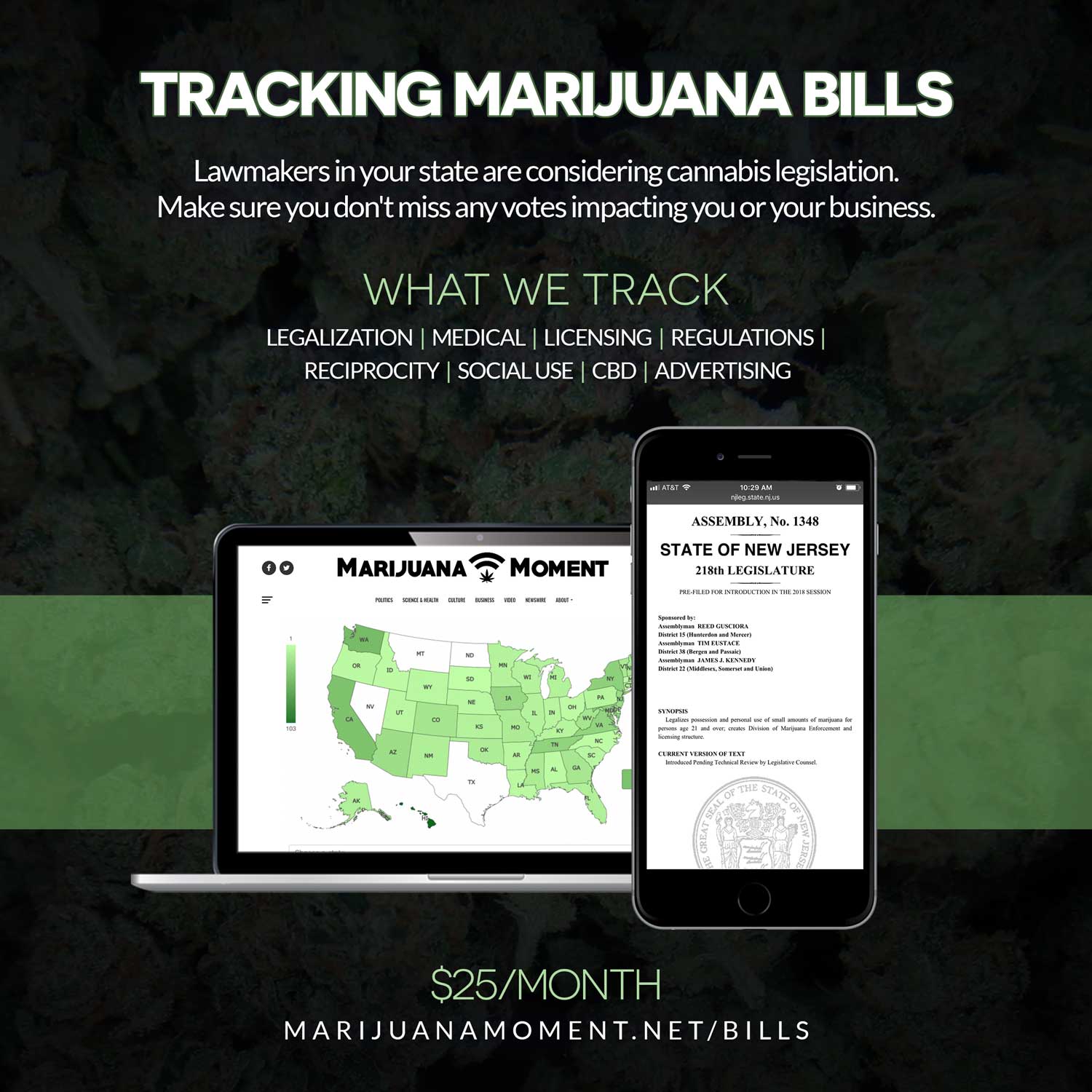
Learn more about our marijuana bill tracker and become a supporter on Patreon to get access.
—
Meanwhile, last month, major alcohol retailers came together to encourage Congress to delay the enactment of the law Trump signed that will federally recriminalize hemp-derived THC beverages and other products.
The coalition says it wants to apply the same regulatory structure that governs beverage alcohol producers, distributors and merchants to hemp drinks “to ensure safe, transparent access.”
Other alcohol industry groups such as Wine & Spirits Wholesalers of America have also backed regulating hemp products instead of prohibiting them.
Photo courtesy of Brendan Cleak.
Marijuana Moment is made possible with support from readers. If you rely on our cannabis advocacy journalism to stay informed, please consider a monthly Patreon pledge.