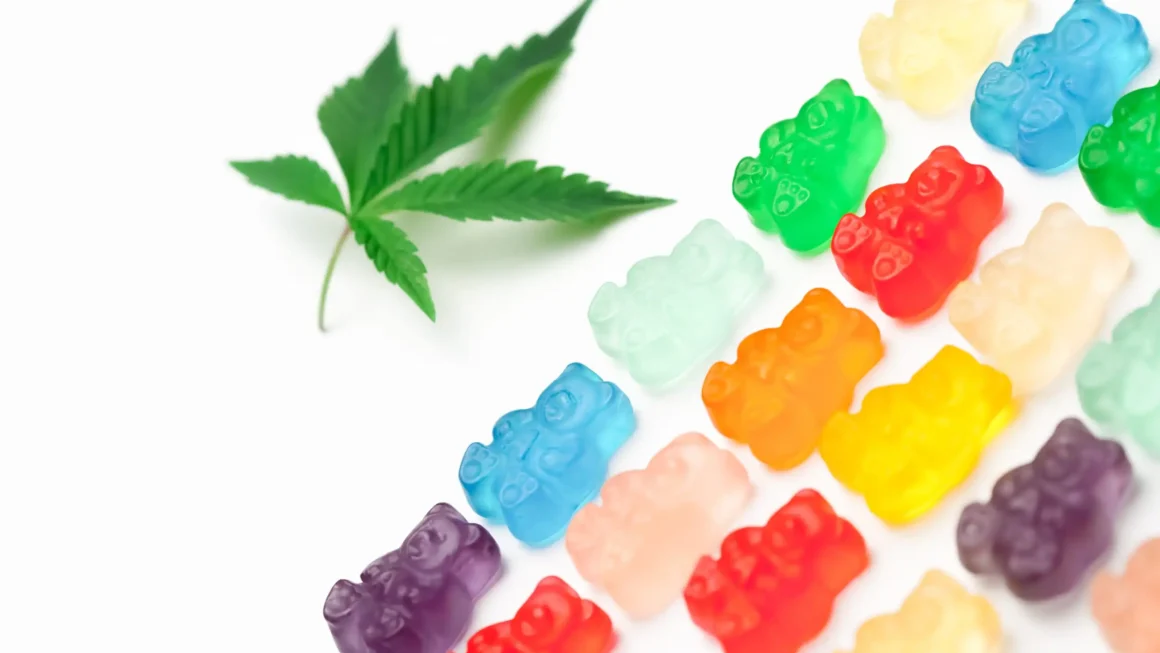
An anti-drug group is seeking to mobilize voters to ask U.S. House and Senate candidates about their stances on hemp THC products as the November elections approach.
The Community Anti-Drug Coalitions of America (CADCA) included two questions about the issue in its 2026 Congressional
Election Guide amid recent developments on Capitol Hill concerning the crop and its derivatives.
Hemp derivatives with less than 0.3 percent delta-9 THC on a dry-weight basis were federally legalized under the 2018 Farm Bill that Trump signed during his first term in office. But late last year, the president signed new legislation containing provisions that redefined hemp to make it so only products with 0.4 milligrams of total THC per container would remain legal after November 12.
Now, however, under provisions included in a funding bill Trump signed this month, the effective date of the ban for most products is being pushed back to December 11 to give lawmakers more time to craft regulations for hemp derivatives. There is a carve-out, however, to allow the recriminalization on November 12 of synthetic cannabinoids “that are not capable of being naturally produced by a Cannabis sativa L. plant.”
CADCA’s election guide touches on a number of drug policy issues it wants candidates for federal office to be asked about—including prevention, treatment, e-cigarettes, kratom and more.
The hemp-related questions it has for congressional candidates read:
“1. Intoxicating hemp products include a rapidly changing range of cannabinoids and formulations that can be modified or reengineered as laws change, allowing the market to evolve faster than laws and regulations can respond. Many health and safety risks also arise from the cannabinoids themselves and therefore cannot be eliminated through age restrictions, labeling, potency limits, or licensing. Do you support excluding products containing intoxicating amounts of cannabinoids from the federal definition of hemp?
2. Congress enacted changes to the federal definition of hemp that are scheduled to take effect in November 2026. These changes would result in the removal of most intoxicating hemp products from convenience stores, smoke shops, grocery stores, and online. Do you support allowing these already enacted changes to take effect without further delays?”
The second hemp question in the guide is somewhat moot now that Trump has signed the legislation delaying most parts of the ban past November, but the group may still be wondering whether candidates would support moving the effective date even further.
This isn’t the first time that CADCA has advocated on the issue. It led a sign-on letter in 2024 pressing Congress to ban intoxicating hemp products.
CADCA has also previously worked to oppose bills to federally legalize marijuana and to ease cannabis businesses’ access to banking services.
On the other side of the hemp debate, advocates for convenience stores recently discussed their views that the retail outlets are an ideal place to continue to sell hemp products under any new regulations that are enacted.
Members of Congress, meanwhile, are debating how—and whether—the crop’s derivatives should be regulated as an alternative to prohibition.
Several Republican lawmakers recently spoke to Marijuana Moment about the kinds of rules they would like to see enacted to keep hemp THC products legal.
A number of lawmakers from both chambers and both parties have filed or are circulating a growing number of bills to prevent the scheduled federal recriminalization of hemp THC drinks and other products. Until now, none of those proposals have gained traction with congressional leaders.
For example, Reps. Beth Van Duyne (R-TX) and Greg Landsman (D-OH) filed a bill to keep hemp THC drinks legal while taxing and regulating them like alcohol.
Rep. James Comer (R-KY), who chairs the House Oversight and Government Reform Committee, is circulating legislation that would delay a planned federal ban on hemp THC products and institute some regulations—including packaging requirements, testing rules and age limits.
Separately, Rep. Andy Barr (R-KY), filed a lengthier proposal to prevent the federal recriminalization of hemp THC products and put in place a number of regulations for manufacturing, labeling, sales and taxation of hemp-derived products, including an age limit of 21.
Trump and White House officials repeatedly pressed Congress to delay, alter or reverse the ban in recent months.
In a letter to House Speaker Mike Johnson (R-LA) in June, for example, White House Office of Management and Budget (OMB) Director Russell Vought said the Trump administration wants lawmakers to “ensure the fair treatment of hemp products”—specifically citing Barr’s earlier amendment to keep many hemp products legal while adding regulations and taxes.
The administration “welcomes the opportunity to work with the Congress to, at a minimum, update the statutory definition of final hemp-derived cannabinoid products to allow Americans to benefit from access to appropriate full-spectrum CBD products,” OMB separately said in June, “while preserving the Congress’s intent to restrict the sale of products that pose serious health risks.”
Also in April, the president himself urged congressional lawmakers to again redefine hemp to avoid recriminalization of full-spectrum CBD products.
“I am calling on Congress to update the Law to ensure that Americans can continue to access the full-spectrum CBD products they have come to rely on, and that help them, while preserving Congress’s intent to restrict the sale of products that pose Health risks,” Trump said in a Truth Social post.
“We must get this done RIGHT and FAST, especially for those who saw that CBD helps them,” he said. “Plus, I am told it will also help our GREAT FARMERS, who we love, and will always be there for.”
Industry advocates say that the law as enacted last year not only threatens to prohibit intoxicating and synthetic cannabinoid products but also stands to remove popular full-spectrum CBD products that many Americans use therapeutically from the market.
“ONE in FIVE adults used it in the past year, and many say it improved their chronic pain enormously,” the president said in his social media post, adding that hemp-derived CBD “has made a HUGE difference for so many people.”
He also referenced a new initiative the administration launched in April to cover up to $500 worth of hemp-derived products each year for eligible Medicare patients. The program being implemented by the Centers for Medicare & Medicaid Services (CMS) focuses largely on CBD but also allows products to have up to 3 milligrams of total THC per serving. A federal judge granted the government’s motion to dismiss marijuana legalization opponents’ lawsuit challenging the initiative, but that is being appealed.
“In December, I signed a very important Executive Order calling for Research and Innovation for Hemp-derived CBD,” Trump said. “Our wonderful Dr. Mehmet Oz moved fast to follow the directive in the Executive Order, and launched a model for some Seniors earlier this month. But more must be done!”
“Please get it done, and SOON,” the president said in reference to a congressional fix for the broad recriminalization set to take effect in November. “Thank you for your attention to this matter!”
Some members of the alcohol industry have also urged Congress to regulate, rather than ban, hemp products.
The National Restaurant Association recently sent a letter urging congressional leaders to delay the federal recriminalization of hemp THC beverages and replace it with a regulatory framework that “ensures consumer safety while meeting growing market demand” for the products as an alternative to alcohol.
Major retailer Target, meanwhile, recently moved to expand its sales of hemp THC drinks into more states.
Photo courtesy of Philip Steffan.
Marijuana Moment is made possible with support from readers. If you rely on our cannabis advocacy journalism to stay informed, please consider a monthly Patreon pledge.


Related Posts

The Great Outdoors Just Got Higher: One in Three Hikers Has Hit the Trail High on Weed
Federal Marijuana Rescheduling Will Have ‘Negligible Impact’ On South Dakota’s Medical Cannabis Program, Attorney General Says