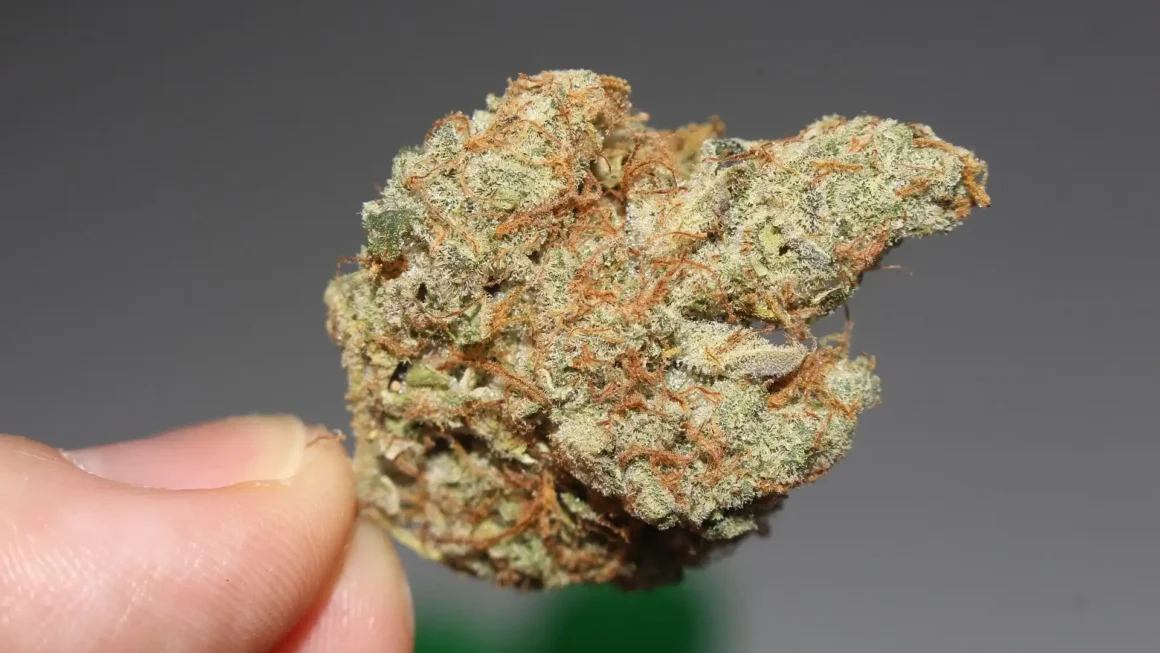
The DEA invited only opponents to its rescheduling hearing, turned reform supporters away and refused to livestream it. Then the government’s own witnesses stood up and made the case that cannabis has real medical value and is safer than substances sold at every gas station. Here is what has been happening inside a room the public is not allowed to see.
The most consequential federal cannabis hearing in more than fifty years began on June 29 in a courtroom in Arlington, Virginia, with roughly 25 public seats and no cameras. The DEA denied a request from Marijuana Moment, a congressman and other news outlets to livestream the proceedings. So what the country gets is secondhand, filtered through the handful of reporters and attorneys allowed in the room, and through the daily social media broadcasts of the people who want the reform dead.
Strip away the noise and the picture inside is clear. The government is arguing, with its own scientists, that cannabis belongs out of Schedule I. The case against it has so far amounted to attacking the test rather than the plant.
A Hearing Built for One Side
The setup matters because it shapes everything that follows. The DEA is the proponent of the rule, a strange posture for an agency that spent half a century defending prohibition. Under the process Acting Attorney General Todd Blanche set in motion, only “interested persons” could participate, and DEA Administrator Terrance Cole decided reform supporters did not qualify because they were not “adversely affected or aggrieved” by the reform. The result is an official participant list, published on the DEA’s own website, made up entirely of opponents: the National Drug and Alcohol Screening Association, the Tennessee Bureau of Investigation, Smart Approaches to Marijuana, the states of Nebraska, Idaho, Indiana and Louisiana, DUID Victim Voices, Kenneth Finn MD, and Phillip A. Drum PharmD.
Reform advocates gathered outside DEA headquarters before the first gavel to say they had been shut out. The Marijuana Policy Project put the irony plainly, noting the DEA would be arguing for the first time in its history that cannabis meets the requirements for removal from Schedule I. The agency built the hearing, chose the guests and then had to make the case its own guests came to tear down.
What the Government’s Witnesses Actually Said
The heart of the hearing is a single legal question. To leave Schedule I, cannabis needs just one currently accepted medical use. The government says it has at least three: pain, anorexia tied to a medical condition and chemotherapy-related nausea.

Cannabis Business Times, whose reporter was in the room for the FDA witness’s testimony, reported that FDA scientist Dominic Chiapperino walked the court through the agency’s ten-month evaluation. His team compared cannabis against heroin, fentanyl, oxycodone, cocaine, benzodiazepines, alcohol and tobacco. Asked directly whether marijuana has fewer overdose deaths than those comparators, he answered, “Yes, that’s what we observed.” He said cannabis withdrawal looks like tobacco withdrawal, and that the data supports Schedule III. Of 39 clinical trials his team reviewed, the strongest evidence was for neuropathic pain.

The government’s second witness, New Hampshire physician Corey Burchman, testified on day two about treating pain patients. According to sources in the room who spoke with Marijuana Moment and Cultivated, Burchman said that once medical cannabis became available he and his colleagues would “avidly use that ability to limit opioids,” and that some patients transitioned off prescription painkillers entirely. His line on relative safety was the sharpest of the hearing. “Withdrawal from opioids is like a dumpster fire,” he said. “Withdrawal from marijuana is more like a dying glowing ember of a campfire.”
None of this makes cannabis harmless. Heavy use is linked to cannabis use disorder, a real risk the science does not dispute. The government did not pretend otherwise. Its own lawyer, James Schwartz, told the court the hearing was “not about legalization” and that the government was “not putting forth any evidence to suggest marijuana is not dangerous,” only that a drug must be weighed by its risks against its medical benefit. That is a scientific argument. What came back at it mostly was not.
The Opponents Are Fighting the Test, Not the Plant
Unable to dispute that cannabis is used medically across more than 40 states, opponents spent day two attacking the yardstick. For years, the FDA used a five-part test to judge accepted medical use, one that demanded known, reproducible chemistry and large controlled trials. In 2023, the government switched to a two-part test that asks whether licensed providers widely use the substance under state law, and whether credible science supports at least one condition. Opponents call the switch proof that politics corrupted the process.
The problem is that the switch was neither secret nor cannabis-specific. In 2024, the Justice Department’s Office of Legal Counsel ruled the old five-part test “impermissibly narrow,” and the DEA has since used the two-part standard for other substances. Schwartz told the court the legality of the test was already settled and off the table for the hearing. When NDASA attorney David Evans pressed Chiapperino on why the agency abandoned the old test anyway, DEA lawyers objected and he withdrew the question.
There is a reason the old test failed cannabis, and it is not safety. As Vanderbilt law professor Robert Mikos has written, the five-part test amounted to a kind of tyranny: it demanded large-scale clinical trials to justify removing a drug from Schedule I, while Schedule I status blocked exactly those trials from happening. It is a test botanical cannabis, with many active compounds rather than a single molecule, could never pass. One attorney in the room described the opponents’ whole line of attack to Cultivated News as “ships passing in the night,” an argument about a test that is not material to the case actually before the judge.
Where the Prohibitionist Case Falls Apart
Outside the courtroom, the loudest voice has been Kevin Sabet of Smart Approaches to Marijuana, who has posted a video nearly every day. The videos are confident and aggrieved, and they keep colliding with the record.
He described a hearing packed with “the suits, all the industry folks.” There were industry executives and lawyers in the public gallery, but not one is a designated participant with the power to question witnesses or enter evidence. That role belongs entirely to the opponents. He said the government was arguing “the opposite of what the science says,” yet SAM’s own outlet, The Drug Report, reported that the FDA witness testified cannabis has accepted medical use for three conditions, the exact opposite of Sabet’s claim that there is none. He called Chiapperino’s acknowledgment that cannabis would fail the old five-part test “truly extraordinary,” without mentioning the Justice Department had already ruled that test unlawfully narrow.
Then there is the money. Sabet’s strongest-sounding argument is that the government moved “solely because” of donations, and the donations are real. Trulieve CEO Kim Rivers, whom Forbes called “the Trump whisperer,” was in the Oval Office when Trump signed the rescheduling order, and cannabis companies gave millions to a PAC that funded his. But “solely” has to erase a ten-month scientific review, an eight-factor analysis and years of majority public support to hold up, and MJBizDaily noted it is doubtful the political argument carries any weight in a hearing about medicine. It is also an odd charge from a group funded by donors it will not name, whose action arm reported $8.6 million in contributions in 2024. On day three, Sabet suggested the government’s pain doctor was “maybe even paid,” then added “who knows,” while calling his own side “the real scientists.”

The pattern is consistent, and it is not new. In a 2025 letter to Trump, SAM claimed drug cartels were running marijuana farms “many licensed at the state level,” and cited a Wall Street Journal article that said the opposite, that the sites were unlicensed. SAM could not produce evidence that any cartel had been licensed. For years, the group has pushed the claim that cannabis lowers IQ, leaning on a single decade-old study challenged in the very journal that published it and that the original author’s own follow-up work could not confirm. NORML’s Paul Armentano, who has tracked SAM for years, calls the continued use of that talking point “unethical” and “dishonest.” On day three, Sabet claimed the FDA witness had blown up the idea of cannabis as a PTSD treatment, a straw man given that no serious advocate claims cannabis cures PTSD and that PTSD is not among the three conditions the government’s case rests on.
Why the Noise, If They’re Winning the Room
So here is the question worth sitting with. If the prohibitionists secured a hearing where every invited participant is on their side, where supporters were excluded and the public cannot even watch, why the frantic daily messaging? Why tell people the room is full of an industry that has no vote, that the science says something it does not, that a settled legal question is a fresh scandal?
Because the room was never the hard part. Public opinion is. Most Americans support reform, the medical evidence keeps accumulating, and a government agency that fought legalization for fifty years just stood up and said, through its own FDA witness, that cannabis carries less overdose risk than the substances sold at any gas station. You can stack a hearing. You cannot stack a country. The hearing was the easy win. Moving the public is the fight SAM is actually losing, and it shows in how loudly they argue about a room they already control.
The hearing runs through July 15. The opponents present their own witnesses next, among them Harvard’s Bertha Madras and Yale’s Deepak Cyril D’Souza, and their attorneys will cross-examine Burchman. Sources told Cultivated to expect their knives sharpened. They will get their turn on the record. The record so far belongs to the other side.
This article is a reported analysis. It is based on public records, federal filings, and on-the-record reporting from Cannabis Business Times, Marijuana Moment, Cultivated and MJBizDaily, as well as statements made publicly by the people named. The views and interpretations are the author’s own. Claims about what was said inside the hearing are attributed to participants and to outlets that spoke with people in the room, as the proceedings were not livestreamed and official transcripts are not yet available.

Related Posts
Iowa Democratic Lieutenant Governor Candidate Defends Marijuana Legalization Plan From Criticism
Medical Marijuana Has ‘Made A Difference’ For Pete Buttigieg’s Family And For Veterans He Served With In The Military, He Says