The governor of Massachusetts has signed a bill to double the legal marijuana possession limit for adults and revise the regulatory framework for the state’s adult-use cannabis market.
Gov. Maura Healey (D) approved the legislation on Sunday, about a week and a half after lawmakers sent it to her desk in unanimous House and Senate votes.
“The cannabis industry is an important part of Massachusetts economy—supporting jobs and local businesses and generating revenue for cities and towns,” Healey said in a press release. “It’s important that we are doing everything we can to make sure this industry is set up for success and that we remain competitive in this fast-growing market. I’m grateful to the Legislature for their leadership on this critical reform bill.”
A bicameral conference committee had spent months working out provisions of the legislation after both chambers passed differing versions last year, and the panel approved a compromise approach on Monday.
“With the governor’s signature today our legislature takes an important step in making the cannabis industry here in Massachusetts more responsive, profitable, and competitive for business owners and consumers,” Sen. Adam Gómez (D), who co-chaired the bicameral panel, said . “This legislation strengthens oversight of the Cannabis Control Commission, making smart updates that support small businesses, improve accountability, and ensure consumers can access cannabis safely and legally.”
“Through clarifying delivery and advertising rules, increasing transparency on accounts receivable, raising purchasing amounts, and modernizing license caps, we are building a more stable and equitable cannabis marketplace for our state and I am proud of our body for prioritizing reform this session,” he said.
Rep. Daniel M. Donahue (D), who also co-chaired the conference committee and who with Gómez additionally co-chairs the Joint Committee on Cannabis Policy, said he is “thrilled” the legislation has become law.
“These reforms signal a renewed commitment from the Commonwealth to ensuring a safe, equitable, and prosperous future for the legalized cannabis industry,” he said. “I look forward to working with the administration through their implementation.”
Among the revisions to the state’s cannabis law is a section that increases the personal possession limit for marijuana from one to two ounces. Colorado enacted the same reform in 2021 after that state’s cannabis market matured.
H.5350 also reduces the size and revise the organization of the Cannabis Control Commission (CCC), while also updating limits on marijuana business licensing.
—
Marijuana Moment is tracking hundreds of cannabis, psychedelics and drug policy bills in state legislatures and Congress this year. Patreon supporters pledging at least $25/month get access to our interactive maps, charts and hearing calendar so they don’t miss any developments.![]()
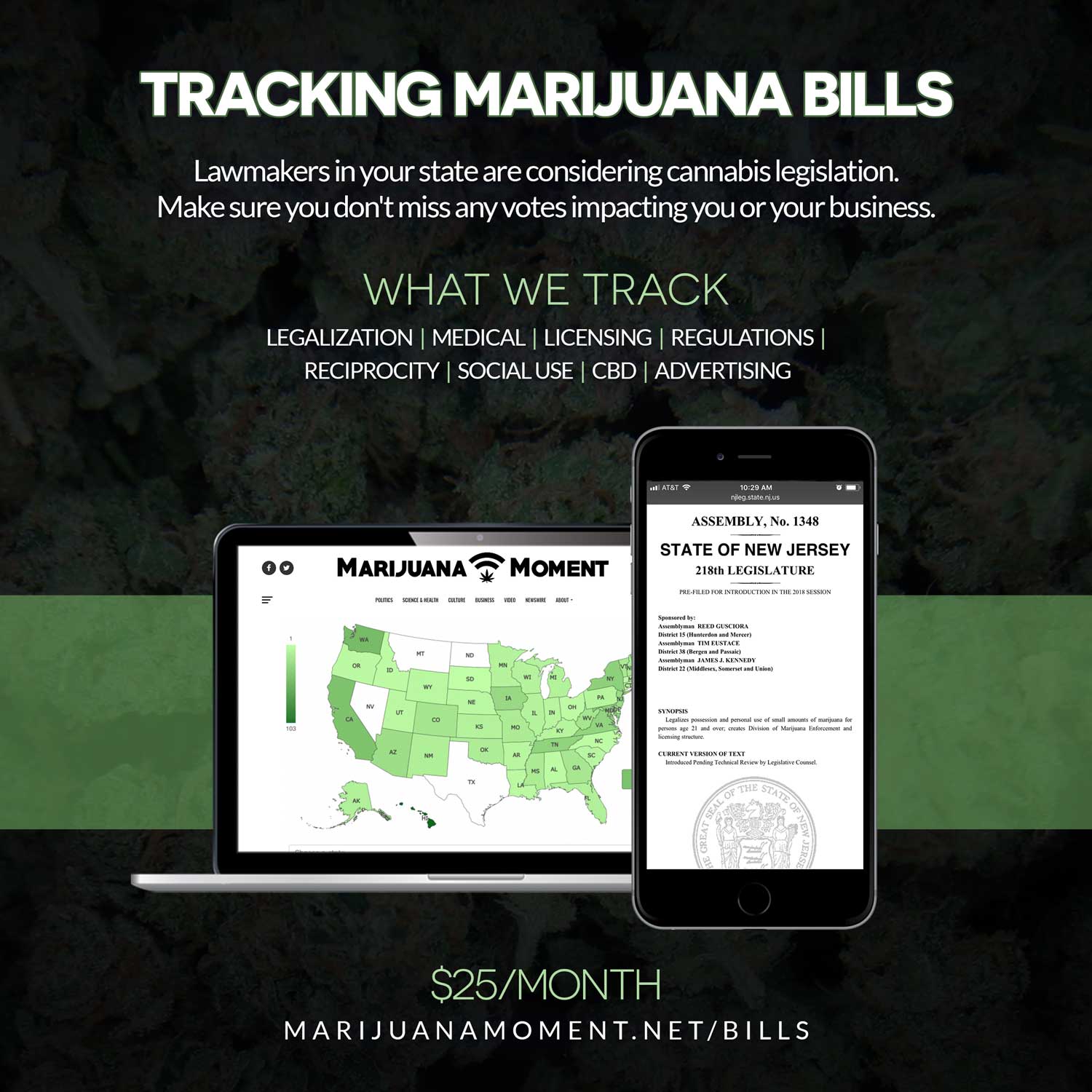
Learn more about our marijuana bill tracker and become a supporter on Patreon to get access.
—
Under both chambers’ versions of the bill, CCC would be comprised of three members rather than the current five. The conference committee report that has now been enacted into law adopts provisions from the House measure that will allow the governor to make all appointments, rather than the Senate approach to give one of the appointments to the attorney general. Under prior law, the treasurer also played a role in appointing commission members, but that will no longer be the case.
The proposal requires that one member of CCC to have a background in social justice, while the other two commissioners need to have backgrounds in public health, public safety, social justice, consumer regulations or the production and distribution of cannabis.
The new law also increases the amount of licenses that a single entity can possess from three to six, while additionally raising from 10 percent to 20 percent the threshold of much equity in a business is considered ownership for the purpose of counting toward the cap on licenses. It also removes a current requirement that medical cannabis operators be vertically integrated to simultaneously cultivate, manufacture and sell marijuana.
It additionally gives regulators the ability to allow dispensaries to advertise sales, discounts and customer loyalty programs inside of retail locations and by opt-in email, and it specifies that marijuana delivery operators can deliver to any municipality unless local officials proactively prohibit cannabis businesses and opt out of delivery.
The measure also creates a new portal for reporting illegal conduct and directs regulators to create a list of “delinquent” cannabis businesses that have not paid their debts to other operators for more than 60 days and prevents others from doing business with those on the delinquent list until debts are paid off.
The legislation additionally requires regulators to study and report on hemp-derived products, the public health impacts of cannabis, tax policy and workplace safety standards.
Ahead of the governor’s signing the bill, CCC published guidance on the new law’s immediate impact.
After the bill was signed on Sunday, CCC Executive Director Travis Ahern said that “during this transition, the organization will remain focused on its primary mission of regulating a safe, equitable cannabis industry for consumers, patients, business leaders and taxpayers in Massachusetts.”
The cannabis regulation reform’s enactment comes as marijuana businesses in the state have filed a lawsuit aiming to block an initiative to roll back the state’s voter-approved legalization law from reaching the November ballot.
If passed, the state wouldn’t revert back to blanket prohibition; rather, it would repeal the commercial recreational sales and personal home cultivation components of the law while still allowing adults 21 and older to possess up to an ounce of cannabis for personal use.
Possession of more than one ounce but less than two ounces would be effectively decriminalized, with violators subject to a $100 fine. Adults could also continue to gift cannabis between each other without remuneration. Medical marijuana sales would remain legal.
The measure is currently before the legislature after supporters turned in an initial batch of signatures last year, and lawmakers have until May 5 to act on the proposal. If they choose not to enact it legislatively, the campaign would need to go through another round of petitioning and get at least 12,429 certified signatures by July 1 to make the November ballot.
Proponents faced skeptical questioning from lawmakers at a hearing of the Joint Committee on Initiative Petitions last month, with several raising concerns about the motivations behind the anti-marijuana measure and its implications for consumers and businesses.
A recent Bay State Poll from the University of Hampshire’s States of Opinion Project found that a majority of Massachusetts adults oppose the marijuana sales and cultivation repeal initiative.
Meanwhile, in November, the legislature’s Joint Cannabis Policy Committee advanced a bill that would require a study into legal barriers facing first responders who wish to use marijuana in compliance with state law.
Regulators would also need to look into the efficacy of marijuana in the treatment of anxiety, depression and post-traumatic stress disorder (PTSD). They would additionally examine laws and policies for cannabis use by police officers and first responders in other jurisdictions and “any other topics the commission deems relevant.”
The bill was reported out as lawmakers in a different committee approved separate legislation to provide employment protections for people who use marijuana. Another panel advanced a similar cannabis employment protections bill in September.
Meanwhile, the head of Massachusetts’s marijuana regulatory agency recently suggested that the measure to effectively recriminalize recreational cannabis sales could imperil tax revenue that’s being used to support substance misuse treatment efforts and other public programs.
To that point, Massachusetts recently reached another marijuana milestone, with officials announcing in February that the state has surpassed $9 billion in adult-use cannabis purchases since the market launched in 2018.
A report from the Cannabis Control Commission (CCC) found that legalization is achieving one of its primary goals: disrupting illicit cannabis sales as adults transition to the regulated market. It shows that among adults who reported past-year marijuana use, an overwhelming 84 percent said they obtained their cannabis from a licensed source.
Massachusetts lawmakers also recently assembled a bicameral conference committee to reach a deal on a bill that would double the legal marijuana possession limit for adults and revise the regulatory framework for the state’s adult-use cannabis market.
In December, state regulators also finalized rules for marijuana social consumption lounges.
CCC recently launched an online platform aimed at helping people find jobs, workplace training and networking opportunities in the state’s legal cannabis industry.
Separately, lawmakers are also advancing legislation to establish pilot programs for the regulated therapeutic use of psychedelics.