Mississippi’s governor has vetoed a pair of bills to expand medical marijuana access while signing separate legislation to support research in hopes of gaining federal approval for the psychedelic ibogaine as a novel treatment option.
Lawmakers approved each measure by strong margins, but on Thursday Gov. Tate Reeves (R) rejected the cannabis proposals while accepting the psychedelics one.
One of the vetoed bills, known as the “Right to Try Medical Cannabis Act,” would have created a pathway for patients who don’t have one of the state’s specific delineated qualifying conditions to become eligible for legal marijuana access.
Under HB 1152, from Rep. Lee Yancey (R), doctors could have submitted petitions to the state Department of Health on behalf of their patients who have chronic, progressive, severely disabling or terminal illnesses. The state health officer would then have been able to approve or deny those requests.
Reeves wrote in a veto message that while he believes “nearly all reasonable people would agree that a Mississippian suffering from a painful and debilitating terminal illness should be afforded an opportunity, subject to medical review, to try any medication or treatment to ease their suffering when they are near the end of life,” recent amendments to the bill prevented him from signing it.
Specifically, while he said its original intent was “commendable,” a Senate amendment to remove the residency requirement for eligibility would have opened the state’s medical cannabis program to “every person on the planet.”
The governor said it has been a “continuing challenge to strike the appropriate balance between the utilization of marijuana for medical purposes versus the utilization of marijuana for recreational purposes” and that the new bill as it reached his desk “has the potential to upset the tenuous balance struck by the [current program] and poses an unreasonable risk of pushing the medical marijuana program in the direction of facilitating recreational use.”
Reeves also vetoed separate legislation to expand the kinds of products that are legally available and to ease some rules for patients and caregivers.
That measure, HB 895, also sponsored by Yancey, would have removed a restriction under current law that limits medical cannabis tinctures, oils and concentrates to a potency of 60 percent THC.
The bill would have also removed a mandate that patients have six-month follow-up visit with their recommending physicians and would have additionally extended medical cannabis caregiver registrations to two years from the current one year.
The governor said the legislation would “erode three important safeguards contained in” current law “to minimize the potential diversion of medical marijuana for recreational purposes” that he argued are “reasonable and necessary checks and balances on the medical marijuana program and do not create unnecessary barriers.”
“I believe the Act, as it exists, has been largely successful in achieving its intended purpose to cabin the use of marijuana in Mississippi to the treatment of medical conditions, and there is no reason to alter it at this time,” Reeves wrote.
HB 895 as originally introduced would have also extended medical cannabis patient card validity from one year to two years, but the Senate removed that provision.
—
Marijuana Moment is tracking hundreds of cannabis, psychedelics and drug policy bills in state legislatures and Congress this year. Patreon supporters pledging at least $25/month get access to our interactive maps, charts and hearing calendar so they don’t miss any developments.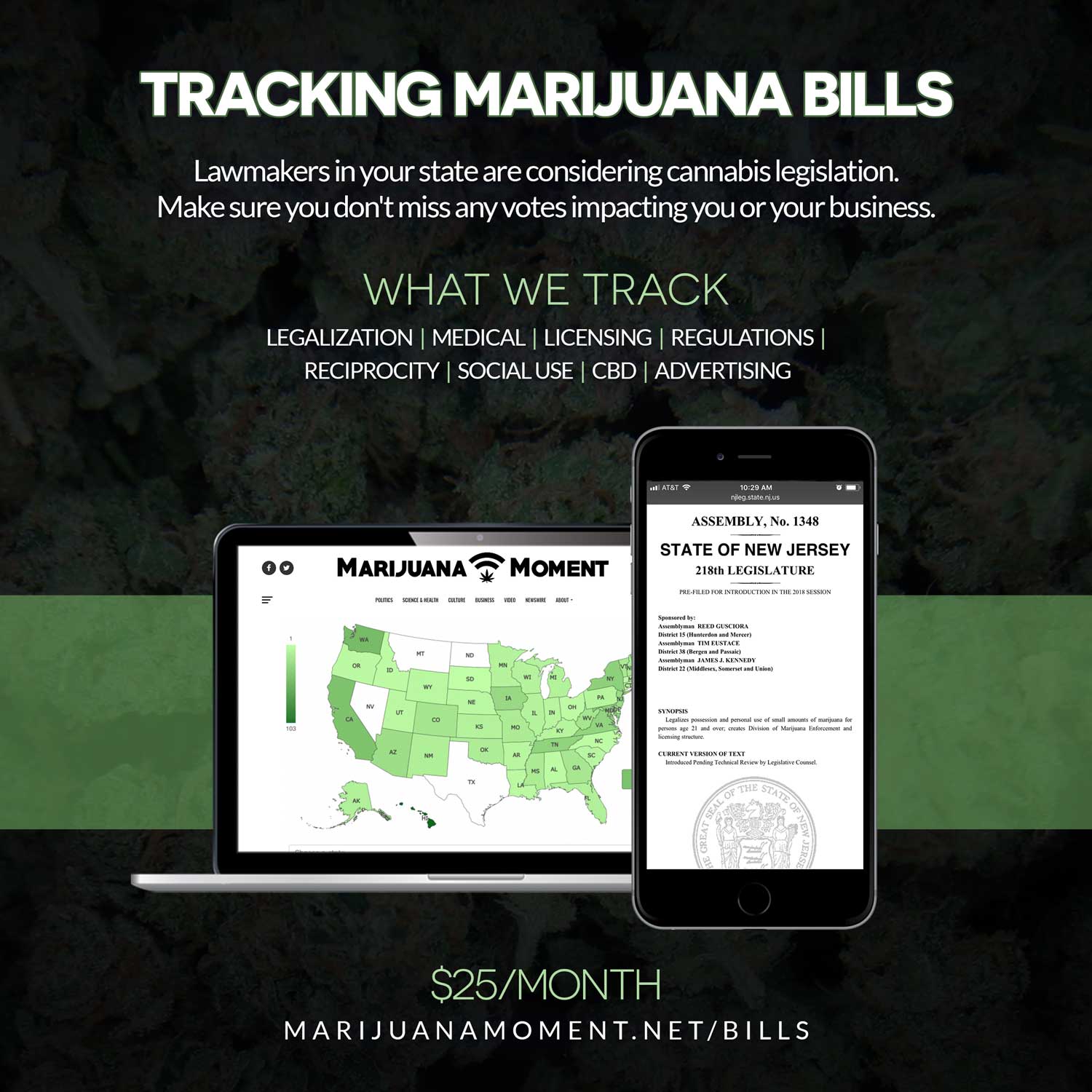
Learn more about our marijuana bill tracker and become a supporter on Patreon to get access.
—
The governor did sign separate legislation, HB 314 from Rep. Sam Creekmore IV (R), to establish a consortium to conduct a clinical trial on ibogaine with the intent of helping to win federal approval for the psychedelic from the Food and Drug Administration.
The “Ibogaine Drug Development Clinical Trial Act” will specifically support trials to get ibogaine approved as a medication to treat opioid use disorder, co-occurring substance use disorder and other neurological or mental health conditions.
The bill would give the state a portion of any revenue stemming from intellectual property or commercial rights generated by the research.
The House also passed separate legislation this session to allow terminally ill patients to access medical marijuana in hospitals, nursing facilities and hospice centers, but it stalled in the Senate.
Marijuana Moment is made possible with support from readers. If you rely on our cannabis advocacy journalism to stay informed, please consider a monthly Patreon pledge.


Related Posts

Federal Drug Testing Rule Will Require ‘Directly Observed’ Urine Collection From Truck Drivers
Democratic Lawmakers Push Trump To Release Federal Marijuana Prisoners As A Follow-Up To Rescheduling