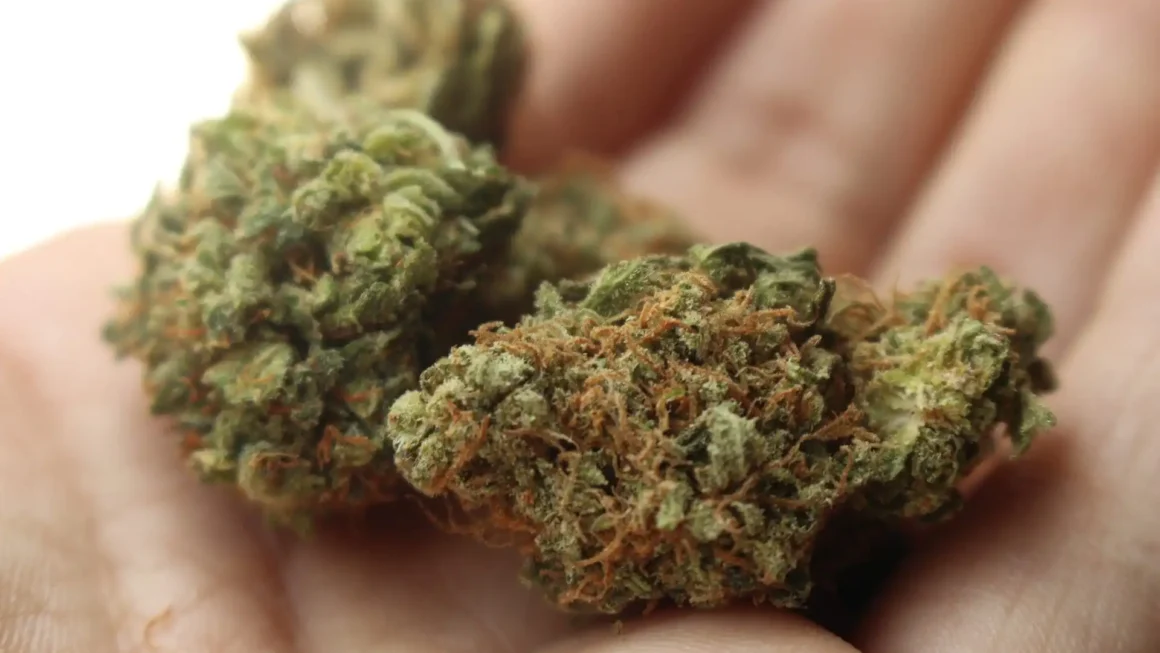
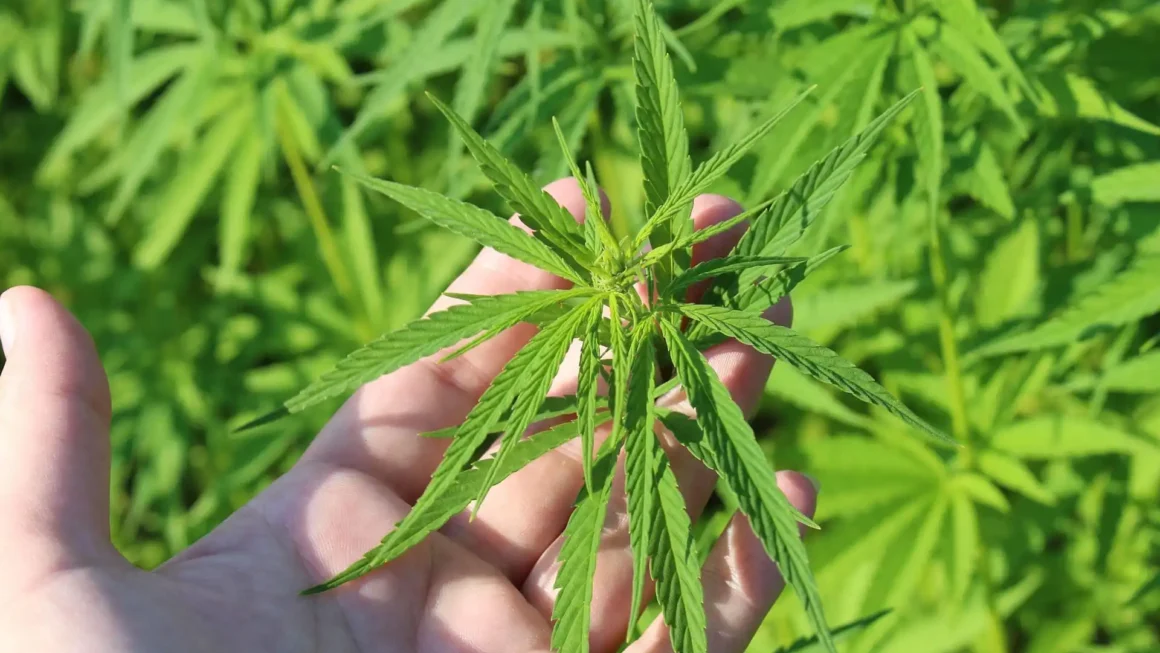
Three Republican members of Congress have filed separate amendments to large-scale agriculture legislation that would prevent a scheduled federal ban on hemp THC products from taking effect in November.
One proposal, from Rep. Andy Barr (R-KY), would keep many hemp products legal that are currently set to be recriminalized this year, add labeling requirements and institute new taxes on sales, among other regulatory reforms.
Another amendment, from Rep. Russell Fry (R-SC), would simply delay the planned recriminalization of hemp THC products for an additional two years.
A third measure, from Rep. James Comer (R-KY), seeks to prevent federal officials from spending any funds to enforce sections of last year’s annual agriculture appropriations bill that significantly narrowed the scope of what constitutes federally legal hemp.
Hemp derivatives with less than 0.3 percent delta-9 THC on a dry-weight basis were federally legalized under the 2018 Farm Bill that President Donald Trump signed during his first term in office. But late last year, Trump signed new spending legislation containing provisions that will redefine hemp to make it so only products with 0.4 milligrams of total THC per container will remain legal after November 12.
Barr’s 25-page amendment, titled the Lawful Hemp Protection Act, would change the definition of legal hemp again to allow concentrations of up to 1 percent delta-9 THC on a dry-weight basis, “measured on the finished consumer product and not on raw, floral material or any work-in-process material, including an unfinished hemp ingredient.”
Cannabinoids that are not capable of being naturally produced by a cannabis plant or that are synthesized or manufactured from any starting material other than hemp would not be part of the revised definition of a legal hemp product.
“Many Americans, including veterans and seniors, rely on consumer hemp products for wellness,” the legislation’s findings section says. “Ensuring that such products are consistently manufactured, accurately labeled, and domestically sourced is essential to maintaining public trust and protecting consumers. Clear provenance standards and the elimination of deceptive or look-alike products promote responsible industry growth, protect consumers, and reinforce confidence in lawful hemp commerce.”
“Protecting minors and preventing children’s access to hemp products is central to the public interest and to the long-term credibility of the hemp industry. Strong age-control measures are necessary to prevent misuse and safeguard public health.
Within 18 months of the proposal’s enactment, the secretary of health and human services would “establish for each cannabinoid present in a hemp-derived consumable product a maximum allowable amount of such cannabinoid per serving of such product.” Those limits would need to be updated at least once every five years or “as soon as scientific evidence warrants reconsideration.”
The legislation also sets out labeling requirements for hemp-derived consumer products, including displaying per-serving and per-package THC content, as well as a statement specifying that they are only for people over the age of 21.
Consumable hemp products would also need to include this text:
“GOVERNMENT WARNING: (1) According to the Surgeon General, women should not consume hemp products during pregnancy because of the risk of birth defects. (2) Consumption of hemp products impairs your ability to drive a car or operate machinery and may cause health problems.”
The labeling and maximum cannabinoid content provisions would only apply to “products introduced or delivered for introduction into interstate commerce on or after the date that is 180 days after the date of enactment of this Act.”
Sales of hemp-derived consumable products would be subject an “in-person or virtual” age verification requirement to ensure customers are 21 or older, with a civil penalty of up $1,000 per violation and the threat of permit or registration revocation for “repeated or willful violations.”
For most consumable hemp products sold in interstate commerce, excluding beverages, there would be a user fee of 5 percent of the retail sale price. It would be collected by retailers at the point of sale and remitted quarterly to the Treasury Department’s Alcohol and Tobacco Tax and Trade Bureau (TTB), with revenue earmarked to support hemp regulation and enforcement, consumer protection activities and assistance for state agencies.
With respect to hemp drinks, there would be a federal tax of 5 cents per milligram of THC in each beverage, with the tax determined as of the time of removal for consumption or sale from the premises of the producer. One percent of the revenue from hemp beverages would go to the Highway Trust Fund to support state-level enforcement, training and testing technologies related to standards on zero-tolerance for impaired driving.
Within a year of the the law’s enactment, TTB would establish a three-tier system for hemp-derived beverages sold in interstate commerce, modeled on the current distribution framework for alcohol. The first tier would include manufacturers, the second tier would be for distributors and wholesalers and the third tier would cover retailers. No entity could hold a permit or registration in more than one tier at a time, nor a “direct or indirect interest” in permittees or registrants in more than one tier—a separation the legislation says will be “strictly maintained.”
Within 180 days of enactment, TTB would need to establish a mandatory retailer registration and licensing system for all people engaged in the sale of hemp-derived beverages in interstate commerce, and covered retailers would need to register within 30 days of the system’s launch.
Hemp products would be considered “adulterated” if they exceed the maximum allowable cannabinoid content established by the secretary of health and human services, if they don’t comply with packaging rules or if they are “not derived exclusively from hemp cultivated in the United States, processed within the United States, and finished, packaged, and labeled within the United States,” the legislation says.
The proposal makes clear that states, territories and Indian tribes could enact hemp product laws that are more stringent that the federal requirements under the bill, but it also says that they cannot interfere with the “passage and delivery of a hemp-derived consumable product through the borders” of their jurisdictions.
One section of the measure would require the Food and Drug Administration (FDA) to publish a list of all cannabinoids known to the agency to be capable of being naturally produced by a Cannabis sativa L. plant, as reflected in peer reviewed literature, as well as a list of all tetrahydrocannabinol class cannabinoids known to the agency to be naturally occurring in the plant, within 90 days.
A hemp-derived consumable product would be defined under the Federal Food, Drug, and Cosmetic Act (FFDCA) to include ingestibles, beverages, oral tinctures, sublinguals, capsules, tablets, inhalables, topicals and transdermals—all considered to be food for the purposes of the law.
The legislation also contains a provision addressing hemp products covered under Medicare:
“Notwithstanding any other provision of this Act, any hemp-derived consumable product (as defined in section 201 of the Federal Food, Drug, and Cosmetic Act (21 U.S.C. 321), as amended by section 4(a) of this Act) that is approved, authorized, or covered under Medicare Advantage Special Supplemental Benefits for the Chronically Ill (SSBCI) or Beneficiary Engagement and Incentives (BEI) under a program administered under title XVIII of the Social Security Act (42 U.S.C. 1395 et seq.), including any model tests implemented under section 1115A of such Act (42 U.S.C. 1315a) and applied under such title XVIII, shall be administered and governed exclusively under the applicable CMS system, process, or program until such date that model tests are completed.”
The Trump administration launched a Centers for Medicare & Medicaid Services (CMS) program last month to cover up to $500 worth of hemp-derived products each year for eligible Medicare patients. A federal judge last week granted the government’s motion to dismiss marijuana legalization opponents’ lawsuit challenging the initiative.
Under a provision of Barr’s proposal, states would be at risk of losing out on certain federal funds if they do not address hemp-impaired driving using the “same field sobriety evaluation standards and protocols that law enforcement officers apply to determine impairment caused by lawfully prescribed pharmaceutical substances, including opioids, benzodiazepines, and other controlled medications” or subject hemp-impaired drivers to the “same penalties, fines, license suspensions, and other sanctions as apply to driving under the influence of alcohol or other impairing substances.”
Barr’s measure, curiously, was filed in the form of a bill and is not drafted as an actual amendment to the agriculture appropriations legislation. Industry advocates have been eagerly anticipating a standalone bill from Barr on the issue, but it’s not clear when that will be formally introduced or why what appears to be its text was filed as an improperly formatted amendment to the agriculture measure.
The House Rules Committee is expected to decide next week which, if any, of the submitted amendments to H.R. 8646, the Fiscal Year Agriculture, Rural Development, Food and Drug Administration, and Related Agency appropriations bill, can advance toward floor votes.
“Members should draft their amendments to the text of H.R. 8646, which is available on the Rules Committee website,” the panel said in an announcement about the process for considering the legislation.
“Members should attempt to draft their amendments with actual legislative language to ensure the Committee is able to properly review and assess amendment submissions. Members should not submit amendment ‘placeholder text,’ blank attachments, or legislative text which is not consistent with the intent of the amendment,” it said. “Amendments which do not comply with this directive will not be reviewed, even if revised.”
Barr spoke at a meeting with hemp industry operators earlier this month and previewed his hemp regulation bill—saying it faces opposition from a coalition of strange bedfellows including sectors of the alcohol industry, marijuana businesses and cannabis legalization opponents.
Separately, White House officials recently provided Barr’s office with feedback on hemp regulatory legislation.
Last month, Vince Haley, director of the White House Domestic Policy Council and James Braid, assistant to the president for legislative affairs, sent hemp policy suggestions to the congressman’s office.
“We appreciate your work to advance the policy of” an executive order Trump signed in December that included provisions seeking to protect Americans’ access to CBD products, the staffers wrote in a letter to the congressman.
“We are transmitting for your consideration draft legislative text and comments to address the statutory definition of final hemp-derived cannabinoid products in order to allow Americans to benefit from access to appropriate full-spectrum CBD products while preserving the Congress’s intent to restrict the sale of products that pose serious health risks,” the White House officials said, according to a social media post containing a screenshot of the letter. “We are available for discussion and further technical assistance.”
Trump himself last month pushed congressional lawmakers to take action to amend the currently scheduled hemp ban, which he suggested threatens to federally recriminalize full-spectrum CBD products.
“I am calling on Congress to update the Law to ensure that Americans can continue to access the full-spectrum CBD products they have come to rely on, and that help them, while preserving Congress’s intent to restrict the sale of products that pose Health risks,” the president said in a Truth Social post on Thursday, the same day his administration announced it is moving forward to reschedule marijuana.
“We must get this done RIGHT and FAST, especially for those who saw that CBD helps them,” he said. “Plus, I am told it will also help our GREAT FARMERS, who we love, and will always be there for.”
Sen. Ted Cruz (R-TX) said recently that it will be an “uphill path” to avert the scheduled federal recriminalization of hemp THC products this year.
Leaders of the advocacy organization Marijuana Policy Project similarly said recently that they think it will be difficult to avert the ban on hemp THC products before November, though they left open the possibility that there could be a carve-out for beverages or some reforms to THC limits.
The House of Representatives recently passed a Farm Bill with provisions aimed at aiding industrial hemp producers—but without any language to delay or alter the federal recriminalization of hemp THC products that’s scheduled to take effect in November.
The Wine & Spirits Wholesalers of America (WSWA) said the House’s failure to include provisions to delay or alter the ban on hemp THC products was a “missed opportunity.”
“A ban will not remove these products from the market—it will push consumers toward unregulated, online channels with no age verification, no product standards and no accountability,” Dawson Hobbs, executive vice president of government affairs for WSWA said.
Meanwhile, the White House Office of Management and Budget recently held a series of meetings about a Food and Drug Administration (FDA) CBD products enforcement policy.
FDA also issued guidance making clear that it does not intend to interfere with implementation of the Medicare hemp-derived products coverage plan.
CMS separately finalized a rule that will allow coverage of some hemp products as specialized, non-primarily health-related benefits through Medicare Advantage plans.
Major retailer Target, meanwhile, recently moved to expand its sales of hemp THC drinks into more states.
Marijuana Moment is made possible with support from readers. If you rely on our cannabis advocacy journalism to stay informed, please consider a monthly Patreon pledge.