


Oklahoma drug officials have issued guidance warning medical marijuana businesses that they must register with the federal government in order to avoid facing punishments, including potentially having their state registrations revoked.
Donnie Anderson, director of the Oklahoma Bureau of Narcotics and Dangerous Drugs Control (OBNDD) said in a letter to cannabis industry operatives on Friday that they are required to fill out a new Drug Enforcement Administration (DEA) registration form that was launched in conjunction with the Trump administration’s move to federally reschedule cannabis.
Citing state laws, he said that “every registrant who is a distributor or manufacturer of medical marijuana products must comply with federal law and, as such, shall be required to obtain a DEA registration.”
“Failure to obtain a DEA registration could result in OBNDD administrative sanctions up to and including the potential revocation of an registrant’s OBNDD registration(s),” the letter says. “This is consistent with the requirements in place for other Schedule Ill registrants currently regulated by OBNDD.”
“To ensure compliance with these federal regulations and minimize any impact on lawfully operating entities, OBNDD will not consider pursuing administrative action on medical marijuana businesses registered with OBNDD for the manufacturing or distribution of marijuana without the required DEA registration until January 1, 2027. It is strongly recommended that all OBNDD registrants authorized to manufacture or distribute medical marijuana apply for the appropriate DEA registration within the sixty-day period after the April 28, 2026, publication of the Final Order. By timely submitting an application to the DEA, a registrant will not be subjected to OBNDD administrative action for the manufacturing, or distribution of marijuana without a DEA registration while the DEA application filed within the sixty-day period remains pending. Failure to timely submit an application to the DEA would render any manufacturing or distribution of medical marijuana products without a DEA registration to be in violation of the Final Order. These activities could subject a registrant to OBNDD administrative sanctions up to and including the potential revocation of an registrant’s OBNDD registration(s).”
Anderson concluded by saying that “nothing included in this letter is intended to be taken as legal advice concerning the obligations of a registrant set forth in either federal law or Oklahoma statutes.”
“This letter is merely being provided to inform medical marijuana businesses of their administrative responsibilities,” he wrote. “If there are additional questions concerning compliance with either federal, state, or administrative law, a registrant should consult with an attorney.”
The Oklahoma Medical Marijuana Authority (OMMA), which licenses and regulates medical cannabis businesses in the state, separately released guidance earlier this week on federal rescheduling and a recently filed lawsuit challenging the reform.
“This is an evolving federal conversation, but our focus remains the same: protecting patient health and safety and responsibly regulating the industry,” OMMA Executive Director Adria Berry said. “These announcements have created a lot of questions, but very few answers have been received. OMMA will continue to relay information as released by the DEA and federal government, but, ultimately, we encourage licensees to seek professional counsel as they determine the best decisions for their business.”
Oklahoma Gov. Kevin Stitt (R), meanwhile, has suggested recently that lawmakers should put a measure on the ballot to roll back the state’s medical cannabis program. He said during his State of the State address in February that voters should “shut it down,” arguing that “liberal activists” conned the state and “opened up Pandora’s box” with legalization.
Legislative leaders have pushed back on that idea, however.
Senate President Pro Tempore Lonnie Paxton (R), for example, initially expressed openness to the idea—but he ultimately determined it’d be “really hard to completely undo” legalization and unfair to licensed medical cannabis operators who “invested their life savings into this program” and are “trying to do this for the Oklahomans that need that product—not for recreational, but for actual medicinal purposes.”
“It’s hard to unring that bell,” he said. “What I’m going to suggest to the governor is that we don’t run a state question on that, but instead we continue to push the regulations [and] we continue to regulate the industry.”
—
Marijuana Moment is tracking hundreds of cannabis, psychedelics and drug policy bills in state legislatures and Congress this year. Patreon supporters pledging at least $25/month get access to our interactive maps, charts and hearing calendar so they don’t miss any developments.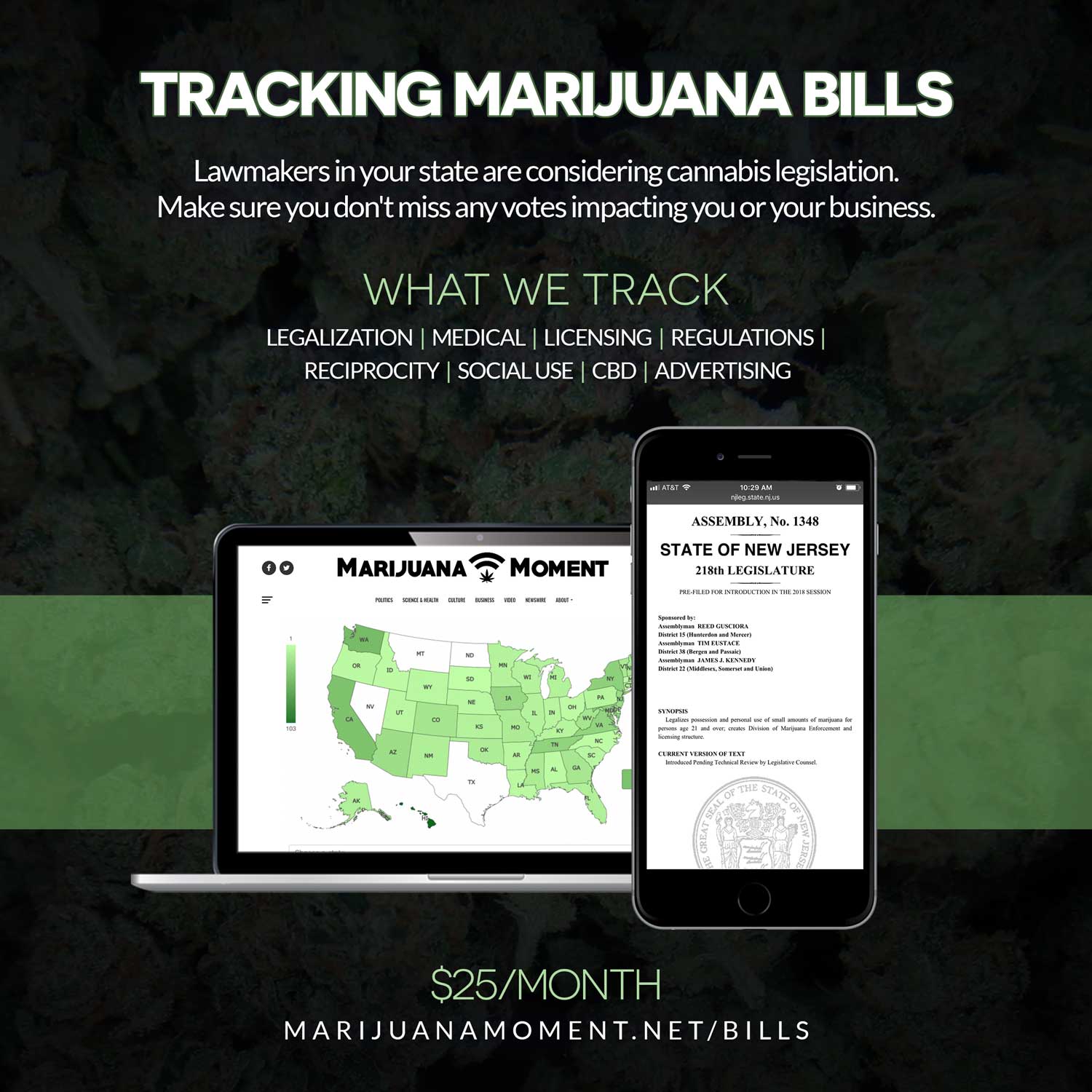
Learn more about our marijuana bill tracker and become a supporter on Patreon to get access.
—
House Speaker Kyle Hilbert (R) has also largely dismissed the prospect of upending the state’s medical cannabis program. He said Oklahomans have already drawn a clear distinction: They support medical marijuana and “resoundingly” oppose adult-use legalization, based on past election results.
Stitt is undeterred, however, claiming in a recent interview that he’s had “some great conversations with the House and the Senate.”
“They know it’s a problem. Oklahomans all over are calling our offices saying it’s a problem,” Stitt said. “So I think we’ll get something back to the people.”
Oklahoma Attorney General Gentner Drummond (R) was asked about the governor’s call to have voters revisit the state’s medical marijuana program, and he said he’d “love” to see the state’s medical marijuana program wiped out.
However, he cautioned that doing so would mean reimbursing the hundreds of licensees participating in the market because the state would be “taking” a revenue source away from them.
Back in 2022, Stitt similarly used his State of the State address as an opportunity to dig at the voter-approved medical marijuana law, arguing that residents were misled by proponents of the ballot initiative.
Meanwhile, in November, Oklahoma activists withdrew an adult-use marijuana legalization initiative that they’d hoped to place on the state’s 2026 ballot.
After a short but aggressive signature push to secure ballot placement, Oklahomans for Responsible Cannabis Action (ORCA) ultimately did not turn in its petitions by the deadline, according to the secretary of state’s office.
Marijuana Moment is made possible with support from readers. If you rely on our cannabis advocacy journalism to stay informed, please consider a monthly Patreon pledge.



